

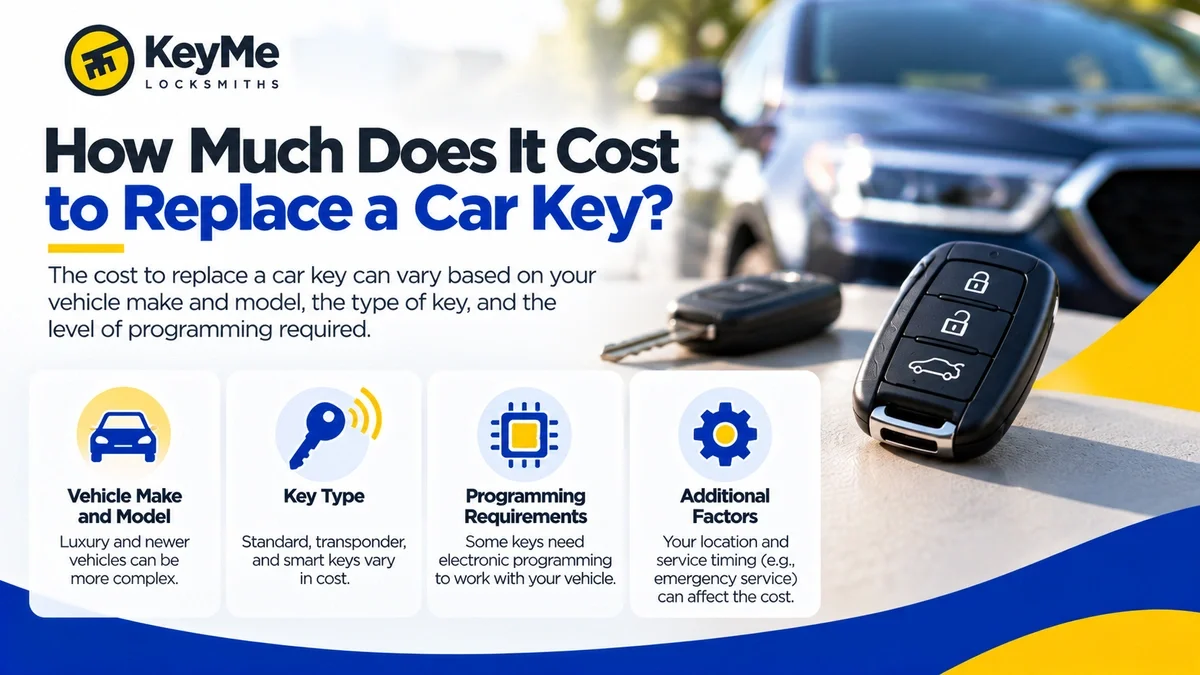
The cost to replace a car key depends largely on what type of key the vehicle uses, whether electronic programming is required, the vehicle's year, make, and model, and whether another working key is still available.
Replacing a traditional mechanical key is a different process from replacing a transponder key, remote-head key, or proximity smart key. Modern vehicle keys can combine physical cutting, electronic authentication, remote functions, and vehicle-specific programming.
If your problem is broader than key replacement, such as a lockout, ignition issue, or broken key, see How Much Is a Locksmith for a Car?.
Summary
- Car key replacement cost varies substantially because vehicle keys use different technologies.
- Traditional mechanical keys and electronically authenticated keys follow different replacement processes.
- Transponder, remote-head, and smart keys may require programming in addition to physical key work.
- The vehicle's year, make, and model determine which key technology and programming procedures apply.
- Replacing the only working key may involve a different process from making another key when a working original is available.
- Not every key problem requires complete replacement.
- KeyMe's recorded automotive service data shows that programming-related problems represent the largest individual troubleshooting category, reinforcing how important electronic compatibility is in modern car-key service.
- If you're unsure whether replacement is the correct service, diagnose the specific symptom before assuming the entire key needs to be replaced.
Best Way to Approach Car Key Replacement
Before replacing a car key, identify four things:
- Your vehicle's year, make, and model
- The type of key the vehicle uses
- Whether any working key remains
- Which key functions currently work or fail
These details help determine whether you need:
- A duplicate key
- A replacement key
- Key programming
- A replacement remote or fob
- Mechanical key cutting
- Troubleshooting before replacement
A key that no longer performs one function does not automatically require complete replacement.
For example, a remote that stops unlocking the doors may present a different problem from a key that is no longer recognized by the vehicle's immobilizer system.
Need a Locksmith? We're here to help
Connect with a trusted local locksmith for fast, professional assistance when you need it most.
Why Car Key Replacement Costs Vary So Much
"Car key" can refer to several fundamentally different devices.
A vehicle key may contain:
- A mechanical blade
- An electronic transponder chip
- Remote lock/unlock controls
- Trunk or hatch controls
- Panic-button functionality
- Proximity communication
- Push-button-start authentication
Some keys combine several of these systems.
SAE technical literature describes vehicle systems in which a single transponder can handle immobilization, passive entry, and remote-control functions.
As key technology becomes more integrated with the vehicle's electronics, replacement can involve more than physically copying a key profile.
That is why understanding the key type is one of the most important steps in understanding replacement complexity.
Traditional Mechanical Car Keys
Older vehicles may use a primarily mechanical key.
The key's physical profile operates the lock and ignition without requiring an electronic transponder to authorize the vehicle to start.
Replacing this type of key generally centers on creating the correct mechanical key for the vehicle.
However, the vehicle's age alone does not reliably determine key type.
Manufacturers introduced electronic security systems at different times and used different technologies across models.
Always identify the actual vehicle and key system rather than assuming an older-looking key is entirely mechanical.
Transponder Keys
A transponder key contains an electronic component used as part of the vehicle's immobilizer or anti-theft system.
NHTSA describes immobilizing devices as systems designed to prevent thieves from bypassing a vehicle's ignition, noting that some incorporate computer chips into ignition keys.
This creates two potentially separate requirements:
- The physical key must be compatible with the lock or ignition.
- The electronic credential must be recognized appropriately by the vehicle.
A physically correct key may therefore be insufficient if the vehicle also expects electronic authorization.
SAE literature on entry-control and immobilizer systems similarly describes communication sequences between the key or key fob and vehicle as part of access and drive authorization.
For a deeper explanation, see How Car Immobilizer Systems Work.
Remote-Head Keys
A remote-head key combines several functions in one housing.
Depending on the vehicle, it may include:
- Mechanical key blade
- Transponder
- Lock button
- Unlock button
- Trunk or hatch control
- Panic function
These functions do not necessarily depend on exactly the same system.
For example, a problem with a remote button does not automatically mean the mechanical key blade or immobilizer function has failed.
Manufacturer documentation provides a useful real-world example. Honda owner information hosted by NHTSA describes keys containing precision electronics and notes that circuit damage may prevent the engine from starting, the remote transmitter from working, or both.
That distinction matters before deciding to replace the entire key.
Smart Keys and Proximity Fobs
Many vehicles with push-button start use a smart or proximity key.
Instead of requiring the driver to insert a mechanical key into the ignition, the vehicle electronically detects an authorized key nearby.
Toyota's smart-key documentation, for example, describes a system in which carrying the electronic key can support door locking and unlocking, tailgate access, and engine starting.
SAE has documented similar integrated systems combining passive entry, vehicle immobilization, and remote-control functions in a single transponder architecture.
Depending on the vehicle, the fob may support:
- Passive entry
- Push-button start
- Remote lock and unlock
- Trunk access
- Other vehicle-specific functions
Replacing this type of key may involve establishing electronic authorization between the new key and the vehicle.
The exact process varies by manufacturer, model, model year, and security system.
Why Programming Affects Car Key Replacement
Modern vehicle-key replacement often involves two different concepts:
Key Cutting
This refers to creating the physical key profile when a mechanical blade is involved.
Key Programming
This refers to configuring a supported electronic key so that the vehicle recognizes it appropriately.
For many modern vehicles, those are separate steps.
This distinction is significant because a replacement key can appear physically correct while still failing electronic authentication.
NHTSA's description of chipped ignition keys and immobilizing anti-theft devices helps explain the technical reason: the vehicle may rely on electronic authorization in addition to mechanical operation.
SAE's work on remote-entry and immobilizer systems further documents communication between the keyhead or key fob and the vehicle as part of drive authorization.
In KeyMe's recorded automotive service data, programming-related problems represented the largest individual troubleshooting category. That finding describes KeyMe's recorded service population rather than national consumer behavior, but it illustrates how central programming has become to modern automotive-key service.
For a detailed explanation, see How Car Key Programming Works.
KeyMe also offers car key programming for supported vehicles.
Why Year, Make, and Model Matter
Car keys are vehicle-specific.
Your vehicle's year, make, and model can affect:
- Key shape
- Key blank
- Transponder technology
- Immobilizer generation
- Remote functionality
- Smart-key system
- Programming requirements
- Supported replacement options
Manufacturers may use several key architectures across different models and generations.
Toyota's current vehicle documentation provides a good example. Some models use Smart Key systems with push-button starting and remote entry, and Toyota also offers Digital Key functionality on certain configurations that allows a compatible smartphone to take over some functions traditionally associated with a physical key fob.
That evolution is one reason the exact vehicle configuration matters.
When requesting car key replacement, provide the full vehicle information rather than describing the key only by appearance.
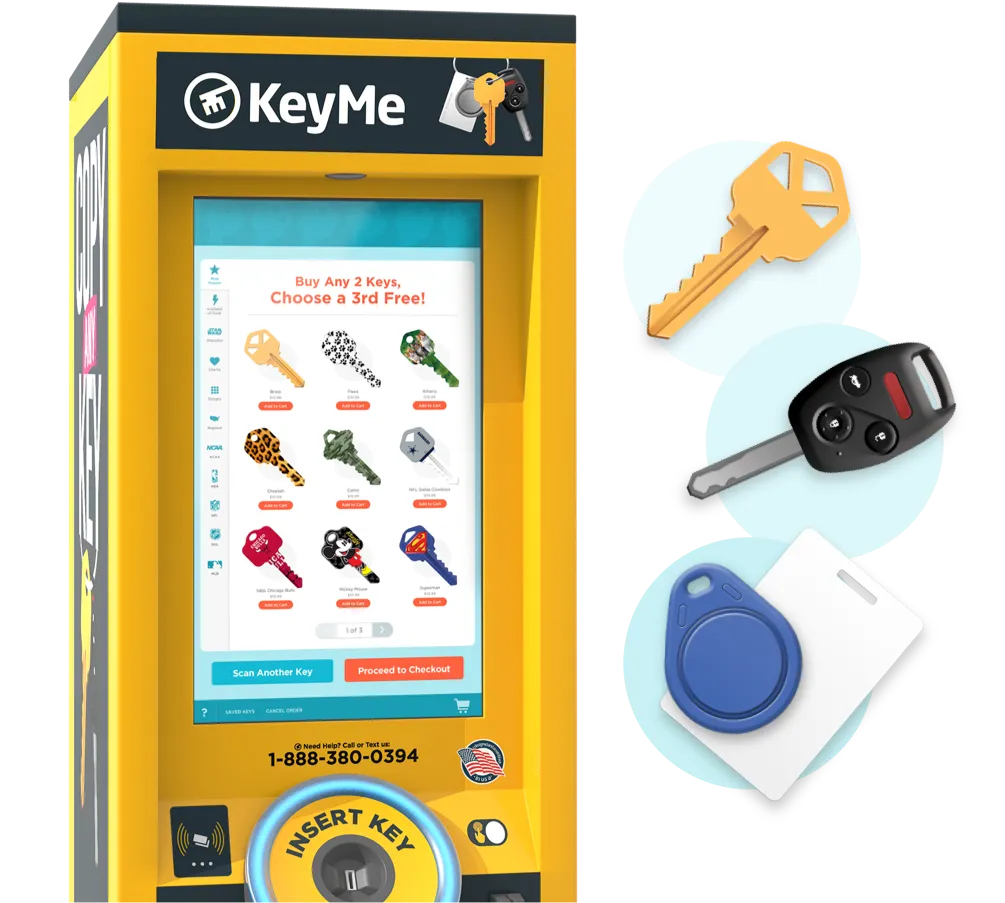
Find a KeyMe Kiosk Near You
Need a spare key fast? Find a KeyMe kiosk near you to copy many house, office, and eligible car keys in just minutes.
Replacing Your Only Key vs. Making a Spare
One of the most important distinctions is whether another working key exists.
When You Have a Working Key
If a working key is available, you may actually be seeking duplication rather than replacement.
That can provide a known working reference for:
- Key shape
- Vehicle compatibility
- Functions
- Key type
Depending on the vehicle, creating another supported key may still require programming.
When the Key Is Damaged but Available
A damaged key can provide useful information even if it no longer functions correctly.
Before replacement, determine what is actually damaged.
For example:
- Blade is bent
- Housing is cracked
- Buttons are damaged
- Key is not recognized
- Key turns but vehicle does not start
- Proximity function fails
Different symptoms may point toward different service needs.
When One Key Is Lost but Another Works
A remaining working key can help identify the key system and confirm which functions should operate.
Depending on the vehicle, you may also want to consider whether the lost key creates a security concern.
When All Keys Are Lost
An all-keys-lost situation can involve a different replacement process.
The provider may need to establish:
- Vehicle identification
- Customer authorization or ownership
- Correct key type
- Mechanical key information where applicable
- Electronic programming requirements
- Vehicle-specific security procedures
SAE's security guidance recognizes creating a new key fob as a vehicle-security use case that can involve authentication and authorization controls within the vehicle's electronic architecture.
Do not assume replacing the only key follows the same process as simply making a spare.
Car Key Replacement vs. Car Key Duplication
The terms are related but not identical.
Car Key Duplication
You have a usable key and want another working key.
Car Key Replacement
The original key may be:
- Lost
- Stolen
- Broken
- Damaged
- Electronically unusable
- Otherwise unavailable
The difference matters because the available source information and service steps can change.
For supported vehicle-key options, see KeyMe's vehicle keys and car key replacement resources.
Does Losing All Your Keys Make Replacement More Complex?
It can.
When no working key remains, the service provider cannot simply compare the new key with a functioning original.
Depending on the vehicle, the process may require additional identification, key generation, programming, or security-system steps.
The exact requirements vary widely.
Security around key creation is not merely theoretical. SAE's recommended practice for hardware-protected vehicle security specifically lists creating a new key fob as an example of a use case in which authentication, authorization, and access enforcement may be involved.
This is also why you should provide your vehicle information when requesting service rather than waiting until the provider arrives.
Does a Key Fob Need to Be Replaced if One Function Stops Working?
Not necessarily.
A vehicle key or fob may perform multiple separate functions.
For example:
- Mechanical door access
- Remote lock/unlock
- Immobilizer authentication
- Proximity detection
- Push-button start
If only one function fails, first determine whether the entire key has failed.
A remote that no longer locks the doors may still be recognized by the vehicle.
A key that starts the engine may still have a remote-button issue.
A proximity function may behave differently from the manual buttons.
Before replacing the entire fob, compare the symptoms carefully.
For troubleshooting guidance, see Signs Your Car Key Battery Is Dying and Why Your Car Key Fob Has Less Range Than It Used To.
Why Vehicle Security Systems Affect Replacement
Modern automotive keys are part of the vehicle's broader anti-theft architecture.
For supported vehicles, the replacement process may interact with systems such as:
- Immobilizer authentication
- Electronic key identification
- Push-button-start authorization
- Passive entry
- Remote-control functions
This means replacement is not always equivalent to copying the physical shape of a key.
The vehicle may also need to recognize the electronic credential.
That is why programming and vehicle compatibility deserve their own place in the replacement process.
Do You Need the Original Car Key?
Not always.
A locksmith may be able to replace a key for supported vehicles without the original, but the appropriate process depends on the vehicle and the available information.
If you still have the original key, bring it even if it is damaged.
It may provide useful information about:
- Key type
- Mechanical profile
- Remote functions
- Transponder or smart-key design
- The functions the replacement should support
For more detail, see Can You Replace a Car Key Without the Original?.
What Information Helps With Car Key Replacement?
Before requesting service, gather:
- Vehicle year
- Make
- Model
- VIN when appropriate
- Current vehicle location
- Whether you have any working keys
- Type of key, if known
- Whether the vehicle uses push-button start
- Which key functions still work
- Whether the key is lost, stolen, damaged, or simply malfunctioning
Providing this information helps distinguish a replacement need from other automotive-key problems.
Locksmith or Dealership for Car Key Replacement?
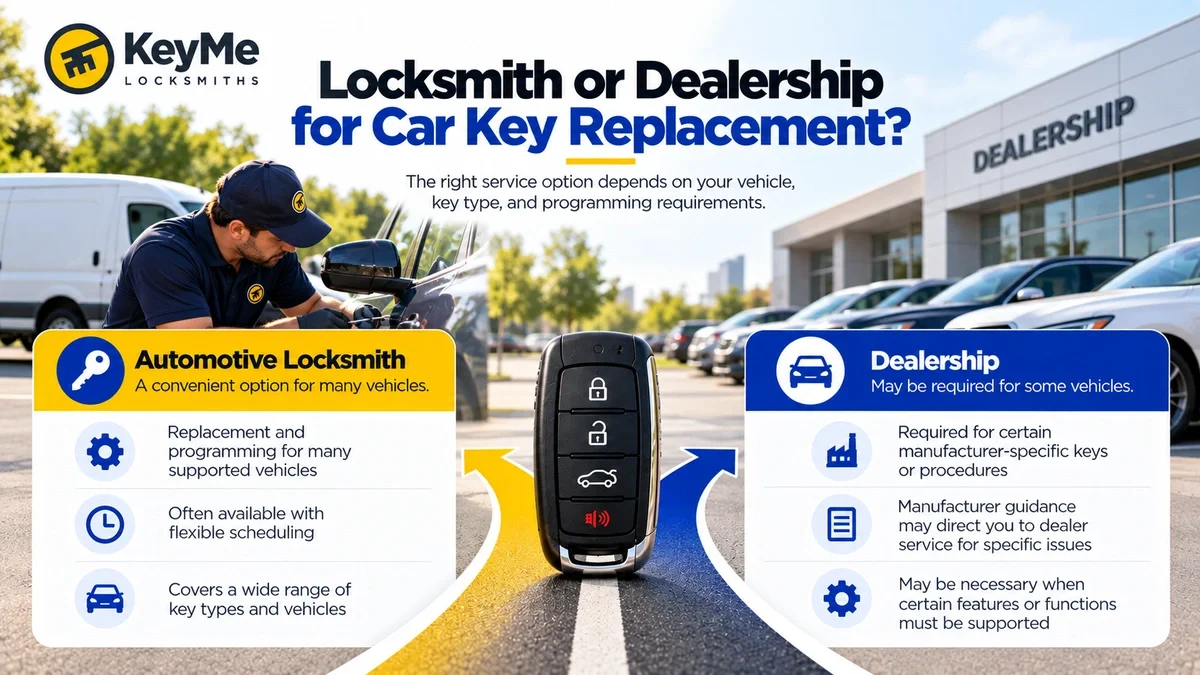
The appropriate service path depends on the vehicle.
Automotive locksmiths can provide replacement and programming services for many supported vehicles.
In other cases, manufacturer-specific technology, procedures, availability, or restrictions may affect the available options.
Rather than assuming one service path is universally appropriate, confirm:
- Whether your vehicle is supported
- Whether the required key type is available
- Whether programming can be completed
- Whether all intended functions are supported
- Whether manufacturer-specific involvement is required
The goal is compatibility with the vehicle, not simply obtaining a key that looks correct.
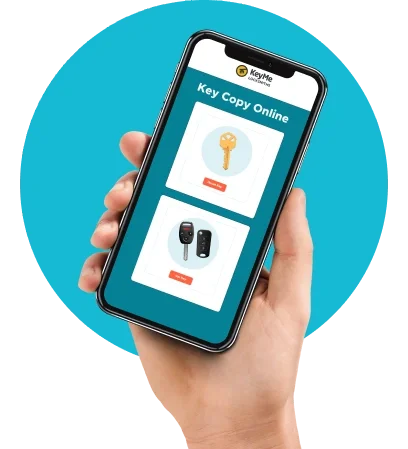
Copy Your Key from Anywhere - Right from Your Phone
Skip the kiosk and copy your key from home. Upload a clear photo of an eligible house or car key, and KeyMe will create a precise duplicate and mail it directly to your door.
When the Problem May Not Require Replacement
Before replacing a key, consider the symptom.
Remote buttons do not work, but the car starts
The problem may involve a remote function rather than the entire key.
Remote range has gradually decreased
Battery condition or another signal-related issue may deserve evaluation before assuming complete key failure.
Mechanical key will not turn
The problem could involve the key, lock cylinder, ignition, or another mechanical condition.
Push-button start says the key is not detected
The issue may involve the fob, battery, electronic authentication, signal environment, or vehicle-side system.
Another key works normally
That comparison can help narrow the issue toward the affected key.
Replacement may ultimately be appropriate, but diagnosis should come before assuming the entire key has failed.
What If the Car Key Was Stolen?
A stolen key introduces a security question in addition to replacement.
Depending on the vehicle, it may be appropriate to evaluate whether a lost or stolen key can continue to authenticate with the vehicle.
The available options depend on the vehicle's key and immobilizer architecture.
See What to Do If Your Car Key Is Stolen and Can a Locksmith Disable Lost or Stolen Car Keys? for dedicated guidance.
How KeyMe Can Help With Car Key Replacement
KeyMe provides car key replacement and car key programming options for supported vehicles.
KeyMe Car Key Vans also provide in-person automotive key duplication and programming at participating retail locations for supported vehicles.
Before requesting service, provide your year, make, model, key situation, and whether another working key remains.
"A replacement car key has to match more than the shape of the original. On many modern vehicles, the physical key, transponder, remote functions, and vehicle authentication system all have to be considered together." - KeyMe Locksmiths
References
- KeyMe Locksmiths: Car Key Replacement
- KeyMe Locksmiths: Vehicle Keys
- KeyMe Locksmiths: Car Key Programming
- KeyMe Locksmiths: How Car Key Programming Works
- KeyMe Locksmiths: How Car Immobilizer Systems Work
- KeyMe Locksmiths: Can You Replace a Car Key Without the Original?
- KeyMe Locksmiths: What to Do If Your Car Key Is Stolen
- NHTSA: Vehicle Theft Prevention, including its explanation of immobilizing anti-theft systems and chipped ignition keys. NHTSA Vehicle Theft Prevention
- SAE International: Safety and Security Considerations of New Closure Systems, covering integrated passive entry, immobilization, and remote-control systems. SAE technical paper
- SAE International: Remote Entry Control and Immobilizer System Solutions, discussing key/fob-to-vehicle communication used in access and drive authorization. SAE technical paper
- SAE International: Hardware Protected Security for Ground Vehicles, which identifies new-key-fob creation as a vehicle-security access-control use case. SAE J3101
- Toyota Owners: If the Electronic Key Does Not Operate Properly, showing how mechanical access, electronic-key communication, and starting functions can behave differently. Toyota electronic-key documentation
- Toyota Owners: Smart Key System, documenting electronic-key entry and starting functions. Toyota Smart Key documentation