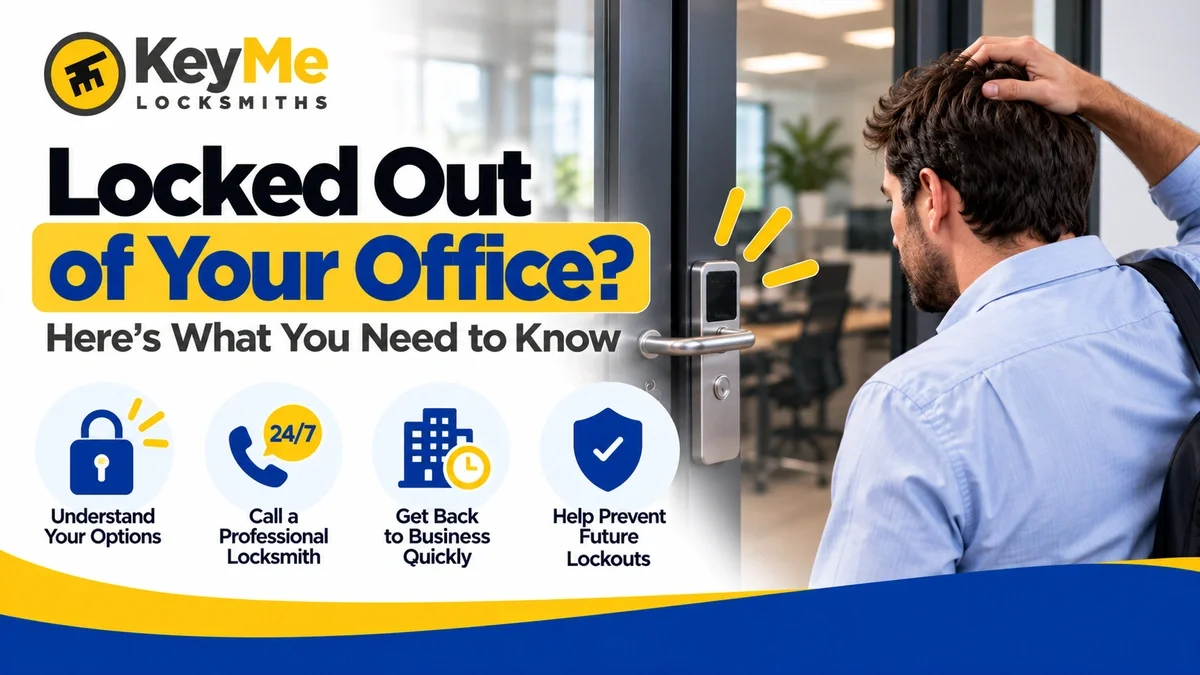
If you're locked out of your office, first determine whether another authorized employee, manager, building owner, landlord, or access administrator can restore entry. If no authorized access option is available, a commercial locksmith may be able to help after confirming that you have permission to enter the space.
An office lockout can be more complicated than a typical home lockout because access may involve building management, multiple tenants, master-key systems, electronic credentials, restricted areas, or company-specific security procedures.
Summary
- Check whether another authorized employee or keyholder can provide access.
- If your office is in a managed building, contact building management, security, or the property owner before arranging outside service.
- Determine whether the problem affects your individual office, an entire suite, or a shared building entrance.
- Electronic access cards, smart locks, and commercial key systems should be handled differently from a lost mechanical key.
- If a key was lost or stolen, restoring entry may not be the only concern. You may also need to review whether access should be changed.
- A locksmith may need to verify that you are authorized to enter the office or business.
- Do not force the door or lock. That can turn a lockout into a hardware-repair problem.
- After access is restored, determine what caused the lockout and whether any follow-up security changes are appropriate.
Best Way to Handle an Office Lockout
An office lockout is easiest to resolve when you identify who controls access and what type of access system is involved.
Start with these questions:
1. Is Another Authorized Keyholder Available?
Contact:
- Business owner
- Manager
- Office administrator
- Coworker with authorized access
- Facilities team
- Security staff
If another authorized key exists nearby, that may resolve the situation without changing any hardware.
2. Is the Building Managed by Someone Else?
If you lease office space, the building owner, landlord, property manager, or security desk may control the exterior entrance or maintain authorized access procedures.
3. Which Door Is Actually Preventing Access?
Determine whether you are locked out of:
- Main building entrance
- Shared lobby
- Office suite
- Individual office
- Storage room
- Interior secured area
That distinction matters because the responsible party and type of lock may be different.
4. What Type of Access System Is Used?
Your office may use:
- Conventional mechanical key
- Master-key system
- Restricted key system
- Keypad
- Access card
- Smart lock
- Electronic credential
- Combination of mechanical and electronic access
The right solution depends on what actually failed.
"For a business lockout, the first question is not simply how to open the door. It is who controls the space, who is authorized to enter, and which part of the access system is preventing entry." - KeyMe Locksmiths
Check Whether Another Authorized Person Has Access
Before assuming the lock itself needs service, find out whether another valid key or credential works.
Possible authorized contacts include:
- Business owner
- Office manager
- Coworker
- Facilities manager
- Building engineer
- Property manager
- Security staff
This provides useful diagnostic information.
Another Key Works Normally
The problem may involve:
- Your key
- Access card
- Electronic credential
- Individual fob
The door or lock may be functioning correctly.
Nobody's Key Works
The issue may involve:
- Lock hardware
- Door alignment
- Building access system
- Electronic reader
- Power or control system
- Another shared component
That difference helps determine who should handle the problem next.
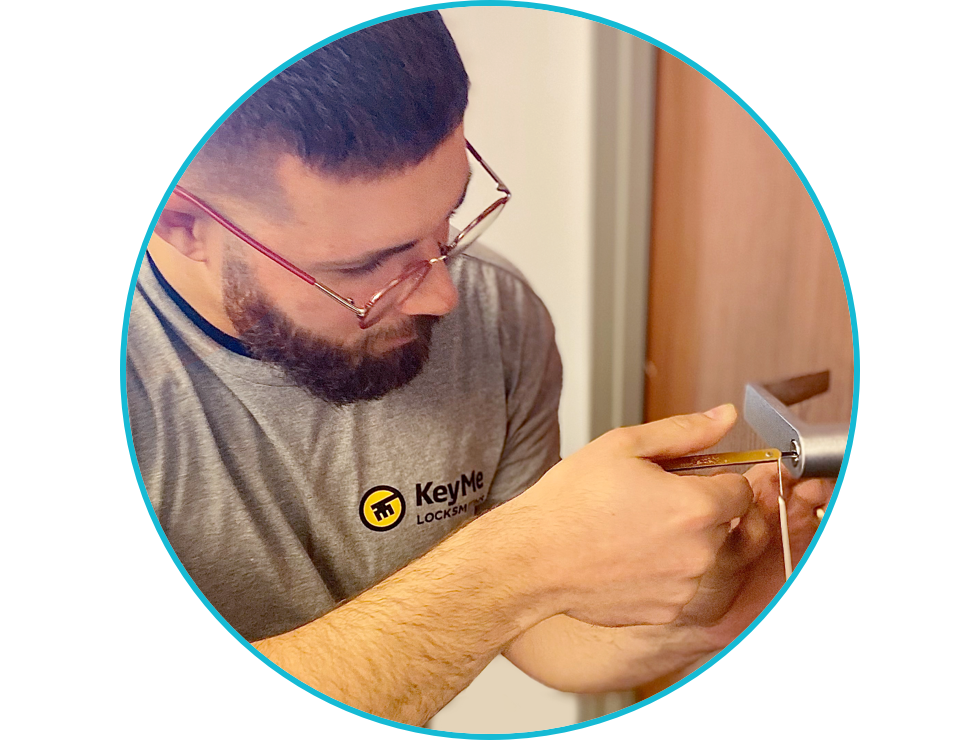
Need a Locksmith? We're here to help
Connect with a trusted local locksmith for fast, professional assistance when you need it most.
Contact Building Management Before Calling for Outside Service
For offices inside a commercial building, the tenant may not control every lock.
Building management may be responsible for:
- Exterior entrances
- Common-area doors
- Elevators
- Shared access-control systems
- Master keys
- Building-wide electronic credentials
- Certain suite-entry hardware
If the problem is at the main building entrance rather than your individual office, the property manager or security team may be the appropriate first contact.
This is especially important outside normal business hours, when access procedures may differ.
If the building can restore access using its own authorized system, outside locksmith service may not be necessary.
Determine Whether You Have an Office, Business, or Building Lockout
"Locked out of the office" can describe several different situations.
Individual Office Lockout
You can enter the building or suite, but not one private office.
The issue is likely limited to that door, key, or access credential.
Office Suite Lockout
You can enter the building but not your company's leased space.
The tenant's lock or access system may be involved.
Business Lockout
A storefront, restaurant, warehouse, professional office, or other business cannot be accessed by authorized staff.
This can affect both operations and security procedures.
Building Lockout
The shared building entrance is inaccessible.
In a multi-tenant property, building management or security is usually an important first contact because the problem may affect more than one tenant.
Understanding the scope prevents you from treating a building-wide access problem as if it were simply a bad office key.
What If You Lost the Office Key?
A lost office key creates two separate questions:
- How do you regain access?
- Should the missing key continue to work if someone finds it?
Those are not the same problem.
If the key is simply inside the office, the primary issue may be restoring authorized entry.
If the key is genuinely lost and its location is unknown, the business should consider whether the existing access arrangement still makes sense.
Possible follow-up options depend on the hardware and circumstances and can include:
- Creating an authorized replacement key
- Rekeying compatible locks
- Changing an affected credential
- Updating electronic access permissions
- Replacing damaged or unsuitable hardware
If the hardware itself is functioning and your goal is only to prevent an old mechanical key from working, rekeying may be more appropriate than replacing the entire lock.
What If the Office Key Was Stolen?
A stolen key should be treated differently from a key known to be locked safely inside the office.
The question is no longer only whether you can get back in.
Consider:
- What doors the key opens
- Whether it identifies the business or location
- Whether copies may exist
- Whether the key is part of a master-key system
- Whether it provides access to sensitive spaces
- Whether electronic credentials were stolen at the same time
Business management should evaluate whether that credential should remain valid.
For a conventional lock that remains in good condition, changing authorized access may be possible without replacing all of the hardware.
What If the Key Turns but the Office Door Still Will Not Open?
A working key does not automatically mean every other part of the door is functioning correctly.
Possible issues can involve:
- Latch
- Deadbolt
- Cylinder
- Strike
- Door alignment
- Hinges
- Internal lock mechanism
If a key turns but the door remains stuck, avoid using excessive force.
The issue may have shifted from a simple office lockout to a lock repair problem.
What If the Office Key Will Not Turn?
First determine whether the problem follows the key or the lock.
If possible, compare another authorized key.
Only One Key Has Trouble
The key may be:
- Worn
- Bent
- Damaged
- Poorly duplicated
Several Authorized Keys Have Trouble
The lock, cylinder, or door may deserve more attention.
Do not force a key that will not turn. A damaged key that breaks inside the cylinder can create an additional problem.
What If You Use an Access Card, Fob, or Smart Lock?
Not every office lockout involves a mechanical key.
Commercial access systems may use:
- Key cards
- Electronic fobs
- Mobile credentials
- PIN codes
- Smart locks
- Centralized access-control systems
If your credential stops working, first determine whether the problem affects only you or everyone.
Your Credential Fails but Others Work
Possible explanations include:
- Credential was disabled
- Permission changed
- Card or fob damage
- Incorrect access schedule
- Individual account issue
The company's access administrator or building manager may need to review the credential.
Multiple Credentials Fail
The problem may involve:
- Reader
- Controller
- Power
- Network
- Door hardware
- Building-wide access system
A locksmith should not automatically be the first call for every electronic-access failure.
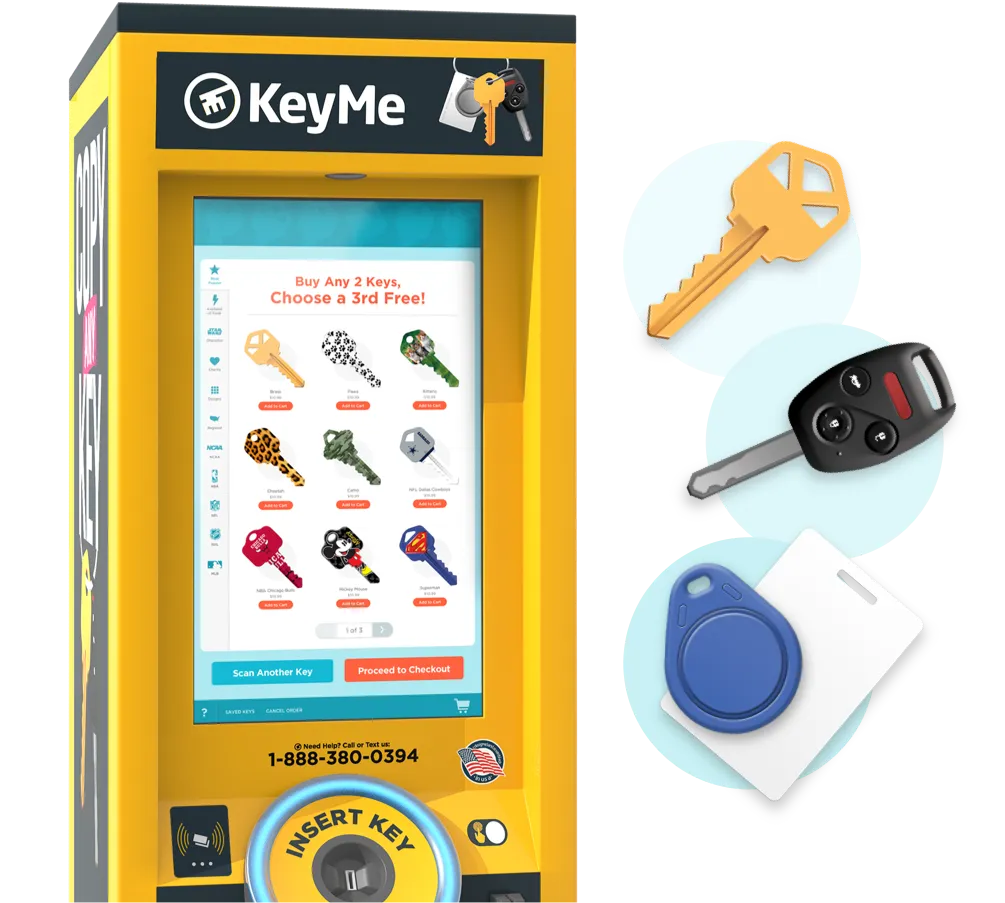
Find a KeyMe Kiosk Near You
Need a spare key fast? Find a KeyMe kiosk near you to copy many house, office, and eligible car keys in just minutes.
What If You're Locked Out After Business Hours?
After-hours office lockouts can involve an extra layer of building policy.
Before requesting service, check whether the property has:
- Security desk
- On-call building manager
- After-hours access procedure
- Tenant emergency contact
- Building engineer
- Authorized keyholder list
Some commercial properties limit when outside vendors can access or service doors.
Your company may also have its own procedures for after-hours entry.
If those options do not restore access and you are authorized to arrange locksmith service, an emergency locksmith may be appropriate.
What Authorization Might a Locksmith Need?
A locksmith may need reasonable confirmation that the person requesting entry is authorized to access the property.
In an office environment, useful information may include:
- Identification
- Company information
- Lease or occupancy information
- Business documentation
- Confirmation from an owner or manager
- Building-management authorization
The exact circumstances vary by property and situation.
If you are an employee rather than the owner or leaseholder, contacting your manager or building representative before arranging service can reduce confusion.
What If You're Locked Out of a Sensitive Area Inside the Office?
Some internal office spaces have additional access controls because they contain:
- Confidential records
- Technology infrastructure
- Cash
- Inventory
- Controlled equipment
- Employee information
- Company assets
Examples can include:
- Server rooms
- File rooms
- Executive offices
- Supply rooms
- Storage areas
Do not assume that having general access to the office automatically gives you authority to open every secured room.
Confirm authorization with the appropriate business representative before requesting access.
Should You Rekey the Office After a Lockout?
Not every lockout requires rekeying.
It becomes more relevant when the concern is who may possess a working key, rather than simply being unable to reach a key that remains accounted for.
Consider reviewing access if:
- Key is lost
- Key is stolen
- Former employee retained a copy
- Unknown copies may be circulating
- Access responsibilities have changed
If all keys remain accounted for and the lockout occurred because a key was left inside, rekeying may not address any actual problem.
The decision should be based on the access risk, not on the fact that a lockout occurred.
Should You Replace the Office Lock After a Lockout?
Usually not just because you were locked out.
Replacement is more relevant when:
- Lock is physically damaged
- Hardware no longer operates reliably
- Lock cannot be appropriately repaired
- Existing hardware no longer meets business needs
- Access system is being intentionally upgraded
If the lock itself works normally, replacing it simply because a key was inaccessible may be unnecessary.
What to Do if an Employee Is Locked Out
If you manage a business, having a clear internal procedure can prevent employees from improvising during a lockout.
A basic process can identify:
- Who employees should contact
- Who maintains spare keys
- Who can authorize locksmith service
- Who manages electronic credentials
- Who contacts the landlord or property manager
- How lost or stolen credentials are reported
This becomes especially useful in businesses with multiple managers, shifts, or locations.
How to Prevent Future Office Lockouts
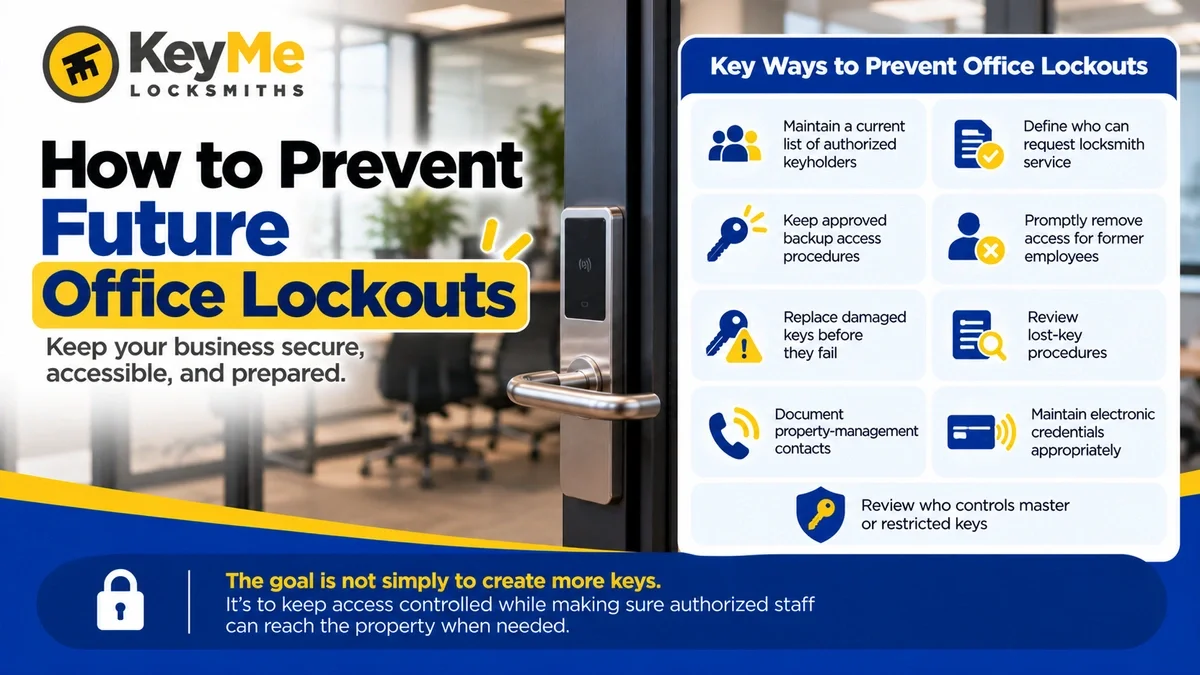
A business can reduce recurring access problems by reviewing how keys and credentials are managed.
Consider:
- Maintaining a current list of authorized keyholders
- Defining who has authority to request locksmith service
- Keeping approved backup access procedures
- Promptly removing access for former employees
- Replacing damaged keys before they fail
- Reviewing lost-key procedures
- Documenting property-management contacts
- Maintaining electronic credentials appropriately
- Reviewing who controls master or restricted keys
The goal is not simply to create more keys.
It is to make sure access remains controlled while authorized staff can reach the property when needed.
When to Call a Commercial Locksmith
A commercial locksmith may be appropriate when:
- No authorized spare key is available
- Building management cannot restore access
- Mechanical lock is malfunctioning
- Key is damaged or broken
- Business needs an authorized replacement key
- Lost-key situation requires an access change
- Commercial lock hardware needs repair or evaluation
KeyMe provides commercial locksmith services for business-related lock and access needs.
If you do need professional lockout assistance and want to understand what typically happens from the initial request through assessment and service, see What to Expect During Emergency Lockout Service.
Copy Your Key from Anywhere - Right from Your Phone
Skip the kiosk and copy your key from home. Upload a clear photo of an eligible house or car key, and KeyMe will create a precise duplicate and mail it directly to your door.
Locked Out of Your Office? The Bottom Line
If you're locked out of an office or business, start by determining who controls the door and who has authorized access.
Check:
- Other authorized keyholders
- Building management
- Property owner or landlord
- Security or facilities staff
- Electronic access administrator
Then identify whether the problem involves:
- Your individual key
- Office lock
- Suite entrance
- Shared building entrance
- Electronic credential
- Building-wide access system
If no authorized access option is available, a commercial locksmith may be able to help.
Once you're back inside, address the reason the lockout happened. A key left on a desk requires a different response from a stolen key, malfunctioning lock, disabled access card, or failed building system.
The goal is not only to regain access. It is to restore authorized, reliable, and appropriately controlled access to the business.
References
- Cybersecurity and Infrastructure Security Agency (CISA). Protective Measures Guide for U.S. Commercial Real Estate. Commercial-building security guidance covering employee credentials, sensitive-area access, credential records, and procedures for reporting, replacing, and deactivating lost or stolen credentials.
https://www.cisa.gov/sites/default/files/2023-01/protective_measures_for_u.s._commercial_real_estate.pdf - National Institute of Standards and Technology (NIST). Guide to Operational Technology Security, SP 800-82 Rev. 3. Defines physical access control systems and describes common access points and credentials, including doors, locks, PINs, key cards, key fobs, encrypted badges, and mobile credentials.
https://tsapps.nist.gov/publication/get_pdf.cfm?pub_id=956505 - Security Industry Association. Corporate Credential Design Guide. Industry guidance on securely managing physical and mobile access credentials throughout their lifecycle, including issuance, validation, governance, and retirement.
https://www.securityindustry.org/wp-content/uploads/2026/03/SIA_CorporateCredentialDesignGuide.pdf - National Institute of Standards and Technology (NIST). Guidelines for the Use of PIV Credentials in Facility Access, SP 800-116 Rev. 1. Technical guidance on identity credentials and physical access-control systems, including authentication of authorized users seeking facility access.
https://www.nist.gov/publications/guidelines-use-piv-credentials-facility-access - KeyMe Locksmiths. What to Expect During Emergency Lockout Service. Guidance on what happens after professional lockout assistance is requested, including authorization, assessment, and service.
https://key.me/article/what-to-expect-during-emergency-lockout-service - KeyMe Locksmiths. Rekeying vs. Replacing Your Locks. Explanation of the difference between changing which keys work and replacing existing lock hardware.
https://key.me/article/rekeying-vs-replacing-your-locks