
How to Open a Locked Door and When to Call a Pro
If you’re locked out, the safest approach is to first check for any alternative, safe entry points, avoid DIY methods that can damage your lock or door, and only attempt non-destructive techniques like checking for unlocked latches or using the built-in emergency release (for interior doors). For exterior doors or deadbolts, it’s best to call a professional locksmith, since forced entry can cost far more to repair than a standard lockout service. KeyMe Locksmiths provides 24/7 mobile lockout help for homes, apartments, and cars nationwide.
1. Stay Calm and Assess Your Situation
Before you try anything, take a moment to consider:
-
Is there another door that may be unlocked?
-
Do you have a valid access point such as a garage or patio door?
-
Is someone with a spare key nearby or on the way?
“Most lockouts can be resolved quickly if you slow down and check your surroundings first. Panic leads people to damage hardware that would’ve opened with a simple, safe method.” - KeyMe Locksmiths
2. Try Safe, Non-Destructive Methods First
Not all doors lock the same way. Here are safe techniques depending on lock type.
For Interior Bedroom or Bathroom Locks
Most interior knobs use privacy locks, not security locks. These can often be opened using:
-
A small flathead screwdriver
-
A paperclip
-
The built-in emergency release tool
How to open a privacy lock:
-
Look for a small hole on the outside knob.
-
Insert the tool straight into the hole.
-
Push until you feel resistance.
-
Apply gentle pressure until the lock pops open.
This method works because privacy locks are designed for accidental lock-ins.
For Simple Spring-Latch Locks (Exterior)
Spring-latch locks (the standard handle lock) secure the door with a slanted latch.
You can try:
-
Checking for slight misalignment
-
Testing the handle from different angles
-
Ensuring the deadbolt isn’t engaged
Avoid credit card tricks.
They can break the card, damage the frame, and don’t work on most modern latches.
For Deadbolts
Deadbolts cannot be slipped, pushed, or manipulated without the correct key.
If a deadbolt is engaged, skip DIY: it's time to call a locksmith.
Learn about residential lockout services
3. Look for Another Safe Entry Point
Walk around your home and check:
-
Back doors
-
Side doors
-
Garage entry
-
Basement doors
-
Windows that may already be open (never break one!)
Never force a window or pry a door.
Not only is this dangerous, it often causes more damage than a standard lockout service.
4. Avoid Methods That Damage Doors or Locks
Many online “hacks” do more harm than good.
Avoid:
-
Picking locks without proper tools
-
Using butter knives or screwdrivers
-
Drilling the lock
-
Trying to remove the door from its hinges
-
Kicking or prying the door
“We repair a lot of doors after DIY attempts. A lockout becomes a $600 hardware replacement. If you’re unsure, don’t force it, call a professional.” - KeyMe Locksmiths
5. When You Have a Spare Key, Use It Wisely
If you have:
-
A spare key inside your car
-
A hidden (but secure) spare in the home
-
A friend, family member, or neighbor with a backup
Now’s the time to use it. If you don’t have a spare key, consider making one after the situation is resolved.
Find a KeyMe Locksmiths kiosk near you
6. Car Lockouts: Do NOT Attempt DIY Entry
Car locks and doors include sensitive components like:
-
Airbag sensors
-
Weather seals
-
Wiring harnesses
-
Electronic lock actuators
DIY attempts, especially wedge tools or coat hangers, can cause expensive damage or trigger alarms.
Skip DIY and call a professional for car lockouts.
Explore automotive lockout services
7. When to Call a Professional Locksmith
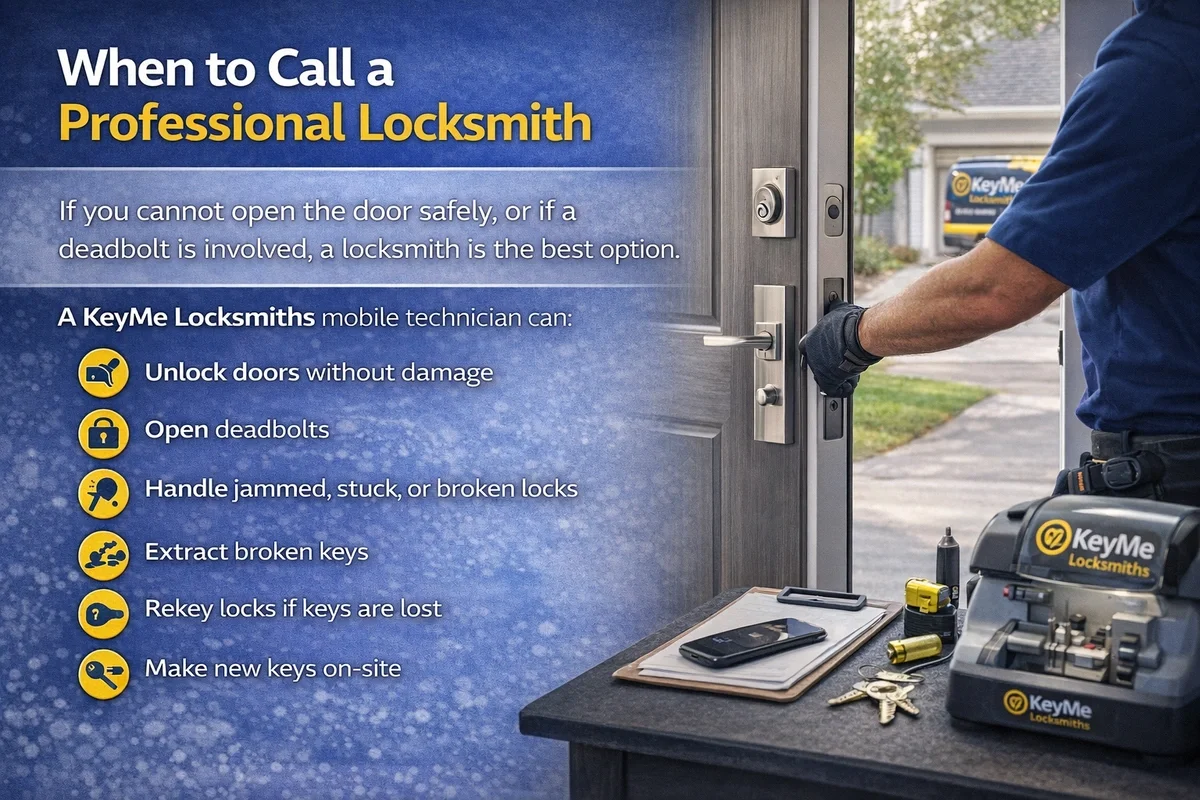
If you cannot open the door safely, or if a deadbolt is involved, a locksmith is the best option.
A KeyMe Locksmiths mobile technician can:
-
Unlock doors without damage
-
Open deadbolts
-
Handle jammed, stuck, or broken locks
-
Extract broken keys
-
Rekey locks if keys are lost
-
Make new keys on-site
“With the right tools, most lockouts take under 10 minutes. The goal is always zero damage and maximum security.” - KeyMe Locksmiths
Request 24/7 mobile lockout help
8. How to Prevent Future Lockouts
Once you're safely inside, take simple steps to avoid future lockouts:
Make spare keys
Keep copies stored securely indoors or with trusted neighbors.
Install a smart lock
Keypad or Bluetooth models eliminate the risk of losing keys.
Fix sticky locks
Hard-to-turn locks are often warning signs of failure.
Rekey locks if your keys were lost or stolen
Improves security while keeping existing hardware.
Explore home locksmith services
FAQs
Can I pick my own lock?
Not recommended, most DIY attempts damage the cylinder.
How long will a locksmith take to arrive?
Response times vary by location, but KeyMe Locksmiths provides fast, 24/7 nationwide service.
Can a locksmith open a deadbolt?
Yes. Professionals have dedicated tools for non-destructive deadbolt entry.
Will a locksmith damage my door?
No, professionals use non-destructive techniques whenever possible.
Final Thoughts: Safe Solutions Beat Force Every Time
Opening a locked door is possible using simple, non-destructive techniques—if it’s an interior door or a latch-style lock. For deadbolts, cars, or any situation where damage is likely, calling a professional locksmith is the safest and most cost-effective solution.
Need help right now? https://key.me/locksmiths
Make a spare key for next time: https://key.me/kiosks
About KeyMe Locksmiths
KeyMe Locksmiths is a leading provider of local locksmith services and key copy kiosks across 50 states and the District of Columbia. Proud to serve over 5 million customers, KeyMe Locksmiths cuts over 10 million keys annually. With more than 8,000 self-service kiosks in major retailers, an e-commerce platform delivering over 10,000 keys weekly, and a nationwide locksmith network, KeyMe Locksmiths provides fast, reliable solutions for residential, commercial, and vehicle needs. KeyMe Locksmiths is committed to delivering exceptional service backed by a 100% money-back guarantee. KeyMe Locksmiths also operates one of the nation’s leading retail media networks, connecting consumers to other brands seeking to advertise in-store and delivering over 2B monthly impressions.