

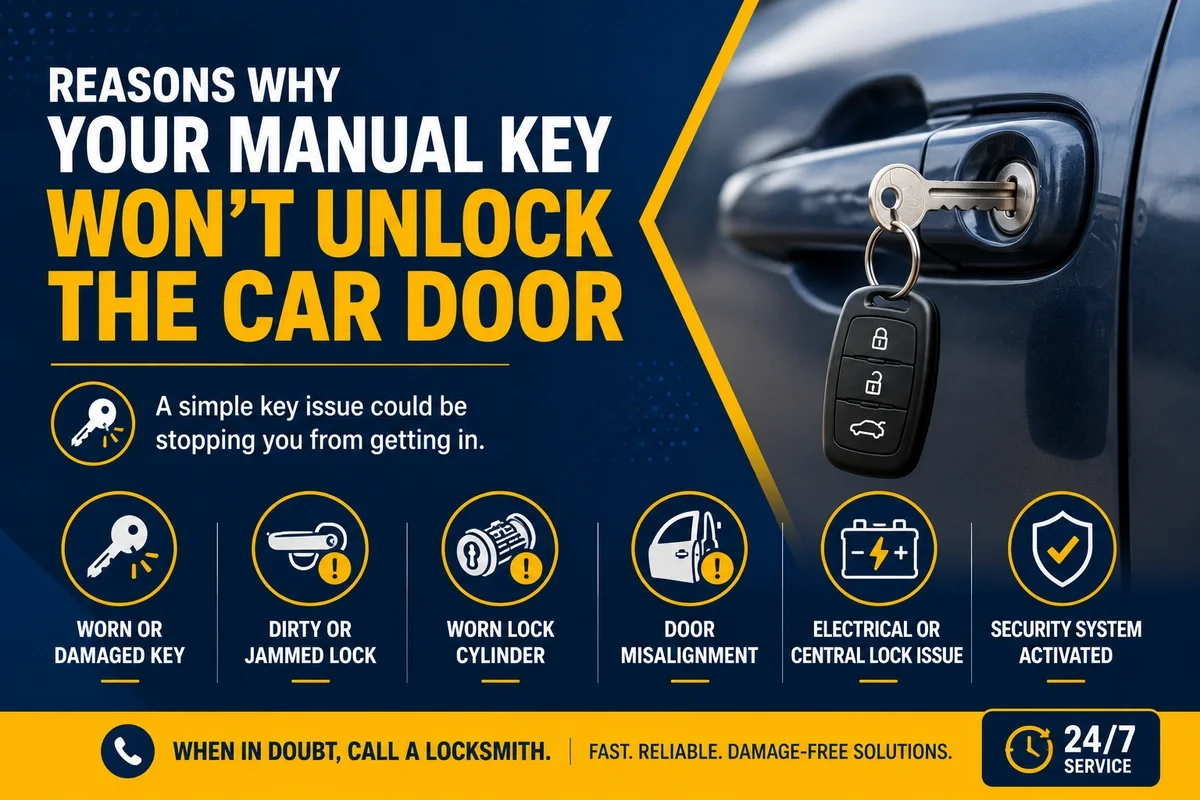
If your manual car key won't unlock the door, the problem is usually caused by a worn key, a damaged or dirty lock cylinder, a bent key, internal lock wear, or a mechanical issue inside the door. Unlike modern smart keys or key fobs, manual keys rely entirely on precise physical contact between the cuts on the key and the lock's internal components. Even minor wear or debris can prevent the lock from operating correctly.
Fortunately, many manual lock problems can be diagnosed without special tools. Understanding how your lock works—and recognizing the signs of common failures—can help you determine whether a simple fix may solve the problem or whether it's time to call a professional automotive locksmith.
Summary
- Manual car door locks rely entirely on mechanical components, making them susceptible to wear, dirt, corrosion, and physical damage over time.
- A worn key, damaged lock cylinder, frozen lock, or bent key are among the most common reasons a manual key won't unlock the door.
- Avoid forcing the key, as excessive pressure can damage the lock or cause the key to break inside the cylinder.
- Simple maintenance, such as cleaning and lubricating the lock with the proper products, may resolve minor issues.
- If the problem persists or affects multiple locks, a professional automotive locksmith can diagnose whether the issue lies with the key, lock cylinder, door hardware, or another mechanical component.
How Manual Car Door Locks Work
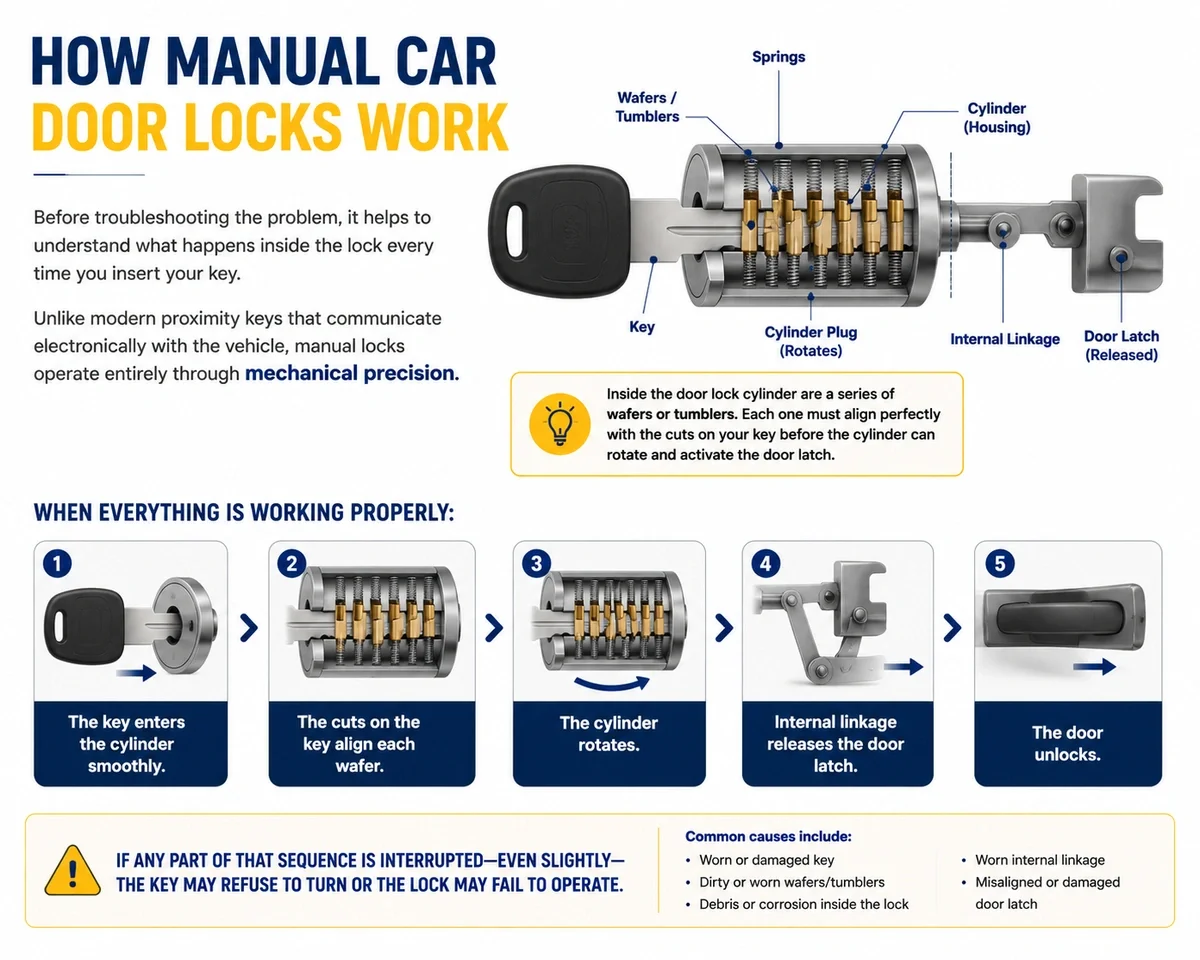
Before troubleshooting the problem, it helps to understand what happens inside the lock every time you insert your key.
Unlike modern proximity keys that communicate electronically with the vehicle, manual locks operate entirely through mechanical precision.
Inside the door lock cylinder are a series of wafers or tumblers. Each one must align perfectly with the cuts on your key before the cylinder can rotate and activate the door latch.
When everything is working properly:
- The key enters the cylinder smoothly.
- The cuts on the key align each wafer.
- The cylinder rotates.
- Internal linkage releases the door latch.
- The door unlocks.
If any part of that sequence is interrupted—even slightly—the key may refuse to turn or the lock may fail to operate.
"Manual locks are surprisingly precise. A fraction of a millimeter of wear on the key or inside the cylinder can be enough to prevent the wafers from aligning correctly, even though the key still appears perfectly normal." — KeyMe Locksmiths
Why Choose KeyMe Locksmiths for Automotive Lock Problems?
When a manual key stops working, the problem isn't always obvious. It could be the key, the lock cylinder, internal door hardware, or years of accumulated wear.
KeyMe Locksmiths helps drivers diagnose and resolve automotive lock issues through experienced mobile automotive locksmiths who work on a wide variety of domestic, Asian, and European vehicles.
Depending on the situation, services may include:
- Vehicle lockout assistance
- Key replacement
- Broken key extraction
- Lock cylinder repair
- Lock replacement
- Automotive key cutting
- Spare key creation
For supported mechanical keys, drivers can also order replacements online using KeyMe's online key copying technology or create duplicate keys before problems occur. Retail-based car key van services are also available at select locations for supported vehicles.
"One of the biggest misconceptions is that every lock problem requires replacing the key. In reality, accurate diagnosis is the most important part of the repair process because several different components can produce nearly identical symptoms." — KeyMe Locksmiths
Need a Locksmith? We're here to help
Connect with a trusted local locksmith for fast, professional assistance when you need it most.
The Most Common Reasons Your Manual Key Won't Unlock the Door
While every vehicle is different, most manual lock problems fall into a handful of categories.
1. Your Key Has Worn Down
The edges of a mechanical key slowly wear every time it's inserted into the lock.
Years of daily use can round off the cuts that the lock depends on for proper alignment.
Common signs include:
- The key feels loose.
- It requires extra wiggling.
- It works occasionally but not consistently.
- A spare key works better.
Key wear is gradual, which means many drivers don't notice the problem until the key suddenly stops working.
2. The Lock Cylinder Has Worn Internally
Just like the key, the lock itself experiences wear.
Thousands of insertions gradually wear:
- Wafers
- Springs
- Cylinder housing
- Internal lubrication
Eventually the internal components no longer align correctly—even with a perfectly good key.
Unlike a worn key, replacing the key alone won't solve this problem.
3. Dirt, Dust, or Debris Has Built Up Inside the Lock
Vehicle door locks are constantly exposed to:
- Rain
- Dust
- Road salt
- Sand
- Dirt
- Metal particles
Over time these contaminants interfere with normal lock operation.
The result may include:
- Difficulty inserting the key
- Rough turning
- Partial rotation
- Complete lock failure
In many cases, careful cleaning and proper lock lubrication restore smooth operation.
4. Cold Weather Has Frozen the Lock
If you live in an area with freezing temperatures, moisture inside the lock cylinder can freeze overnight, preventing the wafers from moving freely.
Common signs include:
- The key inserts normally but won't turn.
- The lock feels completely seized.
- The problem only occurs during cold weather.
- Other doors may still unlock normally.
Avoid pouring hot water on the lock, as it can refreeze quickly and potentially worsen the problem. Instead, use a lock de-icer or move the vehicle to a warmer environment if possible.
Once the lock is functioning again, consider applying a lock-safe lubricant to help displace moisture and improve long-term operation.
5. Your Key Is Bent or Damaged
Manual keys are durable, but they're not indestructible.
Keys carried in pockets, overloaded keychains, or dropped on hard surfaces can gradually bend or develop small imperfections that aren't immediately visible.
Even a slightly bent key may:
- Insert unevenly
- Catch inside the cylinder
- Rotate inconsistently
- Fail to align the internal wafers
Look closely for:
- Uneven edges
- Visible bends
- Cracks near the head of the key
- Excessive wear on the cuts
If your key appears damaged, avoid attempting to straighten it repeatedly. Metal fatigue can weaken the key and increase the risk of it breaking inside the lock.
"Drivers often focus on whether the key fits, but the real question is whether it still matches the lock with the precision it had when it was new. Even minor distortion can affect how the lock responds." — KeyMe Locksmiths
6. The Door Latch or Linkage Has Failed
Sometimes the lock cylinder operates normally, but the door still won't unlock.
In these situations, the problem may lie inside the door rather than inside the lock.
Modern door assemblies contain several interconnected mechanical components, including:
- Lock rods
- Linkage clips
- Door latch mechanisms
- Interior lock actuators
- Handle assemblies
If one of these components becomes disconnected, worn, or damaged, turning the key may no longer release the latch.
Common symptoms include:
- The key turns normally, but the door stays locked.
- Interior door handles feel loose.
- Manual lock knobs don't move correctly.
- Both inside and outside handles stop functioning properly.
Diagnosing these problems typically requires removing the interior door panel for inspection.
7. Previous Damage Has Affected the Lock
Vehicle door locks sometimes sustain damage from:
- Attempted theft
- Previous break-ins
- Accidental impacts
- Improper repairs
- Forcing the lock during a previous malfunction
Even if the damage isn't visible from the outside, internal components may have shifted enough to interfere with normal operation.
If your lock stopped working shortly after one of these events, professional inspection is recommended before additional damage occurs.
8. You're Using the Wrong Replacement Key
Replacement keys are often purchased online or duplicated from an existing key.
Unfortunately, not every replacement is an exact match.
Problems may occur if:
- The wrong key blank was selected.
- The original key was already worn before being copied.
- The duplicate wasn't cut accurately.
- The replacement key isn't designed for your specific vehicle.
Copying a worn key often duplicates the wear itself, meaning the new key may inherit the same problems as the original.
If you're replacing an aging key, it's generally preferable to create the replacement using the manufacturer's original specifications whenever possible instead of duplicating worn cuts.
9. The Lock Hasn't Been Maintained
Vehicle door locks rarely receive routine maintenance.
Over time, old lubricant, dust, moisture, and normal wear can increase friction inside the cylinder.
Periodic maintenance may help extend lock life by:
- Removing contaminants
- Reducing internal wear
- Improving key movement
- Protecting against corrosion
Only lubricants designed specifically for locks should be used. Oil-based household products may attract additional dirt over time and are generally not recommended.
10. The Problem May Not Be the Door Lock at All
Occasionally, what appears to be a faulty lock is actually another issue affecting vehicle access.
Examples include:
- A damaged exterior door handle
- A disconnected linkage rod
- A misaligned door
- Weather stripping interfering with the latch
- Previous collision repairs affecting door alignment
These situations can closely resemble lock failures even though the lock cylinder itself is functioning correctly.
How to Diagnose the Problem Safely
Before calling a locksmith, there are several simple checks you can perform without risking damage to the vehicle.
Try Your Spare Key
If you have a spare key, test it first.
- If the spare works normally, the original key is likely worn or damaged.
- If neither key works, the issue is more likely inside the lock or door.
This simple comparison often provides valuable clues.
Test Every Door
Many vehicles have separate lock cylinders for different doors.
Check whether:
- Only the driver's door is affected.
- The passenger door works normally.
- The trunk lock still functions.
If only one lock has failed, the problem is usually isolated to that particular door.
Observe What the Key Is Doing
Pay attention to the exact symptoms.
Does the key:
- Refuse to insert?
- Insert but not turn?
- Turn halfway?
- Turn fully without unlocking the door?
- Feel unusually loose?
Each symptom points toward a different mechanical problem.
Inspect the Key Carefully
Good lighting can reveal problems that aren't immediately obvious.
Check for:
- Rounded edges
- Cracks
- Bending
- Heavy wear
- Burrs or damage
Even small defects may affect how the key interacts with the lock.
"The symptoms are often the best diagnostic tool. Paying attention to exactly how the key behaves can help narrow the problem before any repairs begin." — KeyMe Locksmiths
What Not to Do
When a key won't unlock the door, frustration can lead to mistakes that create even bigger problems.
Avoid:
- Forcing the key
- Twisting the key aggressively
- Hitting the lock
- Spraying household oils into the cylinder
- Attempting to drill the lock
- Continuing to use a visibly bent key
These actions can permanently damage the lock cylinder or cause the key to snap, turning a relatively minor repair into a more complicated one.
When Should You Call a Locksmith?
Some manual key problems have simple solutions, while others require specialized tools and experience to diagnose safely. If basic troubleshooting doesn't restore normal operation, it's usually best to stop forcing the lock and have it inspected.
Consider contacting a professional automotive locksmith if:
- The key won't turn after basic troubleshooting.
- The key feels like it's binding inside the lock.
- The lock turns but doesn't unlock the door.
- A key breaks inside the lock cylinder.
- Multiple locks on the vehicle stop working.
- The lock has been damaged during an attempted theft or break-in.
- You've recently replaced the key but the problem continues.
A locksmith can determine whether the issue involves the key, the lock cylinder, internal door linkage, or another mechanical component without unnecessary replacement of parts.
"The goal isn't simply to make the key work again—it's to identify why it stopped working in the first place. Accurate diagnosis prevents repeat failures and unnecessary repairs." — KeyMe Locksmiths
Find a KeyMe Kiosk Near You
Need a spare key fast? Find a KeyMe kiosk near you to copy many house, office, and eligible car keys in just minutes.
Can the Lock Be Repaired or Does It Need to Be Replaced?
Not every faulty lock needs to be replaced.
In many cases, the existing lock can be repaired, cleaned, or serviced if the internal components remain in good condition.
Repair May Be Possible If:
- Dirt or debris is interfering with operation.
- Old lubricant has hardened inside the cylinder.
- Internal components need cleaning.
- Minor wear is affecting smooth operation.
- The key is worn but the lock is still in good condition.
Replacement May Be Recommended If:
- The lock cylinder has severe internal wear.
- Components have broken or become damaged.
- The lock has been compromised during a break-in.
- Corrosion has caused extensive internal damage.
- The lock can no longer be repaired reliably.
A professional inspection helps determine which solution provides the best long-term reliability.
Should You Replace the Key, the Lock, or Both?
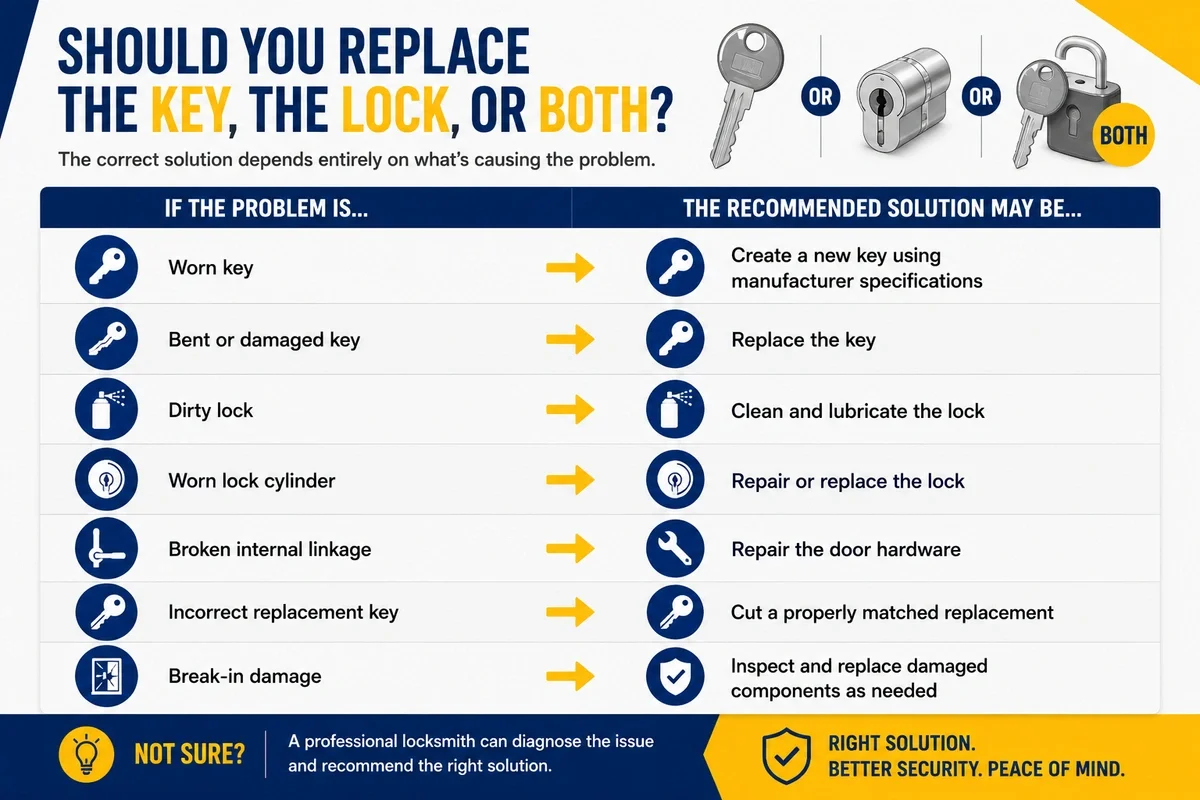
Replacing the wrong component may temporarily improve the symptoms without addressing the underlying issue.
How to Help Prevent Future Lock Problems
While normal wear can't be eliminated entirely, regular care can extend the life of both your keys and your vehicle's locks.
Keep Your Keys in Good Condition
Inspect your keys occasionally for:
- Bent blades
- Cracks
- Excessive wear
- Rough edges
Replacing a worn key before it fails can reduce unnecessary wear on the lock cylinder.
Lubricate Locks Periodically
Vehicle door locks benefit from occasional maintenance using products specifically designed for lock cylinders.
Routine lubrication can help:
- Reduce friction
- Protect against corrosion
- Flush out contaminants
- Improve smooth operation
Always use a lock-safe lubricant recommended for automotive lock cylinders.
Avoid Heavy Keychains
Large keychains place additional stress on keys during everyday use.
Over time, this extra leverage can contribute to:
- Bent keys
- Accelerated wear
- Increased strain on the ignition and lock cylinders
Keeping only essential keys together can reduce unnecessary stress.
Use Every Lock Occasionally
Many drivers exclusively use their remote entry system, leaving the mechanical door lock unused for months—or even years.
Occasionally inserting and turning the manual key helps:
- Keep internal components moving freely
- Distribute lubricant
- Reveal developing problems before an emergency
This simple habit can be especially valuable if your vehicle's key fob battery fails unexpectedly.
Make a Spare Before You Need One
If your only working key shows signs of wear, creating a replacement before it fails is often easier than waiting until you're locked out.
KeyMe Locksmiths offers several options for supported keys, including:
- Self-service key duplication kiosks for many mechanical keys
- Online key copying using mobile key scanning technology
- Mobile automotive locksmith services
- Car key van services at select retail locations for supported vehicle keys
Having a reliable spare can also help determine whether future problems originate with the key or the lock itself.
Copy Your Key from Anywhere - Right from Your Phone
Skip the kiosk and copy your key from home. Upload a clear photo of an eligible house or car key, and KeyMe will create a precise duplicate and mail it directly to your door.

Keep Your Manual Car Lock Working Reliably
Manual car door locks are remarkably durable, but like any mechanical system, they experience wear over time. A key that won't unlock the door is often the result of gradual changes rather than sudden failure, making early diagnosis the best way to avoid becoming locked out.
By understanding how manual locks work, recognizing the warning signs of wear, and avoiding common mistakes like forcing the key, you can often prevent a minor issue from becoming a more expensive repair.
If your key continues to stick, bind, or refuses to unlock the door after basic troubleshooting, a qualified automotive locksmith can identify the cause and recommend the most appropriate solution—whether that's cleaning the lock, repairing the cylinder, replacing a worn key, or addressing another mechanical issue.
References
- Society of Automotive Engineers (SAE International). Automotive Locking Systems and Vehicle Access Technologies. https://www.sae.org/ (Supports discussion of vehicle lock mechanisms and automotive security system design.)
- National Highway Traffic Safety Administration (NHTSA). Vehicle Theft Prevention. https://www.nhtsa.gov/vehicle-safety/theft-prevention (Supports information about vehicle security systems and mechanical lock function.)
- AAA Exchange. Vehicle Maintenance and Lock Care Resources. https://exchange.aaa.com/ (Supports general vehicle maintenance practices relevant to lock and key care.)
- KeyMe Locksmiths service information for automotive locksmith services, key duplication, online key ordering, and retail-based car key vans.