


Summary
- Every property should have a documented procedure for handling tenant lockouts.
- Always verify a resident's identity and authorization before granting access.
- Locksmiths can assist with lockouts, damaged locks, lost keys, and rekeying when appropriate.
- Smart locks and electronic access systems require their own lockout procedures and credential management.
- Clear communication with residents helps reduce confusion and improve response during lockout situations.
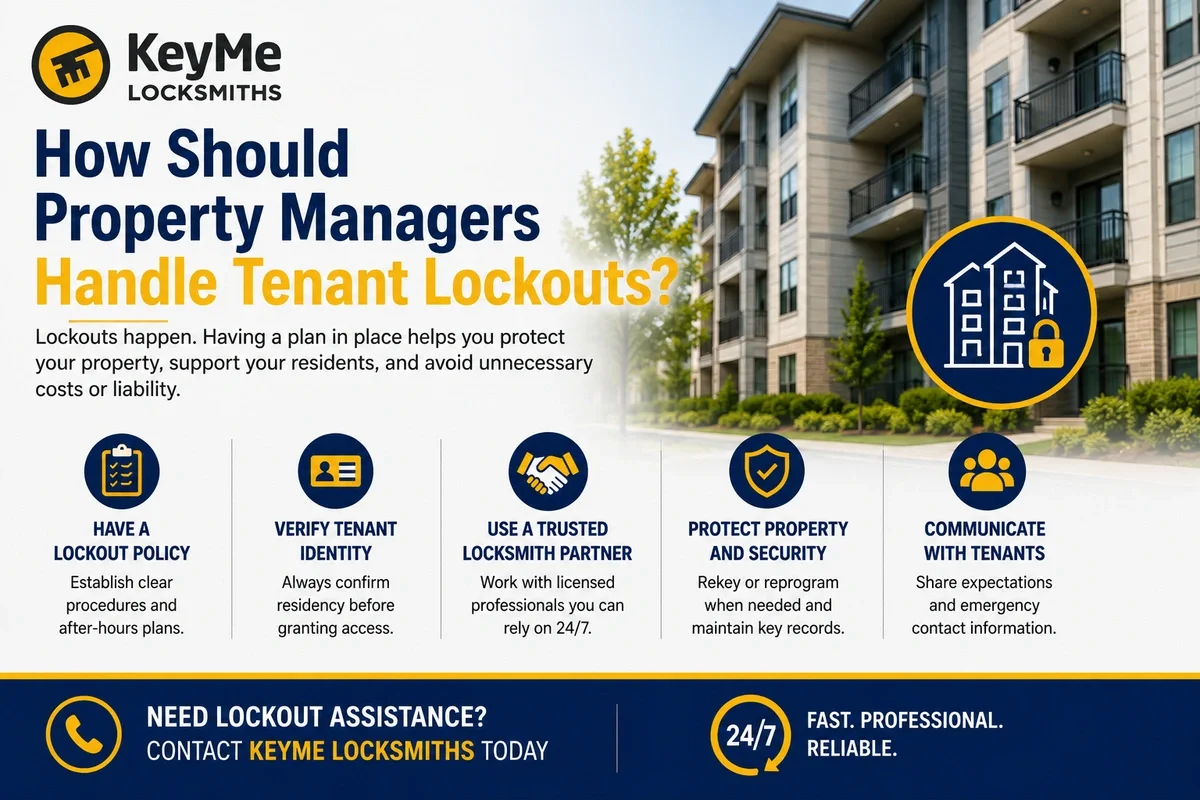
Tenant lockouts are one of the most common situations property managers face. Whether a resident accidentally leaves their keys inside, misplaces them, or experiences a malfunctioning lock or smart lock, responding with a clear, consistent process helps protect both building security and the resident's safety. Establishing lockout procedures before an emergency occurs allows property managers to respond efficiently while verifying authorization and maintaining control over property access.
Why Choose KeyMe Locksmiths?
Tenant lockouts can happen at any time, making it valuable for property managers to have a trusted locksmith partner before an emergency arises. KeyMe Locksmiths connects property managers with experienced locksmith professionals who can assist with residential and commercial lockouts, lock repair, rekeying, lock replacement, key duplication, and smart lock support.
Available services may include:
- Residential lockout assistance
- Lock rekeying
- Lock replacement
- Key duplication
- Smart lock services
- Commercial locksmith services
- Master key system support
Property managers can also take advantage of KeyMe's nationwide locksmith network, along with online key copying for eligible key duplication and Car Key Vans at select retail locations for supported automotive key services.
"A tenant lockout is more than a customer service issue—it's a security decision. The goal is to restore access for the right resident while protecting everyone else in the building. Clear policies, identity verification, and a trusted locksmith partner help property managers respond consistently without compromising security." — KeyMe Locksmiths
Need a Locksmith? We're here to help
Connect with a trusted local locksmith for fast, professional assistance when you need it most.
Why Every Property Needs a Lockout Policy
Even well-managed communities experience tenant lockouts.
Residents may:
- Leave keys inside the unit
- Lose their keys while away
- Experience a broken key
- Forget access codes
- Have a smart lock battery fail
- Encounter a malfunctioning lock
Without established procedures, staff may respond differently from one incident to another, creating confusion and increasing security risks.
A written policy helps ensure every resident receives consistent treatment.
Verify Identity Before Providing Access
Security should always come before convenience.
Before unlocking a unit or issuing a replacement key, property managers should verify that the individual requesting access is authorized to enter the property.
Verification may include:
- Government-issued identification
- Lease records
- Resident account information
- Confirmation from on-site management
- Other established property procedures
If a resident cannot immediately verify their identity, staff should follow the property's documented policies before granting access.
Know When to Call a Locksmith
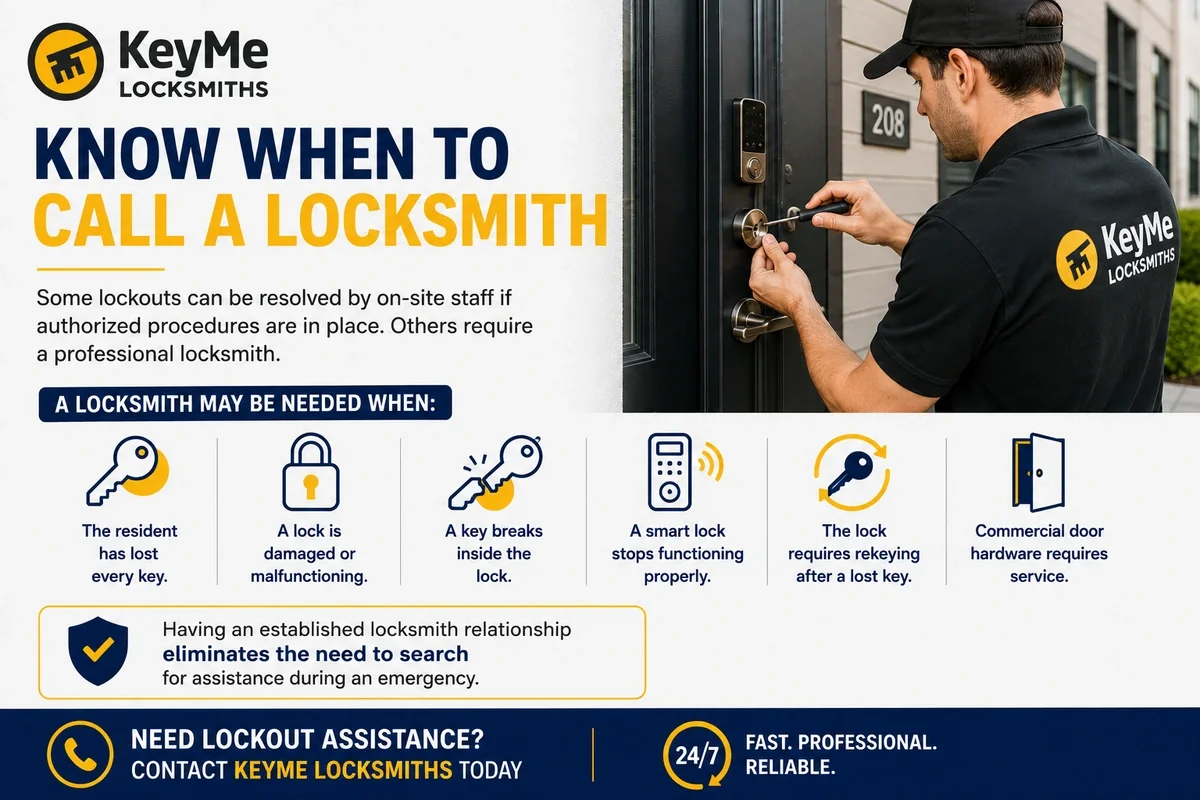
Some lockouts can be resolved by on-site staff if authorized procedures are in place. Others require a professional locksmith.
A locksmith may be needed when:
- The resident has lost every key.
- A lock is damaged or malfunctioning.
- A key breaks inside the lock.
- A smart lock stops functioning properly.
- The lock requires rekeying after a lost key.
- Commercial door hardware requires service.
Having an established locksmith relationship eliminates the need to search for assistance during an emergency.
Lost Keys vs. Locked-In Keys
Not every lockout requires the same response.
Keys Locked Inside the Unit
If the keys are simply locked inside and security has not been compromised, restoring access may be the only service required.
Lost or Stolen Keys
If the resident cannot account for the missing keys, property managers should evaluate whether rekeying the unit is appropriate before issuing new keys.
A lost key presents different security considerations than a key temporarily locked inside the home.
Find a KeyMe Kiosk Near You
Need a spare key fast? Find a KeyMe kiosk near you to copy many house, office, and eligible car keys in just minutes.
Smart Lock Considerations
Many apartment communities now use electronic locks instead of traditional keys.
When responding to a smart lock issue, property managers may need to:
- Confirm the resident's credentials
- Reset temporary access codes
- Update digital permissions
- Replace batteries
- Verify mobile app access
- Inspect the lock for hardware issues
Every property should have procedures for both electronic and mechanical access failures.
Establish Clear Resident Communication
Residents should know exactly what to do if they're locked out.
Many property managers include lockout instructions in:
- Lease agreements
- Resident handbooks
- Community websites
- Move-in packets
- Resident portals
Providing clear instructions ahead of time reduces confusion and helps residents know who to contact after hours.
Prepare for After-Hours Lockouts
Lockouts don't always happen during business hours.
Property managers should establish procedures for:
- Nights
- Weekends
- Holidays
- Emergency maintenance situations
Knowing who responds after hours—and when a locksmith should be contacted—helps avoid unnecessary delays.
Document Every Lockout
Maintaining records supports both customer service and security.
Documentation may include:
- Date and time
- Unit number
- Resident verification
- Staff involved
- Locksmith services performed
- Rekeying decisions
- Replacement keys issued
Consistent documentation helps identify recurring issues and supports future property management decisions.
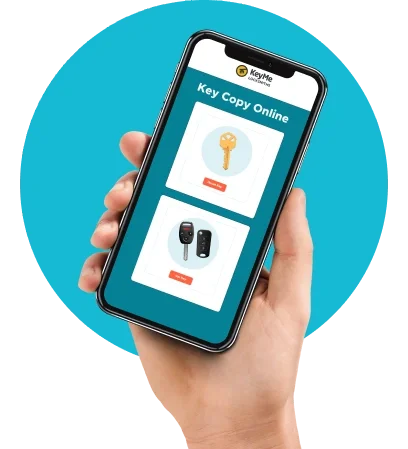
Copy Your Key from Anywhere - Right from Your Phone
Skip the kiosk and copy your key from home. Upload a clear photo of an eligible house or car key, and KeyMe will create a precise duplicate and mail it directly to your door.
Preventing Future Lockouts
While some lockouts are unavoidable, property managers can encourage habits that reduce their frequency.
Suggestions include:
- Creating spare keys where appropriate
- Replacing worn keys
- Updating smart lock batteries on schedule
- Keeping resident contact information current
- Providing clear lockout procedures at move-in
Preventive measures often reduce emergency maintenance requests over time.
Common Mistakes to Avoid
During a tenant lockout, avoid:
- Granting access without verifying identity
- Sharing master keys with unauthorized individuals
- Ignoring reports of lost keys
- Delaying lock repairs after repeated failures
- Overlooking documentation after the incident
Strong procedures help balance convenience with building security.
A Consistent Lockout Policy Benefits Everyone
Tenant lockouts are inevitable, but confusion doesn't have to be. A documented response plan helps property managers verify resident identity, coordinate locksmith services when needed, protect building security, and restore access efficiently.
By working with a trusted locksmith partner and establishing clear procedures before an emergency occurs, property managers can provide a better resident experience while maintaining consistent security standards across every property they manage.
References
- National Apartment Association (NAA). Property Management Resources. https://naahq.org/
- Institute of Real Estate Management (IREM). Property Management Best Practices. https://www.irem.org/
- Associated Locksmiths of America (ALOA). Consumer Resources. https://www.aloa.org/
- KeyMe Locksmiths service information for residential and commercial locksmith services, mobile key scanning, and Car Key Vans.