

Preventive lock maintenance can help property managers identify developing door and lock issues before they turn into avoidable access-related maintenance requests. The most effective approach is not a separate "lock maintenance day." It is a documented program that incorporates door hardware into inspections, unit turns, common-area maintenance, electronic-access management, and maintenance recordkeeping already happening across the property.
For multifamily operators, that makes lock maintenance an operations issue, not simply a response to broken hardware.
The National Apartment Association (NAA) incorporates systematic property inspections and preventive maintenance into professional apartment-management practices. The Institute of Real Estate Management (IREM) likewise emphasizes inspections, preventive maintenance, operating procedures, and recordkeeping as components of professional property management.
Locks and door hardware can be managed within that same framework.
Summary
- Build lock and door-hardware checks into existing property inspections rather than waiting for access problems.
- Create different maintenance priorities for unit doors, common-area entrances, staff areas, and electronic-access openings.
- Use unit turnover as a scheduled checkpoint for locks, keys, door operation, and access permissions.
- Follow manufacturer procedures for smart-lock batteries, credentials, software, and mechanical backup access.
- Treat resident maintenance requests as data that can reveal property-wide patterns.
- Record repairs, rekeying, battery changes, hardware replacement, and repeat service calls by opening.
- Establish clear rules for what onsite maintenance handles and what should be escalated to a locksmith.
- Review repeated repairs when making lock repair versus lock replacement decisions.
- Use a separate troubleshooting resource when staff need to diagnose a particular symptom, such as a sticking key or misaligned deadbolt.
Why Locks Belong in the Preventive Maintenance Program
Locks are small compared with HVAC systems, plumbing, roofing, and other major property components.
Operationally, however, they are used constantly.
Apartment properties may have locking hardware on:
- Unit entrances
- Main entrances
- Package rooms
- Leasing offices
- Fitness centers
- Pool or amenity areas
- Maintenance rooms
- Storage spaces
- Parking facilities
- Staff areas
NAA's apartment-management framework emphasizes systematic physical inspections and preventive maintenance as part of protecting property condition and supporting operations.
IREM similarly treats routine inspection, preventive maintenance, maintenance-program oversight, and recordkeeping as property-management responsibilities.
The practical opportunity is to incorporate access hardware into systems the property already uses.
"Preventive lock maintenance works best when it becomes part of normal property operations. The goal isn't to create another complicated inspection program. It's to make sure doors and access hardware aren't overlooked until someone can no longer use them." - KeyMe Locksmiths
Need a Locksmith? We're here to help
Connect with a trusted local locksmith for fast, professional assistance when you need it most.
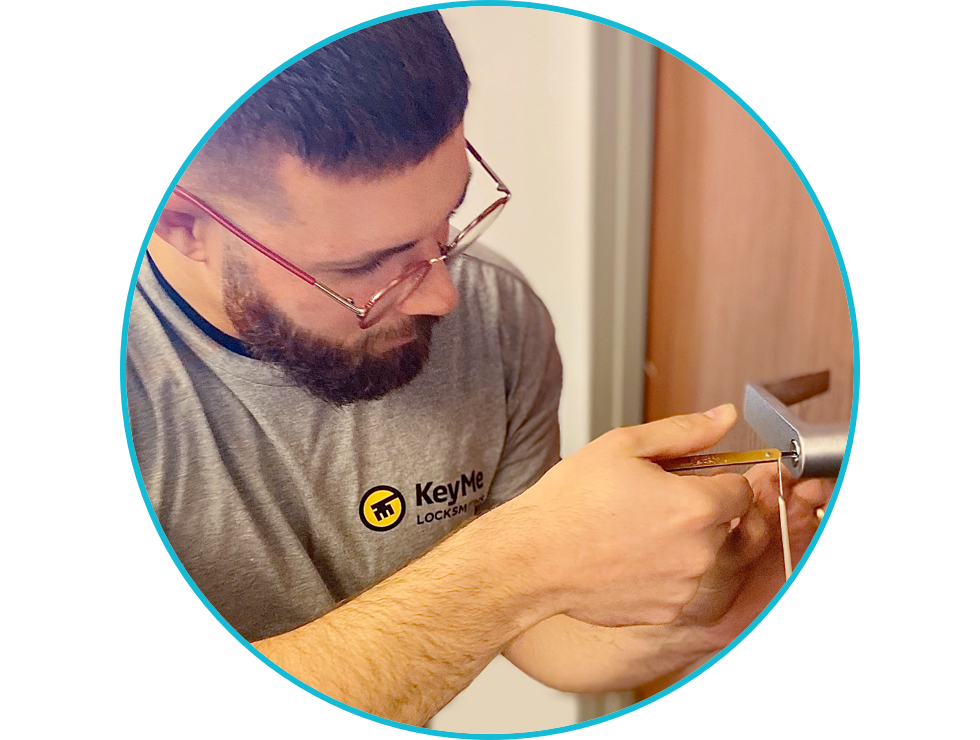
Build the Program Around Types of Openings
Not every door needs the same maintenance plan.
A better approach is to classify openings based on use and operational importance.
Unit Entry Doors
These require coordination with resident access and provide natural inspection opportunities during turnover.
Maintenance planning may include:
- Scheduled inspection opportunities
- Turnover inspection
- Rekeying history
- Hardware service history
- Electronic-lock battery management, where applicable
High-Use Common-Area Doors
Main entrances, package rooms, fitness centers, and other frequently operated doors may accumulate use differently from individual apartment doors.
Maintenance planning may need to account for:
- Usage level
- Door closers
- Exit hardware
- Access-control components
- Mechanical hardware
- Repair frequency
Operational and Staff Doors
Maintenance rooms, storage spaces, offices, and other staff areas should be included rather than forgotten simply because residents do not regularly use them.
Electronic-Access Openings
These add another maintenance layer because the property may need to manage:
- Batteries
- Credentials
- Readers or keypads
- Mechanical locking components
- Software or firmware
- Backup access procedures
Classifying doors helps management decide where inspection resources should be concentrated.
Add Access Hardware to Existing Inspections
Property managers do not necessarily need a separate lock inspection schedule for every opening.
Instead, identify existing inspection points where access hardware can be included.
Examples include:
- Routine property inspections
- Unit preventive-maintenance visits
- Move-out inspections
- Make-ready inspections
- Common-area inspections
- Seasonal property reviews
- Building-system inspections
The purpose of these checks is not to perform a full locksmith diagnosis every time.
Staff are looking for changes from normal operation.
For example:
- Does the door close as expected?
- Does the locking hardware operate consistently?
- Is anything visibly loose or damaged?
- Has the resident reported a change in operation?
- Is an electronic lock reporting a maintenance condition?
When staff discover a specific symptom, they can move from preventive inspection into diagnosis or escalation.
For detailed troubleshooting, see Common Lock Problems in Apartment Buildings.
Make Unit Turnover a Formal Access Checkpoint
Turnover is one of the most useful opportunities for preventive access maintenance because the property already has a defined make-ready process.
NAA's apartment-maintenance training treats make-ready inspection as an opportunity to identify required work and prepare the unit for the next resident.
Add access-related tasks to that process.
During turnover, property teams can review:
- Condition of unit-entry hardware
- Door operation
- Existing keying
- Whether rekeying is appropriate
- Authorized key inventory
- Smart-lock operation
- Electronic credentials
- Battery condition
- Mechanical backup access
- Prior maintenance history
- Previously deferred hardware work
This also creates an opportunity to address repeated problems without scheduling work around an occupied unit.
Coordinate Rekeying With Turnover Procedures
Preventive maintenance and access control intersect during resident changes.
If existing hardware remains serviceable but previous keys should no longer operate the lock, rekeying may be appropriate.
If the hardware is damaged, repeatedly unreliable, or incompatible with the property's current system, lock replacement may deserve consideration instead.
The turnover procedure should make the distinction explicit:
Access needs changed: Evaluate rekeying.
Hardware condition changed: Evaluate repair or replacement.
That prevents functioning hardware from being replaced solely because occupancy changed while also preventing worn hardware from being repeatedly rekeyed without addressing its condition.
Find a KeyMe Kiosk Near You
Need a spare key fast? Find a KeyMe kiosk near you to copy many house, office, and eligible car keys in just minutes.
Create a Plan for Electronic and Smart Locks
Electronic access does not eliminate preventive maintenance.
It adds additional components to manage.
Depending on the system, those may include:
- Batteries
- Keypads
- Readers
- Wireless communication
- Electronic credentials
- Mechanical cylinders
- Latches or deadbolts
- Firmware
- Management software
- Mechanical backup access
Property teams should follow manufacturer instructions for the installed system.
A preventive electronic-lock program may include:
- Monitoring battery status
- Replacing batteries according to manufacturer guidance
- Maintaining credential records
- Testing supported backup access
- Reviewing system notifications
- Applying manufacturer-supported updates when appropriate
- Documenting recurring electronic faults
The objective is not to assume every electronic warning means the lock is failing. It is to keep routine electronic maintenance from becoming an avoidable resident-access issue.
Give High-Use Common-Area Doors Their Own Maintenance Priority
A main entrance and an apartment bedroom door do not experience the same operating conditions.
Common-area openings may be used by:
- Residents
- Staff
- Vendors
- Visitors
- Delivery personnel
Depending on the property, frequently used openings may include:
- Main building entrances
- Package rooms
- Fitness centers
- Leasing offices
- Parking entrances
- Amenity areas
- Stairwell doors
These openings may also incorporate hardware not found on unit doors, including:
- Door closers
- Exit devices
- Electronic access components
- Commercial-grade locks
Preventive schedules should reflect the actual hardware and use of the opening rather than applying one inspection routine to every door.
Code-regulated and life-safety hardware should be inspected and serviced according to applicable requirements, manufacturer instructions, and property procedures.
Turn Resident Reports Into Maintenance Data
Preventive maintenance does not mean eliminating resident service requests.
Resident reports can provide useful information because residents interact with their doors every day.
The operational improvement is to capture the symptom, rather than categorizing every request simply as "lock problem."
A maintenance ticket might distinguish among:
- Key-related complaint
- Door-closing complaint
- Mechanical lock complaint
- Electronic credential complaint
- Loose hardware
- Lockout
- Physical damage
That information becomes useful when multiple tickets are analyzed together.
NAA's property-management framework includes monitoring service requests and follow-up as part of property operations.
For lock maintenance, a consistent classification system can reveal whether the same problem is occurring repeatedly.
Build a Useful Maintenance Record
IREM includes property recordkeeping and maintenance-program oversight among professional management responsibilities.
For locks and door hardware, consider recording:
- Property/building
- Unit or opening
- Hardware type
- Installation date, if known
- Reported symptom
- Diagnosis
- Work performed
- Rekey date
- Key-related service
- Battery replacement
- Hardware replacement
- Locksmith service
- Repeat issue
- Follow-up recommendation
The value appears over time.
A single work order tells you what happened to one door.
A year of structured records can tell you:
- Which openings generate repeated requests
- Whether one building has recurring door-alignment issues
- Whether a hardware type requires disproportionate service
- Which electronic locks consume batteries unusually frequently
- Which doors have repeatedly been repaired
- Where planned replacement may deserve evaluation
Copy Your Key from Anywhere - Right from Your Phone
Skip the kiosk and copy your key from home. Upload a clear photo of an eligible house or car key, and KeyMe will create a precise duplicate and mail it directly to your door.
Use Repeat Repairs to Inform Replacement Planning
Preventive maintenance is not a commitment to repairing every lock indefinitely.
A simple problem may justify a simple repair.
A long pattern of recurring failures deserves a different evaluation.
When reviewing lock repair versus lock replacement, management can consider:
- Service history
- Hardware condition
- Frequency of use
- Parts availability
- Compatibility with the property's keying system
- Condition of the door and frame
- Whether the problem is isolated or widespread
Maintenance records give property teams more context for those decisions.
Standardization Can Make Maintenance Easier
Properties often accumulate different lock types over years of renovations, emergency replacements, ownership changes, and individual repairs.
That can complicate:
- Replacement parts
- Keying
- Technician familiarity
- Battery inventory
- Troubleshooting
- Vendor coordination
When hardware is legitimately due for replacement, consider whether standardizing appropriate categories of locks could simplify future maintenance.
That does not mean every opening should use identical hardware.
A unit entrance, package room, mechanical room, and common-area egress door can have different requirements.
Standardization should occur within appropriate hardware categories and building requirements.
Establish an Escalation Process
A preventive program should tell onsite staff when to stop troubleshooting and request specialized help.
Property teams may handle routine tasks within their training and property procedures.
A locksmith may be appropriate for issues involving:
- Malfunctioning cylinders
- Rekeying
- Broken key extraction
- Master key systems
- Restricted key systems
- Recurring mechanical lock failures
- Lock replacement
- Specialized commercial hardware
- Problems whose underlying cause remains unclear
KeyMe provides commercial locksmith services and residential locksmith services for supported property needs.
The important operational step is deciding before a problem occurs who is authorized to request service and what types of problems should be escalated.
Build Locksmith Support Into Vendor Planning
For larger properties, locksmith service should fit into the same vendor-management process used for other specialized trades.
Property managers may want to document:
- Who can authorize locksmith work
- Who provides property access
- Which staff member verifies requested work
- How rekeying changes are documented
- How new keys are controlled
- Where completed service is recorded
- Who handles after-hours access-related issues
For planned work, relevant KeyMe services may include lock repair, lock installation, lock replacement, and rekeying.
For access issues requiring assistance outside normal property operations, emergency locksmith services may also be relevant depending on local availability.
Best Way to Build a Preventive Lock Maintenance Program
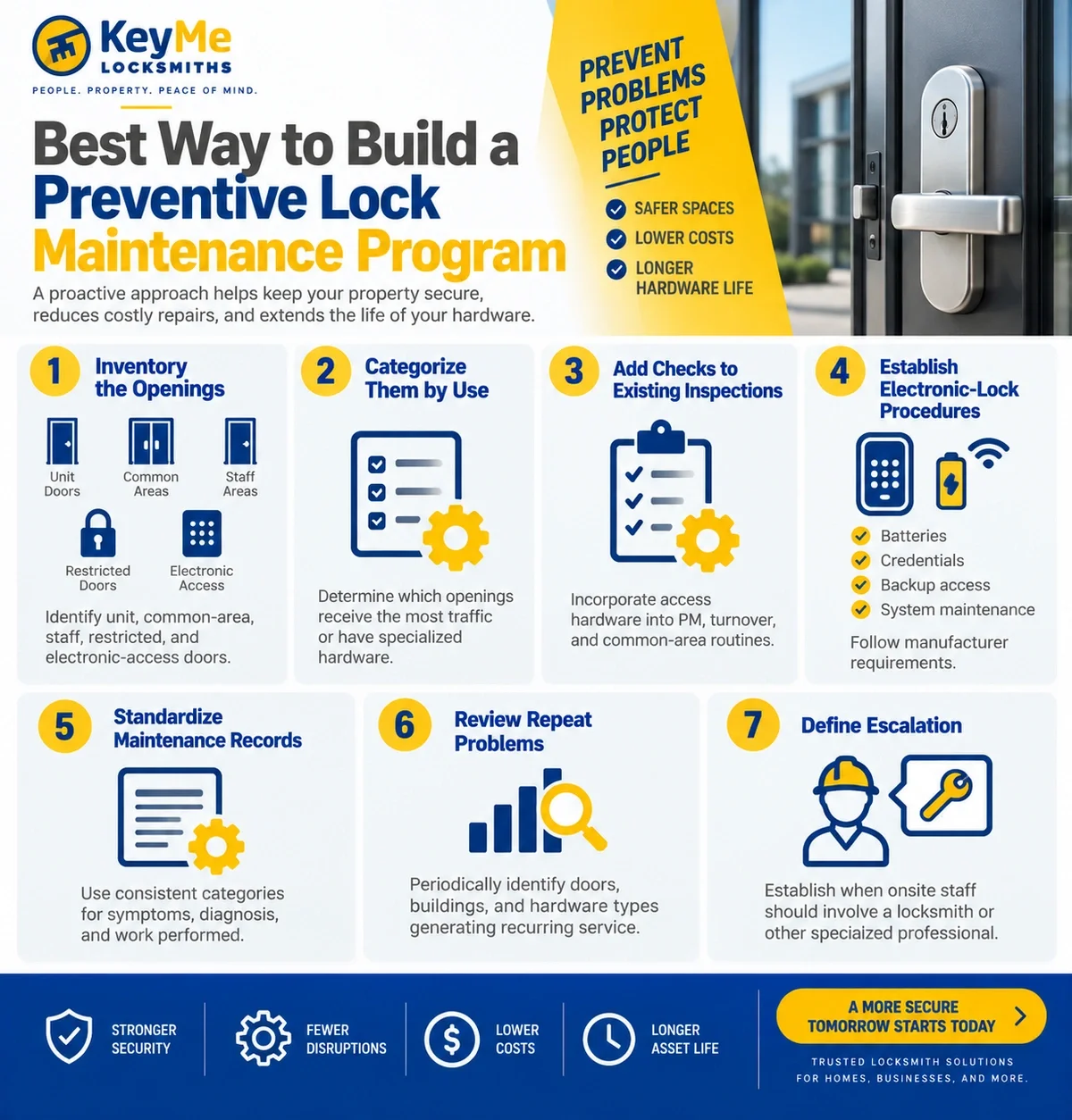
A useful program can be built around seven steps.
1. Inventory the Openings
Identify unit, common-area, staff, restricted, and electronic-access doors.
2. Categorize Them by Use
Determine which openings receive the most traffic or have specialized hardware.
3. Add Checks to Existing Inspections
Incorporate access hardware into PM, turnover, and common-area routines.
4. Establish Electronic-Lock Procedures
Follow manufacturer requirements for batteries, credentials, backup access, and system maintenance.
5. Standardize Maintenance Records
Use consistent categories for symptoms, diagnosis, and work performed.
6. Review Repeat Problems
Periodically identify doors, buildings, and hardware types generating recurring service.
7. Define Escalation
Establish when onsite staff should involve a locksmith or other specialized professional.
"A maintenance ticket solves today's problem. A preventive maintenance program asks whether the same problem is likely to happen again, where else it may occur, and what the property can learn from the repair." - KeyMe Locksmiths
Example Preventive Lock Maintenance Checklist
Property teams can adapt a checklist to their specific hardware and manufacturer requirements.
During routine inspections:
- Confirm doors close and secure normally.
- Note visible hardware damage.
- Record resident-reported changes in operation.
- Check high-use openings for developing issues.
- Review electronic-lock notifications where applicable.
During turnover:
- Test unit-entry hardware.
- Review keying and access requirements.
- Evaluate whether rekeying is appropriate.
- Check electronic credentials.
- Review battery status.
- Confirm supported backup-access procedures.
- Review prior maintenance history.
Periodically at the property level:
- Review repeat lock tickets.
- Identify high-service openings.
- Review recurring electronic-lock issues.
- Evaluate aging hardware.
- Update locksmith escalation contacts and procedures.
- Review opportunities for appropriate hardware standardization.
Preventive Maintenance Is an Operations Strategy
Preventive lock maintenance should do more than create a checklist.
Its real value comes from connecting:
Inspections
Turnover
Resident reports
Electronic-access maintenance
Service history
Repair decisions
Vendor escalation
NAA and IREM both place preventive maintenance, inspection, and operational oversight within the broader responsibilities of professional property management.
For locks, the same principle applies: use planned inspection and documented maintenance to identify predictable issues earlier and make better-informed decisions about repair, rekeying, and replacement.
For a symptom-by-symptom guide to diagnosing individual lock issues, see Common Lock Problems in Apartment Buildings.
KeyMe provides commercial locksmith services, residential locksmith services, lock repair, rekeying, lock replacement, and lock installation for supported property needs.
References
- National Apartment Association (NAA). Planning for Preventive Maintenance. Multifamily guidance on developing systematic preventive-maintenance practices.
https://naahq.org/news/planning-preventive-maintenance - National Apartment Association (NAA). Certified Apartment Manager (CAM) Exam Blueprint. Professional apartment-management framework incorporating property inspections, maintenance, service-request management, and operational responsibilities.
https://naahq.org/naaei/exams/cam-blueprint - National Apartment Association (NAA). CAMT Exam Blueprint. Apartment maintenance framework addressing preventive maintenance, make-ready activities, diagnosis, and repair practices.
https://naahq.org/camt-exam-blueprint - Institute of Real Estate Management (IREM). The Role of Preventive Maintenance in Sustainability. Property-management guidance addressing planned maintenance and asset operations.
https://blog.irem.org/the-role-of-preventive-maintenance-in-sustainability - Institute of Real Estate Management (IREM). How Inspections Build Asset Resilience. Guidance on the role of regular inspection in understanding property condition and supporting maintenance decisions.
https://blog.irem.org/learning/publications-news/blog/irem-blogs/2021/07/how-inspections-build-asset-resilience