

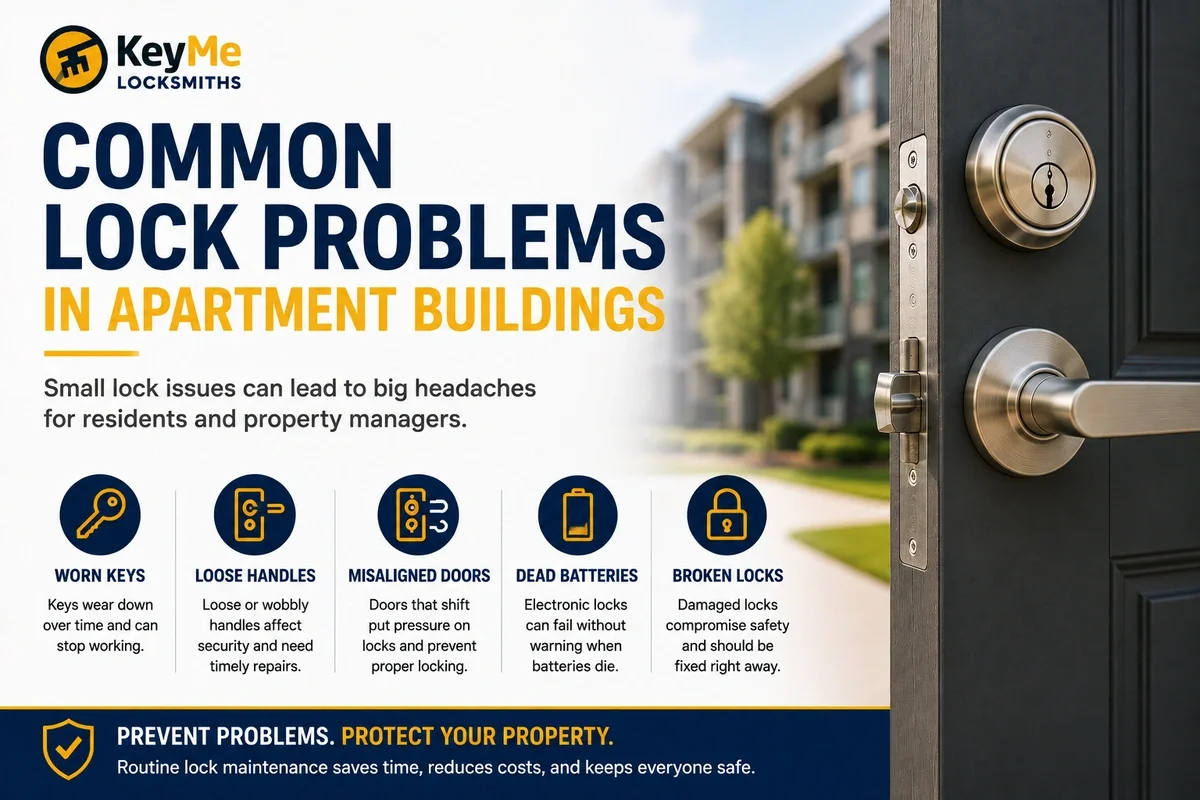
Common apartment lock problems include keys that become difficult to turn, deadbolts that bind when the door closes, loose handles, sticking latches, worn cylinders, broken keys, and electronic credentials that stop working as expected. The important part for property teams is identifying what the symptom actually suggests before assuming the entire lock needs replacement.
A resident may say, "My lock is broken," but that description can represent several very different problems.
The cause might be:
- The key
- Cylinder
- Latch
- Strike
- Hinges
- Door alignment
- Electronic credential
- Battery
- Other access hardware
ALOA's consumer guidance similarly identifies worn keys, worn locks, lubrication needs, and door alignment among common causes of lock problems.
This guide focuses specifically on diagnosing those symptoms. Property managers looking to build inspection schedules, turnover procedures, maintenance records, and broader prevention processes should see How Preventive Lock Maintenance Can Help Reduce Property Maintenance Requests.
Summary
- A difficult lock does not automatically mean the cylinder needs replacement.
- If a lock works normally while the door is open but binds when closed, investigate door and strike alignment.
- If one key has trouble but other authorized keys work normally, inspect the individual key.
- If multiple good keys have the same problem, the lock or another part of the opening deserves closer examination.
- Loose levers, sticking latches, and worn cylinders can produce different symptoms and should be diagnosed separately.
- A failed electronic credential does not necessarily mean the electronic lock has failed.
- Broken keys require careful extraction to avoid creating additional damage.
- Lost or unreturned keys are primarily an access-control issue rather than a mechanical failure.
- Frequently used common-area hardware can develop different problems from individual apartment locks.
- If routine troubleshooting does not identify the cause, a residential or commercial locksmith can evaluate the opening.
Why "The Lock Doesn't Work" Isn't a Diagnosis
Maintenance teams frequently receive broad descriptions:
"My key sticks."
"The lock won't turn."
"The door won't lock."
"The fob doesn't work."
"The handle is broken."
Those descriptions identify a symptom, not necessarily its cause.
A locksmith troubleshooting an opening may consider several interacting components:
- Key
- Cylinder
- Deadbolt
- Latch
- Lever or knob
- Strike
- Hinges
- Door
- Frame
- Electronic credential
- Reader or keypad
That distinction can prevent unnecessary hardware replacement.
"When a resident says a lock isn't working, the first job is to identify what isn't working. A worn key, misaligned strike, failing cylinder, and invalid electronic credential can create similar complaints but require completely different solutions." - KeyMe Locksmiths
Need a Locksmith? We're here to help
Connect with a trusted local locksmith for fast, professional assistance when you need it most.
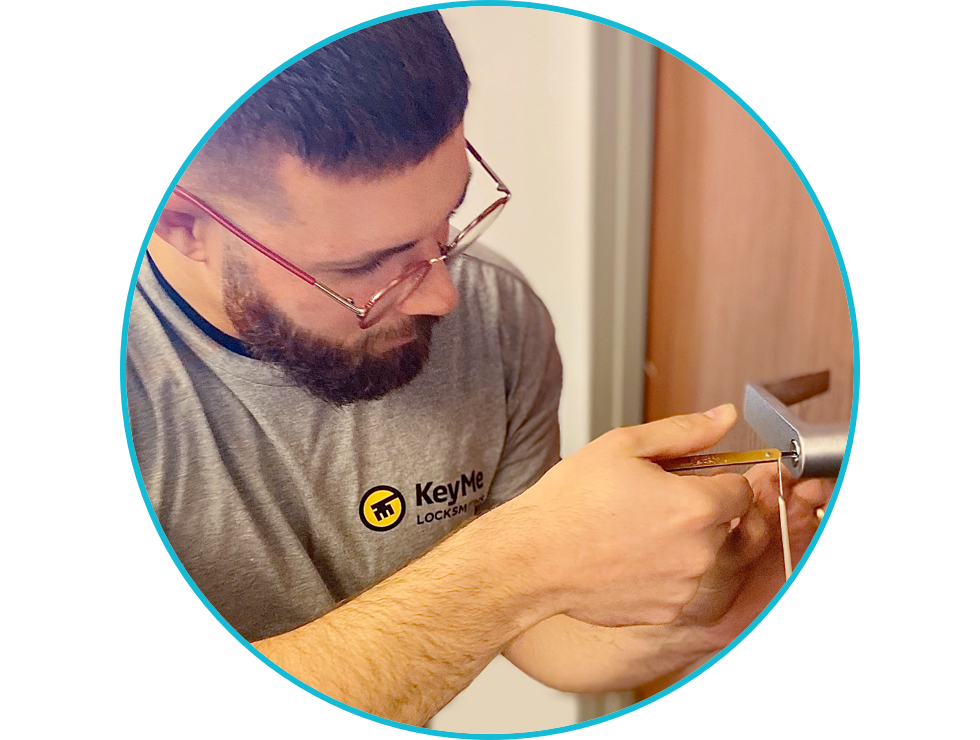
1. The Key Is Difficult to Insert or Remove
What the Resident May Report
- "The key sticks."
- "I have to wiggle it."
- "The key won't go all the way in."
- "It's getting harder to pull out."
Possible Causes
The problem may involve:
- Worn key
- Bent key
- Debris or contamination
- Cylinder wear
- Internal lock condition
- Inappropriate or insufficient maintenance
ALOA identifies worn keys and lock wear among common causes of difficult operation.
What Property Staff Can Check
Compare the resident's key with another properly authorized key.
If another key operates normally, the individual key deserves closer examination.
If multiple appropriate keys produce the same symptom, the cylinder may need further diagnosis.
Avoid forcing a key that is becoming increasingly difficult to operate.
When a Locksmith May Be Appropriate
Seek professional evaluation when the cylinder remains difficult with known-good keys, the key cannot be removed normally, or internal lock wear is suspected.
KeyMe offers lock repair for supported hardware.
2. One Key Works Poorly but Other Keys Work Normally
This is an important diagnostic clue.
What It Usually Suggests
If several authorized keys exist and only one causes problems, investigate that key before assuming the lock has failed.
Look for:
- Visible bending
- Rounded or worn cuts
- Cracks
- Damaged key head
- Poor duplication
ALOA specifically identifies worn and poorly duplicated keys as potential sources of lock problems.
Why Duplication Matters
Creating another key from a heavily worn copy can reproduce existing imperfections.
When an authorized replacement is needed, use an appropriate original or other supported key-originating method rather than assuming the most worn copy is the best source.
For supported keys, KeyMe provides key duplication and key cutting.
3. The Deadbolt Works With the Door Open but Binds When Closed
This is one of the clearest clues that the cylinder itself may not be the problem.
What the Resident May Report
- "I have to push the door to lock it."
- "I have to pull on the handle while turning the key."
- "The deadbolt gets stuck."
- "The lock works sometimes."
Likely Area to Inspect
If the deadbolt moves smoothly while the door is open but becomes difficult after closing, inspect:
- Strike alignment
- Door sag
- Hinges
- Frame position
- Door movement
- Weather-related changes
ALOA identifies door alignment as a common source of lock-operation problems.
Why This Matters
Replacing a functioning cylinder will not correct a deadbolt that cannot align with the strike.
The door-open test is therefore a useful first diagnostic step.
4. The Door Has to Be Lifted, Pushed, or Pulled to Lock
This symptom also points toward the complete door opening.
Possible Causes
- Loose hinges
- Door sag
- Strike position
- Frame movement
- Door closer issue on applicable common-area openings
Property teams should look at the relationship among the door, frame, hinges, latch, and strike before assuming the locking mechanism has failed.
If the condition is beyond routine property maintenance, lock repair and installation can help evaluate supported lock hardware.
5. The Handle or Lever Is Loose
A loose handle is different from a difficult key.
What the Resident May Notice
- Lever moves excessively
- Knob feels unstable
- Trim moves against the door
- Handle no longer returns normally
Possible Causes
Depending on the hardware, the issue may involve:
- Loose mounting hardware
- Worn internal components
- Lever assembly
- Lock body
- Door preparation
Do not assume tightening every visible screw is appropriate for every lock. Hardware designs differ.
If looseness returns after appropriate service, further evaluation may be needed.
Find a KeyMe Kiosk Near You
Need a spare key fast? Find a KeyMe kiosk near you to copy many house, office, and eligible car keys in just minutes.
6. The Key Broke Inside the Lock
A broken key creates two separate questions:
- Can the broken piece be removed?
- Why did the key break?
Possible Contributing Factors
- Damaged key
- Heavily worn key
- Excessive force
- Binding cylinder
- Door alignment causing resistance
Removing the fragment solves the immediate obstruction but may not explain the underlying problem.
Avoid pushing the fragment deeper into the keyway with improvised tools.
KeyMe provides broken key extraction for supported situations.
After extraction, the key and lock should be evaluated before another key is simply inserted and forced through the same resistance.
7. Multiple Good Keys Are Difficult to Turn
This is different from one worn key causing trouble.
If several properly functioning authorized keys encounter the same resistance, the opening deserves closer examination.
Possible areas include:
- Cylinder wear
- Internal lock mechanism
- Deadbolt
- Latch
- Alignment
Test the lock with the door open and closed.
If the problem remains with the door open, the lock itself deserves greater attention.
If the problem appears primarily when closed, investigate alignment.
A locksmith can help determine whether lock repair, rekeying, or lock replacement is appropriate.
8. The Latch Sticks or Does Not Retract Normally
The latch is the spring-loaded component that typically holds a door closed without the deadbolt being engaged.
What Residents May Report
- "The door won't close."
- "The handle doesn't pull the latch in."
- "The latch gets stuck."
- "I have to slam the door."
Possible Causes
- Latch wear
- Internal lock wear
- Lever or knob problem
- Strike alignment
- Door alignment
ALOA identifies latches as components that can experience wear through repeated use.
The maintenance team should determine whether the latch itself is sticking or whether it simply cannot align with the strike.
9. The Door Closes but the Latch Does Not Catch
This symptom can look like a lock failure even when the latch moves normally.
Inspect:
- Strike location
- Door position
- Hinge condition
- Frame
- Latch alignment
If the latch engages when the door is manually pushed into a particular position, alignment deserves particular attention.
For common-area doors with closers, the closing system may also affect whether the door reaches the position needed to latch.
10. A Smart Lock Shows a Low-Battery Warning
A low-battery alert is a maintenance condition, not automatically a failed lock.
What to Do
Follow the lock manufacturer's instructions for:
- Battery type
- Replacement
- Backup access
- Reset or testing procedures
Do not assume all electronic locks use the same batteries or replacement interval.
After replacement, confirm that normal authorized access functions have been restored.
If the Problem Continues
Further troubleshooting may need to consider:
- Electronic components
- Credential
- Keypad
- Mechanical deadbolt or latch
- Door alignment
Electronic and mechanical problems can exist simultaneously.
11. The Keypad or Reader Responds, but Access Is Denied
This is where electronic-access troubleshooting differs from mechanical lock troubleshooting.
Possible Causes
The issue may involve:
- Expired credential
- Incorrect permissions
- Credential assigned to the wrong user or opening
- Deactivated credential
- Access schedule
- System configuration
- Reader or lock problem
Before replacing the lock, verify that the credential is actually authorized for that opening.
If other valid credentials work normally, the individual credential or its permissions deserve attention first.
12. A Fob or Credential Works at Some Doors but Not Others
This can be normal.
Electronic access systems can assign different permissions to different openings.
For example, a resident credential might operate:
- Main entrance
- Resident's building
- Fitness center
while not operating:
- Maintenance room
- Management office
- Another resident building
The fact that a credential works somewhere else does not prove it should work at the affected door.
Check the property's access-control permissions before treating the situation as hardware failure.
For compatible and authorized RFID credentials, KeyMe offers RFID key fob services. Property authorization and access policies should always govern credential duplication.
13. A Resident Lost a Key
A lost key is different from a broken lock.
The mechanical hardware may be functioning perfectly.
The primary question becomes:
Should the missing key continue to operate the apartment?
Depending on the property's policies and hardware, rekeying may allow functioning locks to remain in place while changing which mechanical key operates them.
Property managers should follow applicable lease provisions, property policies, local requirements, and key-control procedures.
Copy Your Key from Anywhere - Right from Your Phone
Skip the kiosk and copy your key from home. Upload a clear photo of an eligible house or car key, and KeyMe will create a precise duplicate and mail it directly to your door.
14. A Former Resident Did Not Return a Key
Again, this is an access-control problem rather than evidence that the lock has mechanically failed.
Management should determine:
- Which openings the key operates
- Whether other copies may exist
- Property turnover procedures
- Whether rekeying is appropriate
Do not confuse changing access with replacing hardware.
If the lock remains serviceable, rekeying may address the access change without requiring complete lock replacement.
15. A Common-Area Door Keeps Generating Complaints
Repeated trouble at a main entrance, package room, fitness center, or other shared opening deserves a broader diagnosis.
Unlike a unit door, the opening may include:
- Commercial lock
- Door closer
- Exit hardware
- Electronic reader
- Electric locking component
- Heavy-use hinges
- Access-control system
The complaint may therefore involve more than the cylinder.
If a common-area opening repeatedly fails, review the complete door system and its repair history.
For supported commercial hardware, KeyMe offers commercial locksmith services.
16. The Same Door Keeps Failing After Repair
A recurring problem is diagnostically important.
Instead of treating the next complaint as an isolated event, ask:
- Is the same component failing?
- Does the door have an unresolved alignment issue?
- Is the hardware appropriate for the opening?
- Is usage unusually high?
- Is a repair addressing the symptom but not the cause?
Repeated failures may justify a broader evaluation of the door, frame, and hardware.
This is also where the property's preventive-maintenance records become useful.
For guidance on using repair histories and property-wide maintenance data, see How Preventive Lock Maintenance Can Help Reduce Property Maintenance Requests.
A Simple Diagnostic Sequence for Apartment Lock Problems
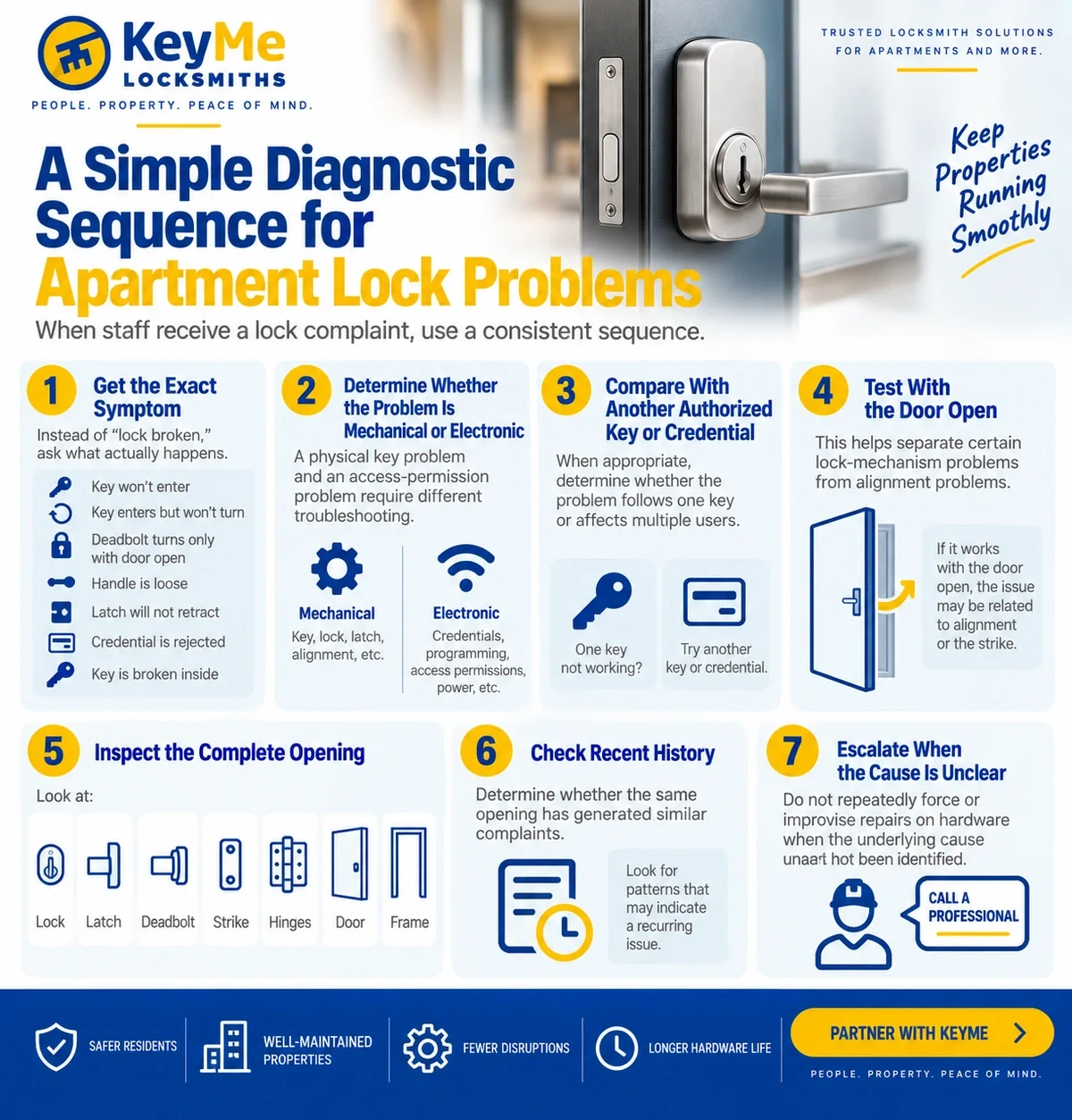
Step 1: Get the Exact Symptom
Instead of "lock broken," ask what actually happens.
For example:
- Key won't enter
- Key enters but won't turn
- Deadbolt turns only with door open
- Handle is loose
- Latch will not retract
- Credential is rejected
- Key is broken inside
Step 2: Determine Whether the Problem Is Mechanical or Electronic
A physical key problem and an access-permission problem require different troubleshooting.
Step 3: Compare With Another Authorized Key or Credential
When appropriate, determine whether the problem follows one key or affects multiple users.
Step 4: Test With the Door Open
This helps separate certain lock-mechanism problems from alignment problems.
Step 5: Inspect the Complete Opening
Look at:
- Lock
- Latch
- Deadbolt
- Strike
- Hinges
- Door
- Frame
Step 6: Check Recent History
Determine whether the same opening has generated similar complaints.
Step 7: Escalate When the Cause Is Unclear
Do not repeatedly force or improvise repairs on hardware when the underlying cause has not been identified.
"Troubleshooting becomes much easier when staff describe exactly what happens. 'The deadbolt works with the door open but not closed' gives a locksmith far more useful information than simply saying 'the lock is broken.'" - KeyMe Locksmiths
Repair, Rekey, or Replace?
Apartment lock problems can lead to three very different services.
Repair
Consider lock repair when a serviceable component or related hardware is malfunctioning and the existing lock can remain in use.
Rekey
Consider rekeying when the lock functions but the property needs to change which mechanical key operates it.
Examples can include lost keys or occupancy changes.
Replace
Consider lock replacement when hardware is damaged, unsuitable, incompatible, or no longer appropriately serviceable.
The correct choice depends on the diagnosis.
When to Call a Locksmith
Professional evaluation may be appropriate when:
- Multiple good keys cannot operate the lock normally.
- A cylinder is jammed or malfunctioning.
- A key has broken inside the lock.
- A latch or deadbolt is mechanically failing.
- The underlying cause remains unclear.
- A lock requires rekeying.
- A master key system has a problem.
- Commercial hardware is malfunctioning.
- Repeated repairs have not resolved the issue.
KeyMe provides residential locksmith services, commercial locksmith services, lock repair, rekeying, and lock replacement for supported needs.
Best Way to Handle an Apartment Lock Complaint
The best first response is diagnosis, not automatic replacement.
Start with the symptom.
Then determine whether it follows:
The key
The credential
The lock
The door
The opening
A key that works poorly when every other key works normally suggests a different problem from a deadbolt that binds only after the door closes.
Likewise, a credential rejected by one reader may require a different response from a mechanical latch that physically will not retract.
The more precisely the problem is described, the easier it becomes to choose the appropriate next step.
Diagnose the Symptom Before Choosing the Solution
Apartment lock complaints often sound similar from the resident's perspective.
The underlying causes can be very different.
A difficult key may be worn.
A deadbolt may be binding against the strike.
A latch may be wearing.
A cylinder may be failing.
A smart lock may need battery attention.
An electronic credential may simply lack permission for that door.
A lost key may require an access-control decision even though the lock itself works perfectly.
ALOA's consumer guidance reinforces this diagnostic approach by identifying worn keys, worn locks, lubrication needs, and door alignment as distinct contributors to common lock problems.
For property teams, the key lesson is:
Identify the symptom.
Test the opening.
Determine the likely component.
Then decide whether the appropriate response is repair, rekeying, replacement, credential management, or another door-related correction.
For guidance on preventing recurring problems across an entire property, see How Preventive Lock Maintenance Can Help Reduce Property Maintenance Requests.
References
- Associated Locksmiths of America (ALOA). Common Lock Issues. Consumer locksmith guidance addressing worn keys, lock wear, lubrication, latches, and door-alignment problems.
https://www.aloa.org/consumers/commonlockissues - National Apartment Association (NAA). CAMT Exam Blueprint. Multifamily maintenance framework covering troubleshooting, diagnosis, repair, and make-ready responsibilities.
https://naahq.org/camt-exam-blueprint - Institute of Real Estate Management (IREM). How Inspections Build Asset Resilience. Property-management guidance addressing inspections and understanding asset condition.
https://blog.irem.org/learning/publications-news/blog/irem-blogs/2021/07/how-inspections-build-asset-resilience