

Summary
- Most sellers can keep their existing locks if all keys are accounted for and the hardware is working properly.
- Rekeying locks may be worth considering if keys have been lost, borrowed, or shared with others over the years.
- Smooth, reliable locks help create a positive impression during showings and inspections.
- Buyers often choose to rekey after closing to establish control over who has access to their new home.
- A residential locksmith can inspect your existing locks and help determine whether rekeying, lock repair, or lock replacement makes the most sense.
In most cases, sellers don't need to rekey their locks simply because they're listing their home for sale. However, there are situations where rekeying can improve security before showings begin, especially if keys have been lost, copies cannot be accounted for, or multiple people have had access to the property over the years. Whether you should rekey before listing depends on your home's security history, the condition of your existing locks, and how confident you are that you know who has access to your home.
When Rekeying Before Listing Makes Sense
While many homeowners list their properties without changing the locks, there are situations where rekeying is a practical security measure.
You may want to consider rekeying if:
- One or more house keys have been lost.
- You recently experienced a break-in or attempted unauthorized entry.
- Previous roommates or tenants may still have keys.
- Contractors, cleaners, pet sitters, or other service providers were given permanent key copies.
- You purchased the home years ago and never changed the locks.
- You can't confidently account for every copy of your house key.
In these situations, rekeying allows you to restore control over who can enter the property while continuing to use the existing lock hardware if it's in good condition.
If the hardware itself is damaged or unreliable, lock replacement may be more appropriate.
When Rekeying May Not Be Necessary
Many sellers don't need to rekey before listing.
You may be able to keep your existing locks if:
- Every key is accounted for.
- The locks operate smoothly.
- No unauthorized copies are believed to exist.
- The home's security has not been compromised.
- The hardware remains in good condition.
Instead of rekeying, sellers may simply benefit from a thorough lock inspection before listing.
If a lock sticks, feels loose, or does not operate consistently, lock repair may be the better first step.
Need a Locksmith? We're here to help
Connect with a trusted local locksmith for fast, professional assistance when you need it most.
Rekeying vs. Replacing Locks
These services solve different problems.
Rekeying
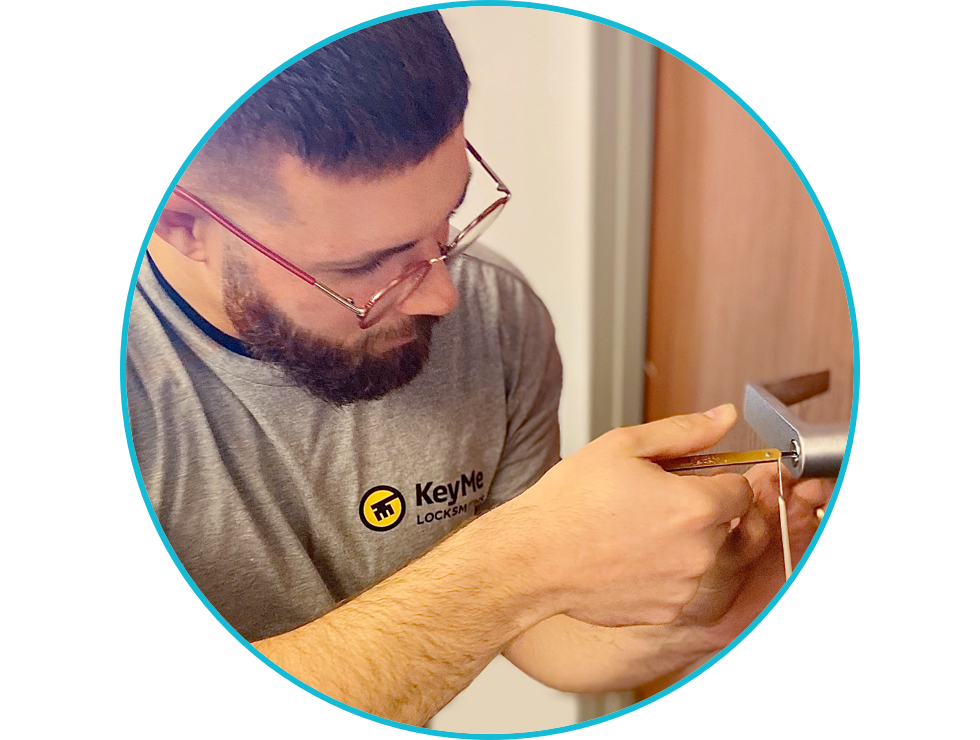
Rekeying changes the internal configuration of the lock so existing keys no longer work while allowing the current hardware to remain installed.
This is often appropriate when:
- Keys are missing.
- Security needs have changed.
- The lock is in good mechanical condition.
Lock Replacement
Replacing a lock involves installing entirely new hardware.
Replacement may be appropriate when:
- Locks are damaged.
- Hardware is worn beyond repair.
- You want updated finishes or styles.
- Existing locks no longer meet your security preferences.
If new hardware is being added rather than simply swapped out, professional lock installation may also be appropriate.
A locksmith can help determine which option best fits your home's condition.
Think About Everyone Who Has Had a Key
Before deciding whether to rekey, consider who may have received access to your home over the years.
Examples include:
- Family members
- Friends
- Neighbors
- Housekeepers
- Dog walkers
- Contractors
- Landscapers
- Property managers
- Previous tenants
- Roommates
If you're uncertain whether every key has been returned, rekeying may provide additional peace of mind before your home enters the market.
If you simply need additional authorized copies of a current key, KeyMe offers key duplication and key cutting for many supported key types.
Preparing for Showings
Whether or not you rekey, every seller should make sure locks operate properly before prospective buyers begin touring the home.
Check that:
- Exterior doors lock and unlock smoothly.
- Deadbolts fully engage.
- Sliding doors secure properly.
- Window locks function correctly.
- Garage entry doors operate as intended.
- Spare keys are organized and accounted for.
Smooth-operating locks contribute to a positive showing experience and demonstrate that the home has been well maintained.
If a lock is difficult to operate or the hardware feels loose, lock repair and installation services can help determine whether the issue can be corrected without replacing the entire lock.
What About Smart Locks?
Homes equipped with smart locks should also be reviewed before listing.
Consider:
- Replacing batteries if needed.
- Confirming keypad operation.
- Reviewing administrator settings.
- Removing outdated user accounts.
- Creating temporary access credentials for authorized individuals when appropriate.
- Verifying that mechanical backup keys are available.
Electronic access should be managed just as carefully as physical keys throughout the selling process.
If the homeowner wants to upgrade or replace the existing smart lock before listing, lock installation may be appropriate depending on the device and door configuration.
Find a KeyMe Kiosk Near You
Need a spare key fast? Find a KeyMe kiosk near you to copy many house, office, and eligible car keys in just minutes.
Should Buyers Rekey After Closing?
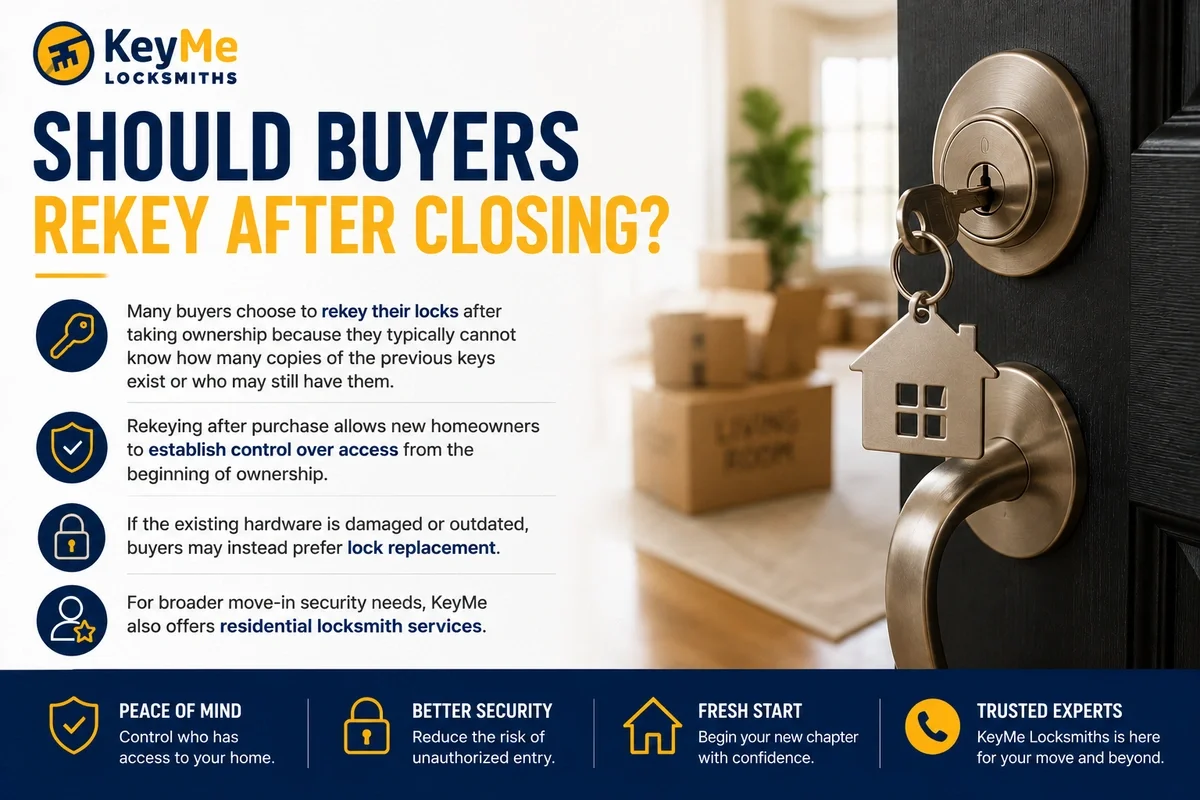
Many buyers choose to rekey their locks after taking ownership because they typically cannot know how many copies of the previous keys exist or who may still have them.
Rekeying after purchase allows new homeowners to establish control over access from the beginning of ownership.
If the existing hardware is damaged or outdated, buyers may instead prefer lock replacement.
For broader move-in security needs, KeyMe also offers residential locksmith services.
Other Security Steps Before Listing
Rekeying is only one part of preparing a home for sale.
Sellers should also:
- Test every exterior lock.
- Repair loose or damaged door hardware.
- Inspect windows and sliding doors.
- Verify garage door operation.
- Organize all property keys.
- Review smart lock settings.
- Secure valuables during showings.
- Perform a final security walkthrough before listing.
If a key breaks during this process, avoid forcing the fragment deeper into the lock. Broken key extraction can remove the lodged piece and allow the lock to be evaluated for additional damage.
Best Practices for Sellers
Before listing your home:
- Evaluate whether all keys are accounted for.
- Inspect the condition of every exterior lock.
- Consider rekeying if access history is uncertain.
- Repair damaged locks or door hardware.
- Test smart locks and electronic access systems.
- Organize keys for your real estate agent.
- Schedule locksmith service if repairs or upgrades are needed.
Preparing your home's security before the first showing helps create confidence for both sellers and buyers.
When to Call a Locksmith Before Listing
Professional assistance may make sense if:
- A lock repeatedly sticks or binds.
- Several keys do not operate a lock correctly.
- A key has broken inside a lock.
- Exterior hardware is loose or damaged.
- Existing locks need to be rekeyed.
- New locks need to be installed.
- A vacant property has uncertain key control.
- A home lockout interrupts a showing or property visit.
Copy Your Key from Anywhere - Right from Your Phone
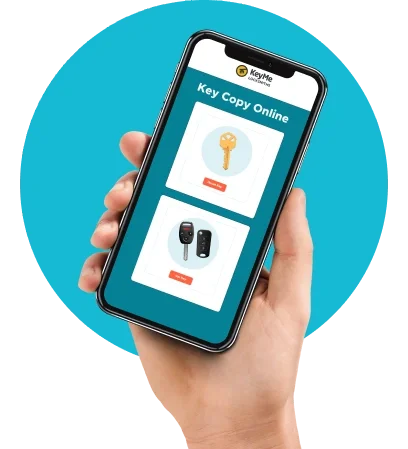
Skip the kiosk and copy your key from home. Upload a clear photo of an eligible house or car key, and KeyMe will create a precise duplicate and mail it directly to your door.
Why Choose KeyMe Locksmiths?
Preparing a home for sale involves more than staging and curb appeal. It also means making sure every entry point operates safely and reliably. KeyMe Locksmiths connects homeowners and real estate professionals with experienced locksmiths who can inspect locks, rekey existing hardware, replace worn locks, duplicate keys, and assist with smart lock services before or after a home is sold.
Available services may include:
- Lock rekeying
- Lock repair
- Lock replacement
- Lock installation
- Key duplication
- Smart lock installation and support
- Residential lockout assistance
- Commercial locksmith services for investment and mixed-use properties
In addition to connecting customers with a nationwide locksmith network, KeyMe offers online key copying, allowing eligible house keys to be duplicated by securely uploading a key photo through the KeyMe app, with the finished key shipped directly to the customer.
"Rekeying before listing isn't about preparing the home for the next owner. It's about protecting the current one. If you're unsure who still has a working key, restoring control over access before your home begins receiving visitors can provide additional peace of mind throughout the selling process." — KeyMe Locksmiths
Rekeying Before Listing Depends on Your Home's Security History
For many sellers, rekeying before listing isn't required. But if you've lost track of who may still have a key, have shared access with service providers over the years, or simply want greater control before your home begins receiving visitors, rekeying can be a practical step.
Whether you decide to rekey, repair, or simply inspect your locks, ensuring that every entry point operates smoothly helps protect your home during the selling process while supporting a better experience for buyers and agents.
When specialized help is needed, KeyMe offers residential locksmith services, including lock repair, rekeying, lock replacement, lock installation, and key duplication.
References
- National Association of REALTORS® (NAR). Consumer and Real Estate Resources.
https://www.nar.realtor/ - National Association of Home Builders (NAHB). Homeownership Resources.
https://www.nahb.org/ - Associated Locksmiths of America (ALOA). Consumer Resources.
https://www.aloa.org/ - KeyMe Locksmiths. Residential locksmith, rekeying, lock repair, lock replacement, lock installation, and key duplication service information.
https://key.me/