If you're locked out of your apartment, start by contacting your property manager, leasing office, building staff, or after-hours maintenance line when one is available. If they cannot restore access, an emergency locksmith may be able to help with the apartment-unit door, depending on the building's policies, the lock involved, and your ability to show that you are authorized to enter the unit.
Apartment lockouts are different from house lockouts because there may be several layers of access involved.
You could be locked out of:
- The building itself
- A controlled lobby
- An elevator or residential floor
- A parking garage
- Your individual apartment
- More than one of these areas at the same time
Summary
- Contact building management or the property's after-hours contact first when one is available.
- Determine whether you're locked out of the building or only your apartment unit.
- Building entrances, electronic fobs, and common-area access may require help from property management rather than a locksmith.
- A locksmith may be able to help with a compatible apartment-unit lock when management cannot restore access.
- Be prepared to show identification, proof of residence, or other authorization requested before work begins.
- Renters generally should not replace or materially alter building-owned locks without checking property rules first.
- If the key is missing rather than simply locked inside, there may be a separate key-security decision after access is restored.
- If the lock itself is damaged, the problem may involve repair rather than a routine lockout.
- If your lockout is actually at a standalone house late at night, see Locked Out of Your House Late at Night.
Best Way to Handle an Apartment Lockout
Use this order:
- Identify exactly where you are locked out.
- Contact building management or the after-hours property contact.
- Confirm whether management can restore access.
- Ask whether the building has a required locksmith procedure.
- If a locksmith is appropriate, explain that you are locked out of an apartment rather than a standalone house.
- Have identification and proof of residence or authorization available when possible.
- After access is restored, address any lost-key, damaged-lock, or building-access issue separately.
"An apartment lockout can involve both private-unit access and building-controlled access. Identifying which door or credential is actually preventing entry is the first step toward getting the right help." - KeyMe Locksmiths
First, Determine Where the Lockout Is Happening
"Locked out of my apartment" can describe several different problems.
Building Entrance
You cannot get through the main exterior entrance.
This may involve:
- Key
- Electronic fob
- Mobile credential
- Access card
- Intercom
- Building-controlled entry system
Because the building controls this access point, property management or building staff are usually the most relevant first contact.
A residential locksmith who can work on a mechanical apartment door may not be able to issue or reactivate a building's electronic credential.
Common Area or Residential Floor
Some properties use controlled access between:
- Lobby and elevator
- Elevator and residential floor
- Parking area and building
- Amenities and residential areas
Again, those systems are generally administered by the building.
Apartment Unit Door
If you can enter the building but cannot unlock your individual apartment, the problem is more similar to a conventional residential lockout.
Management may have:
- A spare or management key
- An after-hours maintenance procedure
- A preferred locksmith
- Specific rules about lock changes
If management cannot help, an emergency locksmith may be appropriate for a supported mechanical unit lock.
Need a Locksmith? We're here to help
Connect with a trusted local locksmith for fast, professional assistance when you need it most.
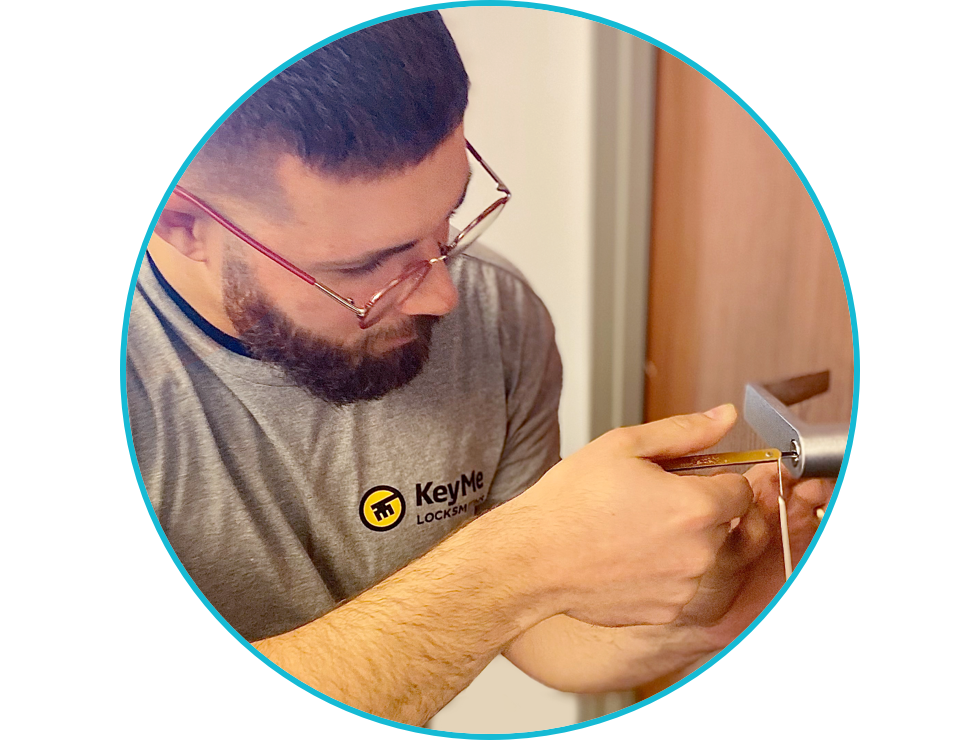
Why Contact the Property Manager First?
The apartment owner or property operator may control the lock, keying system, and access policies.
Starting with management can help determine:
- Whether a spare key is available
- Whether maintenance can respond
- Whether the lock is part of a master-key system
- Whether a particular locksmith must be used
- Whether management needs to authorize work
- Whether the problem involves a building system instead of the apartment lock itself
This is one of the main differences between an apartment lockout and being locked out of a privately owned standalone home.
What If the Leasing Office Is Closed?
Many apartment properties have some type of after-hours contact.
Look for:
- Emergency maintenance number
- Property-management phone number
- Resident portal
- Building concierge or front desk
- Security desk
- Posted after-hours instructions
The property's definition of an emergency may vary, so do not assume every maintenance team handles lockouts in the same way.
If building staff cannot restore access and the problem is your individual unit's mechanical lock, you can ask whether contacting an emergency locksmith is appropriate.
When Can an Emergency Locksmith Help With an Apartment Lockout?
A locksmith may be relevant when:
- You are authorized to enter the unit
- The problem involves the apartment's mechanical lock
- Building management cannot provide access
- The property allows outside locksmith service
- Appropriate verification can be provided
Depending on the situation, locksmith service may involve restoring normal entry through the existing lock.
If the lock is damaged or malfunctioning rather than simply locked, lock repair may be a different service need.
What Information Should You Give the Locksmith?
Explain that the property is an apartment or managed residential building.
Useful details include:
- Property address
- Apartment number
- Whether you can enter the building
- Which specific door is locked
- Whether the key is lost, broken, or inside
- Lock type if known
- Whether property management has been contacted
- Whether management has authorized outside locksmith service
- What identification or proof of residence you have available
This context helps distinguish a straightforward unit-door lockout from a building-access problem.
Find a KeyMe Kiosk Near You
Need a spare key fast? Find a KeyMe kiosk near you to copy many house, office, and eligible car keys in just minutes.
Why Might a Locksmith Ask for Proof That You Live There?
A locksmith needs a reasonable basis to confirm that the person requesting entry is authorized to access the property.
Depending on the circumstances, that could involve items such as:
- Government-issued identification
- Lease documentation
- Resident portal information
- Mail or records showing the address
- Confirmation from building management
- Requirements can vary by provider and situation.
If your identification is inside the apartment, explain that before service begins so the locksmith can tell you what documentation or verification may be needed.
Apartment Door vs. Building Access System
These should be treated as separate problems.
Apartment Door Lock
Often involves a mechanical lock such as:
- Deadbolt
- Knob lock
- Lever lock
- Mortise lock
- Other residential hardware
A locksmith may be able to service supported hardware.
Building Access
May involve:
- Electronic fob
- Card
- Mobile credential
- Controlled elevator
- Intercom
- Electronic strike or building security system
These are usually managed by the property.
A locksmith called for an apartment lockout should not be assumed to have authority or ability to modify the building's access-control system.
What If Your Apartment Key Is Lost?
A lost key is different from a key that is safely sitting on the kitchen counter.
Once you're back inside, consider whether the missing key creates an access concern.
Factors can include:
- Whether the key identifies your building
- Whether your unit number or address was attached to it
- Whether the missing key operates multiple doors
- Whether the building uses a controlled key system
- Whether management wants the loss reported
Because the apartment may use building-owned or master-keyed hardware, contact management before changing the lock or arranging a rekey.
For the broader security decision after losing a residential key, see What to Do After Losing Your House Keys.
What If the Key Broke in the Apartment Lock?
That may no longer be a simple lockout.
A broken key can involve:
- Key extraction
- Lock inspection
- Replacement key
- Lock repair if damage occurred
Avoid forcing the remaining key farther into the cylinder.
For supported locks, see broken key extraction and lock repair.
What If the Lock Itself Is Not Working?
Signs of a possible hardware problem include:
- Key enters but will not turn normally
- Cylinder feels loose
- Lock turns but door will not open
- Deadbolt binds
- Latch does not retract
- Door has been increasingly difficult to lock or unlock
These symptoms may involve the lock, latch, strike, door alignment, or other hardware.
Once access is restored, the underlying issue may require lock repair and installation.
Should You Replace an Apartment Lock After a Lockout?
Not simply because you were locked out.
A routine lockout does not automatically mean the hardware needs to be replaced.
Replacement becomes a separate question when:
- Lock is damaged
- Hardware no longer works properly
- Property management requires a change
- Access-control needs have changed
Tenants should confirm building rules and authorization before replacing or rekeying apartment hardware.
For the general difference between changing the internal keying and changing the complete lock, see Rekeying vs. Replacing Your Locks.
How to Reduce Future Apartment Lockouts
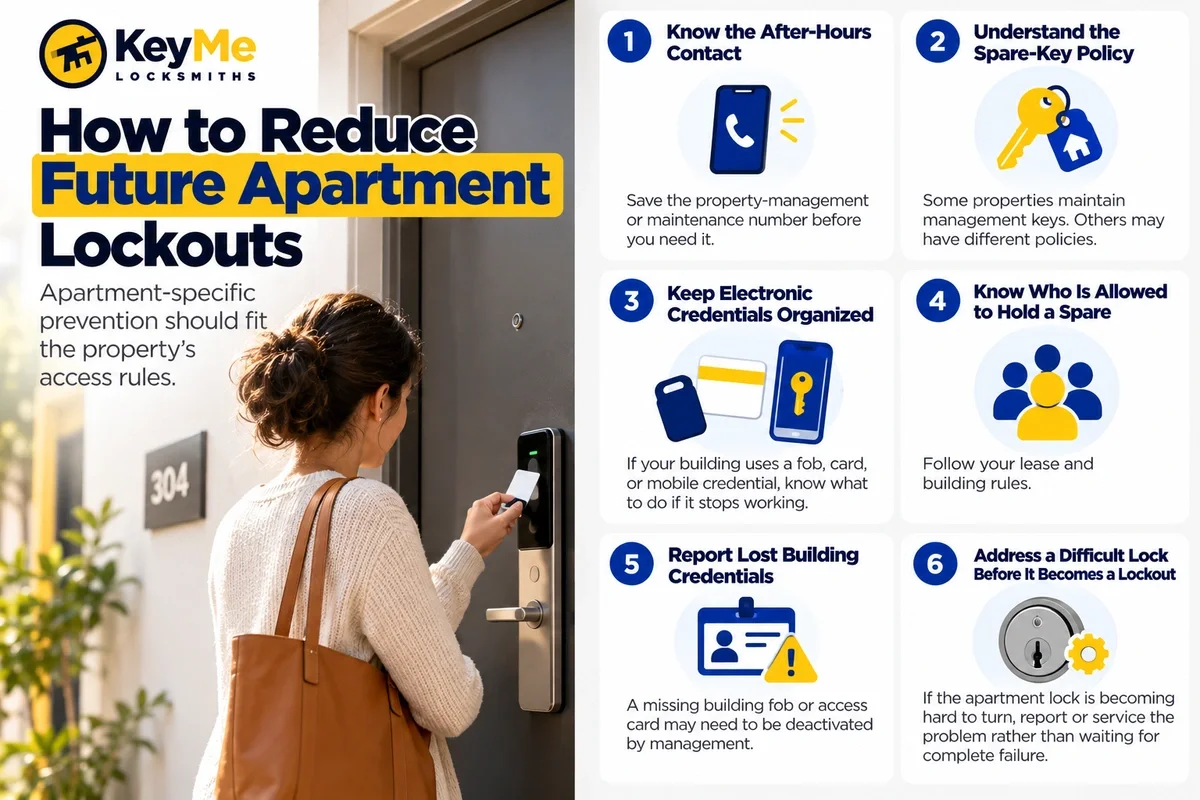
Apartment-specific prevention should fit the property's access rules.
Consider:
Know the After-Hours Contact
Save the property-management or maintenance number before you need it.
Understand the Spare-Key Policy
Some properties maintain management keys. Others may have different policies.
Keep Electronic Credentials Organized
If your building uses a fob, card, or mobile credential, know what to do if it stops working.
Know Who Is Allowed to Hold a Spare
Follow your lease and building rules.
Report Lost Building Credentials
A missing building fob or access card may need to be deactivated by management.
Address a Difficult Lock Before It Becomes a Lockout
If the apartment lock is becoming hard to turn, report or service the problem rather than waiting for complete failure.
Apartment Lockout vs. House Lockout
The actual locked door may look similar, but the decision paths are different.
Apartment Lockout
Often involves:
- Property manager
- Leasing office
- Building access
- Tenant authorization
- Master-key considerations
- Building policies
House Lockout
Usually involves:
- Homeowner or resident
- Spare key
- Direct locksmith service
- Privately controlled exterior doors
- After-hours safety considerations
If you are locked out of a standalone house, especially after normal business hours, see Locked Out of Your House Late at Night.
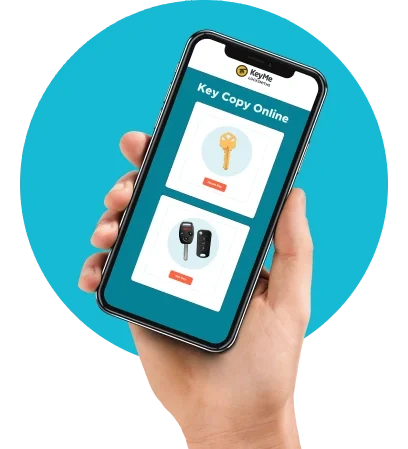
Copy Your Key from Anywhere - Right from Your Phone
Skip the kiosk and copy your key from home. Upload a clear photo of an eligible house or car key, and KeyMe will create a precise duplicate and mail it directly to your door.
How KeyMe Locksmiths Can Help
KeyMe provides emergency locksmith services and residential locksmith services.
For supported apartment-unit hardware and authorized service situations, a locksmith may be able to assist with:
- Residential lockouts
- Lock repair
- Broken key issues
- Rekeying when appropriate and authorized
- Lock replacement when needed and authorized
For managed properties, confirm any building requirements before changing the lock or keying.
References
- KeyMe Locksmiths: Emergency Locksmith
- KeyMe Locksmiths: Residential Locksmith
- KeyMe Locksmiths: Lock Repair and Installation
- KeyMe Locksmiths: Broken Key Extraction
- KeyMe Locksmiths: Rekeying vs. Replacing Your Locks
- KeyMe Locksmiths: What to Do After Losing Your House Keys
- KeyMe Locksmiths: Locked Out of Your House Late at Night