


Summary
- Secure the unit and review access as soon as the previous resident moves out.
- NAA's 2025 turnover guidance includes changing the lock to a vacant lock as part of the make-ready process.
- Consider rekeying the locks or replacing locks when previous keys cannot be fully accounted for or existing hardware needs replacement.
- Track who receives keys and when they are returned. NAA specifically recommends assigning keys to users and tracking their movement to support accountability.
- Inspect doors, windows, locks, latches, hinges, and other entry hardware before the next resident moves in.
- Remove former residents' electronic credentials and review temporary codes when smart access is used.
- Continue inspecting vacant units rather than leaving them unchecked until move-in. IREM teaches that regular property inspection supports proactive maintenance and risk identification.
- Finish with a documented security and access check before handing keys or credentials to the next resident.
Vacant rental units should be secured as soon as a resident moves out by restoring control over physical and electronic access, inspecting every entry point, addressing damaged locks or door hardware, and establishing a process for contractors, maintenance staff, and leasing teams who need temporary access. Regular inspections should continue until the next resident takes possession.
This matters because turnover creates an unusual access period. The unit is unoccupied, but cleaners, contractors, maintenance technicians, inspectors, leasing agents, and prospective residents may all need entry. The National Apartment Association's 2025 apartment turnover guidance specifically begins the make-ready process with a post-move-out inspection and includes changing the lock to a vacant lock before repairs, cleaning, and final inspection.
Why Vacant Units Require Extra Attention
Occupied homes have residents who can notice a broken window, damaged lock, water leak, or other problem. Vacant units do not have that everyday presence.
At the same time, turnover can increase the number of people entering the unit, including:
- Maintenance technicians
- Cleaning crews
- Contractors
- Painters and flooring installers
- Leasing agents
- Property inspectors
- Vendors
- Prospective tenants
NAA's turnover guidance recognizes this as an active operational period. Its make-ready process begins with inspecting the apartment after move-out, then progresses through securing the unit, repairs, cleaning, and a final inspection before the new resident arrives.
Vacancy also deserves attention because security and property condition matter to renters. In a 2025 resident experience survey discussed by NAA, renters ranked maintenance and repairs first and community security second among the most important aspects of apartment living.
That makes the turnover period an important opportunity to address security before it becomes part of a new resident's experience.
Rekey or Replace Locks When Appropriate
One of the first questions after move-out should be whether management can confidently account for access to the unit.
NAA's 2025 Apartment Turnover guidance specifically includes changing the unit to a vacant lock during the make-ready process.
Property managers may also consider rekeying a lock when:
- Previous keys cannot be fully accounted for.
- Multiple copies were distributed during the tenancy.
- A key was reported lost.
- Staff or vendor access has changed.
- Property policy calls for rekeying during turnover.
- There is another reason to change which keys operate the unit.
Rekeying changes which key operates an existing compatible lock without necessarily replacing the complete lock assembly.
If the hardware itself is damaged, worn, unsuitable for the property's current needs, or due for an upgrade, lock replacement may be more appropriate.
ALOA recommends addressing lock changes when moving into an apartment while also emphasizing that renters should consult the rental office about its lock-change policies. Property managers should likewise account for applicable state and local requirements, lease provisions, and company policies when establishing turnover procedures.
Need a Locksmith? We're here to help
Connect with a trusted local locksmith for fast, professional assistance when you need it most.
Control Who Has Access
Lock quality matters, but it is only part of vacant-unit security.
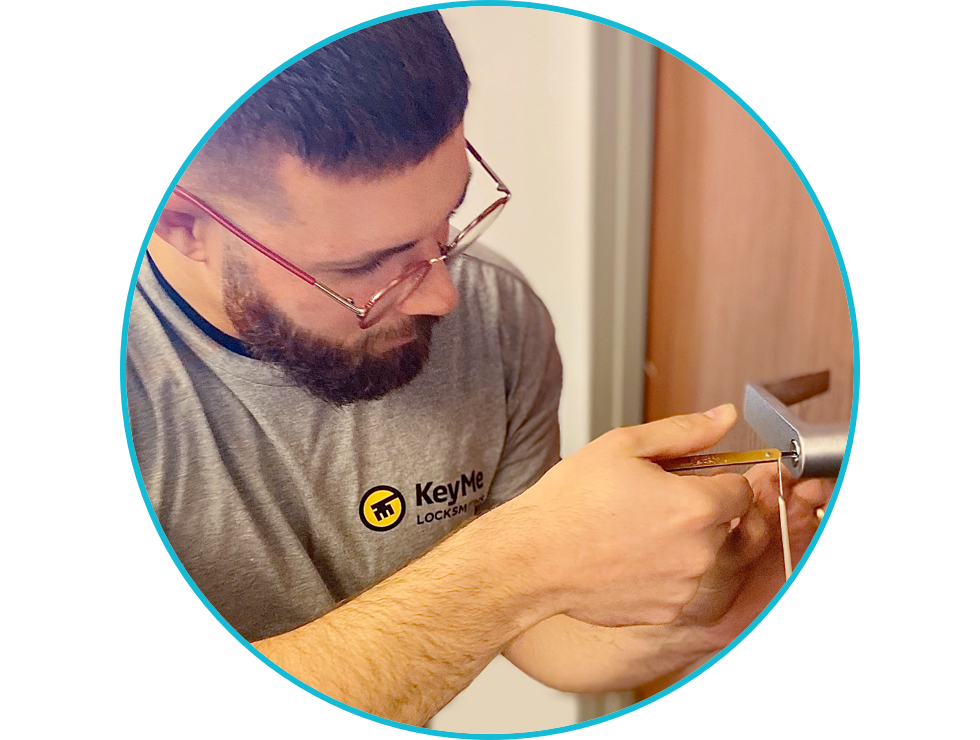
During turnover, several people may legitimately need temporary access. The challenge is maintaining a clear chain of custody as keys move among employees and vendors.
NAA emphasizes that assigning physical keys to specific users and tracking their movement is important for both security and accountability. Electronic key-management systems can record key issuance, returns, authorizations, and the person who last accessed a particular key.
Property managers should establish procedures for:
- Issuing keys
- Identifying authorized users
- Recording temporary access
- Returning keys promptly
- Reporting missing keys
- Updating access records when staffing changes
- Restricting access when it is no longer required
NAA's key-management guidance also recommends documented, time-stamped key removal and return procedures and immediate reporting of missing keys.
"A vacant unit can have more authorized visitors during turnover than it does during normal occupancy. The security goal is to make sure every physical key and electronic credential is controlled from move-out through the next move-in." — KeyMe Locksmiths
Inspect Every Entry Point
Security should not stop at the front door.
Before marketing or showing the unit, inspect:
- Front doors
- Rear doors
- Patio doors
- Sliding glass doors
- Accessible windows
- Garage access
- Storage areas
- Balcony doors
- Other exterior entry points
Check that each opening closes properly and that locks and latches operate as intended.
IREM's residential property management curriculum states that property managers should inspect all parts of a property regularly to support proactive maintenance, identify risk, and protect the owner's asset, residents, guests, and management company.
A vacant-unit inspection should apply that principle to the complete opening, not just the lock cylinder.
Check Door and Lock Hardware
Door hardware experiences repeated use throughout a lease and can also be affected by door movement, previous repairs, and environmental conditions.
Inspect:
- Deadbolts
- Lever handles
- Knob locks
- Strike plates
- Hinges
- Door closers
- Lock cylinders
- Latches
- Door frames
A lock that works with the door open but binds when the door is closed may point to an alignment problem rather than a defective cylinder.
Loose or damaged components should be addressed before the next resident moves in. Depending on the condition, that may involve lock repair, rekeying, or replacement.
This is also an opportunity to test every authorized key. If a key is broken inside a cylinder during turnover, professional broken key extraction can address the obstruction without treating it as a routine duplication problem.
Review Smart Locks and Electronic Access
Electronic access requires its own turnover procedure.
NAA notes that access-control software can allow property managers to revoke former residents' access and create temporary credentials for cleaners, maintenance teams, and other authorized users. It can also provide entry records that help management verify access activity.
If the unit uses a smart or electronic lock, consider:
- Removing the previous resident's credentials
- Deleting temporary codes that are no longer needed
- Reviewing administrator permissions
- Checking battery status
- Testing authorized credentials
- Confirming mechanical backup access, if provided
- Following manufacturer guidance for system updates
- Reviewing access logs where the system supports them
Digital credentials should receive the same attention as physical keys. Changing a mechanical lock while leaving an old electronic credential active does not fully restore access control.
Find a KeyMe Kiosk Near You
Need a spare key fast? Find a KeyMe kiosk near you to copy many house, office, and eligible car keys in just minutes.
Secure Keys During Maintenance and Showings
Vacant units frequently need to remain accessible while work and leasing activity are underway.
That does not mean access should be informal.
NAA recommends strong key-management policies that document removals and returns, restrict unnecessary key access, and require missing keys to be reported promptly.
During maintenance visits and showings:
- Limit keys to authorized personnel.
- Record temporary key assignments.
- Return physical keys promptly.
- Avoid leaving keys unattended inside the unit.
- Use temporary electronic credentials when appropriate and supported.
- Remove temporary credentials when access is no longer required.
If a vendor needs access for three days, for example, a supported electronic access system may allow management to issue a credential limited to the appropriate period rather than providing ongoing access. NAA specifically discusses temporary PINs and access schedules as tools for managing cleaners and maintenance professionals during move-in and move-out operations.
Protect Common Areas During Turnover
Vacant-unit security does not exist in isolation.
Contractors, prospective tenants, and other visitors may pass through shared areas before reaching the unit. Property teams should therefore consider nearby:
- Building entrances
- Hallways
- Mail and package areas
- Parking garages
- Storage rooms
- Utility areas
- Amenity spaces
- Other restricted areas
Access should be limited to what each visitor actually needs.
NAA's key-management guidance warns that misplaced or stolen keys to shared or restricted areas can create security and asset-control problems, reinforcing the need to track common-area keys as carefully as unit keys.
For problems involving shared entrances, commercial locks, or other building hardware, commercial locksmith services may be more appropriate than treating the issue as an individual apartment lock problem.
Schedule Regular Vacant Unit Inspections
A unit should not disappear from the maintenance team's attention simply because nobody lives there.
IREM states that regular inspections help property managers move toward proactive rather than reactive maintenance while identifying and managing risks to the property.
Periodic vacant-unit walkthroughs can check for:
- Damaged locks or doors
- Signs of unauthorized access
- Broken windows
- Water leaks
- HVAC or environmental concerns
- Maintenance issues
- Changes since the previous inspection
- Problems introduced during contractor work
Inspection frequency should reflect property policy, insurance requirements, local conditions, and applicable rules rather than relying on a universal schedule.
Documenting each walkthrough also creates a clearer record of the unit's condition throughout the vacancy.
Use a Turnover Checklist
Consistency matters when managing multiple units.
NAA's 2025 Apartment Turnover guidance recommends a turnover checklist and make-ready board to track the tasks needed to restore an apartment after move-out. The process includes an initial inspection, lock change, repairs, cleaning, and a final inspection before the next resident moves in.
Security items can be incorporated directly into that workflow.
For example:
After move-out: Collect keys, remove former credentials, inspect entry points, and establish vacant-unit access.
During make-ready: Track employee and vendor access, repair damaged hardware, and monitor temporary credentials.
Before showings: Confirm doors and windows remain secure and establish a process for leasing access.
Before move-in: Perform a final lock, key, credential, and entry-point check.
A standardized checklist makes these tasks part of the turnover process instead of relying on individual staff members to remember them.
Prepare the Unit Before Move-In
Before the next resident receives possession, complete a final security review.
Confirm that:
- Entry locks operate properly.
- Rekeying or lock replacement has been completed when required.
- Resident keys operate the correct locks.
- Keys are accounted for according to property procedures.
- Temporary contractor or showing access has been removed.
- Smart locks and authorized credentials function properly.
- Door hardware is secure.
- Windows close and lock properly.
- Common-area access intended for the resident works as expected.
This final review also supports the broader resident experience. NAA's 2025 survey coverage found that maintenance, security, and property cleanliness ranked as renters' three most important aspects of apartment living. A properly secured and inspected unit addresses two of those priorities before the resident even moves in.
Copy Your Key from Anywhere - Right from Your Phone
Skip the kiosk and copy your key from home. Upload a clear photo of an eligible house or car key, and KeyMe will create a precise duplicate and mail it directly to your door.
Best Way to Secure a Vacant Rental Unit
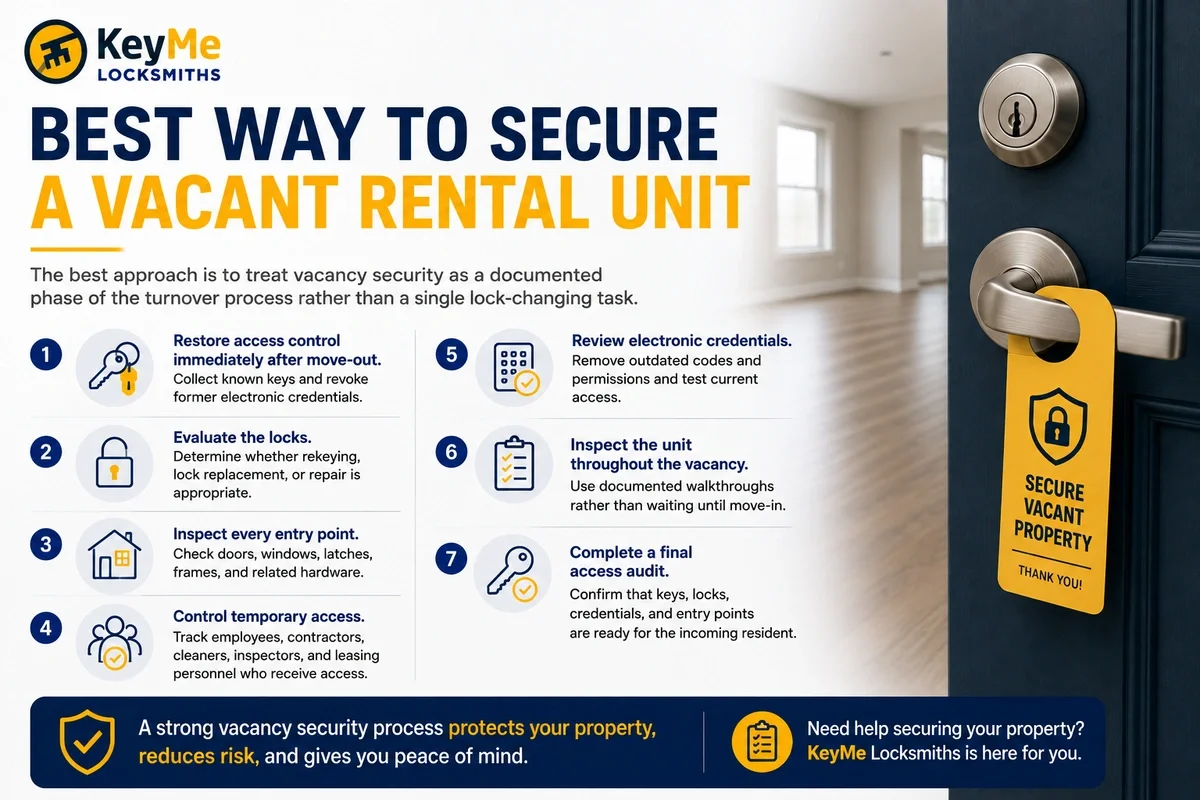
The best approach is to treat vacancy security as a documented phase of the turnover process rather than a single lock-changing task.
A strong process includes:
-
Restore access control immediately after move-out. Collect known keys and revoke former electronic credentials.
-
Evaluate the locks. Determine whether rekeying, lock replacement, or repair is appropriate.
-
Inspect every entry point. Check doors, windows, latches, frames, and related hardware.
-
Control temporary access. Track employees, contractors, cleaners, inspectors, and leasing personnel who receive access.
-
Review electronic credentials. Remove outdated codes and permissions and test current access.
-
Inspect the unit throughout the vacancy. Use documented walkthroughs rather than waiting until move-in.
-
Complete a final access audit. Confirm that keys, locks, credentials, and entry points are ready for the incoming resident.
This approach closely reflects NAA's make-ready model and IREM's emphasis on regular inspections and proactive risk management.
Why Choose KeyMe Locksmiths?
Preparing a vacant unit involves more than cleaning and repairs. It also requires restoring control over who can access the property.
KeyMe Locksmiths connects property managers with locksmith professionals who can assist with services such as:
- Lock rekeying
- Lock replacement
- Lock repair and installation
- Key duplication
- Commercial locksmith services
- Master key system support where applicable
- Smart and electronic lock support where applicable
- Emergency locksmith assistance
For eligible supported keys, KeyMe's mobile key scanning option can also allow an authorized user to submit a photo of a key. The key is processed and cut at a central facility and then shipped to the requested address. Property managers should use duplication methods in accordance with their own authorization and key-control policies.
Car Key Vans are not part of the vacant-unit security workflow. They provide in-person automotive key duplication and programming at select retail locations, so they are better suited to automotive content rather than property turnover guidance.
"Vacant-unit security is really an access-control process. Property teams need to know which keys and credentials still work, who has them, and whether the physical doors and locks are ready for the next resident." — KeyMe Locksmiths
Strong Security Begins Before the Next Tenant Arrives
The period between residents is one of the best opportunities to review and strengthen access control.
NAA's current turnover guidance incorporates lock changes and inspections directly into the apartment make-ready process. Its key-management guidance emphasizes tracking who has physical keys and when they are returned. IREM likewise identifies regular inspection and proactive risk management as core residential property-management practices.
Together, those practices point toward a clear approach: restore access control after move-out, inspect the complete unit, manage every temporary key or credential, continue monitoring the property while it is vacant, and perform a final security check before move-in.
When specialized lock work is required, property managers can use KeyMe commercial locksmith services for support with property access and lock needs.
References
- National Apartment Association (NAA). Apartment Turnover, 2025. Guidance covering make-ready boards, post-move-out inspection, vacant locks, turnover checklists, repairs, cleaning, and final inspection.
NAA Apartment Turnover 2025 - National Apartment Association (NAA). Electronic Key Control for Residential Property Management. Guidance on assigning, tracking, issuing, and returning residential property keys.
NAA Electronic Key Control - National Apartment Association (NAA). Protect Your People, Properties, and Profits with an Effective Key Management Policy. Guidance on key storage, documentation, missing keys, and access procedures.
NAA Key Management Policy - National Apartment Association (NAA). Move Along Your MIMOs With Access Control Software. Information about turnover access, revoking former resident credentials, temporary access codes, and access records.
NAA Move-In and Move-Out Access Control - National Apartment Association (NAA). Survey Data Shows Several Disconnects Between Property Managers and Renters. 2025 survey findings on resident priorities, including maintenance, security, and property condition.
NAA Resident Experience Survey Coverage - Institute of Real Estate Management (IREM). Managing Residential Properties (RES201). Property-management education covering regular inspections, proactive maintenance, and risk management.
IREM Managing Residential Properties - Associated Locksmiths of America (ALOA). Should I Change My Locks? Consumer guidance addressing lock changes, rekeying, and rental-property policies.
ALOA Lock Change Guidance