

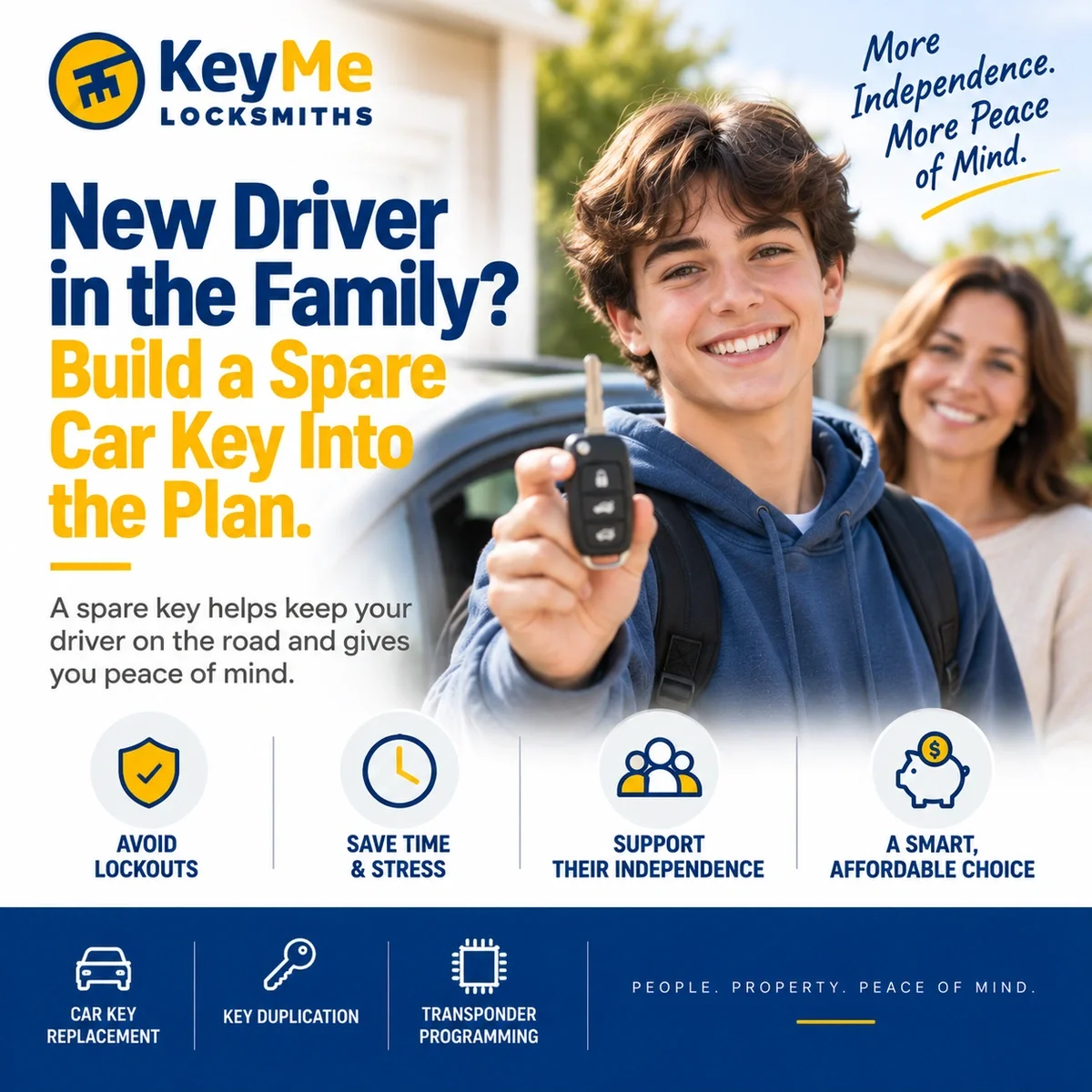
When a new driver starts using the family car, adding a spare car key to your preparation checklist can make vehicle sharing easier and give the household another access option if the primary key is lost, damaged, or accidentally taken by the wrong driver. The transition to independent driving already involves new routines around school, work, practices, curfews, and vehicle responsibility. Key management belongs in that conversation too.
This is especially relevant around back-to-school season, when a newly licensed teen may suddenly be driving to class, sports, a part-time job, or other activities without a parent in the vehicle.
A spare key will not make a new driver safer on the road, but it can make the household better prepared for the practical realities that come with adding another driver.
Summary
- Getting a driver's license is a major transition in responsibility, not just a transportation milestone.
- CDC says crash risk is particularly high during a teen's first months of independent driving.
- NHTSA recommends that parents remain actively involved after licensing and understand graduated driver licensing requirements.
- Families should decide who carries the everyday vehicle key, where the spare is stored, and what happens if a key is lost.
- Creating an authorized spare while a working key is still available can provide another access option for a shared family vehicle.
- Modern vehicle keys may require both physical cutting and car key programming, depending on the vehicle.
- KeyMe offers vehicle key services and car key replacement for supported vehicles.
A New Driver Changes More Than the Family Schedule
When a teenager or young adult starts driving independently, the household suddenly has a new set of logistics to manage.
The family car may now be used for:
- School
- Sports practice
- Work shifts
- College classes
- Errands
- Social activities
- Picking up siblings
- Weekend activities
The key that once stayed with one parent may now change hands several times each week.
That makes the transition to independent driving a useful time to establish routines around both driving behavior and vehicle access.
NHTSA encourages parents to remain involved during the early stages of independent driving. Its teen-driving guidance recommends clear household rules, awareness of state graduated driver licensing requirements, and continued parental involvement as young drivers gain experience.
Key responsibility can fit naturally into that same plan.
"A new driver creates a new access routine for the whole household. Deciding who carries the everyday key, where the spare stays, and what to do if a key goes missing can prevent unnecessary confusion once school, work, and activities start competing for the same vehicle." - KeyMe Locksmiths
Need a Locksmith? We're here to help
Connect with a trusted local locksmith for fast, professional assistance when you need it most.
Why the First Months of Driving Deserve Extra Planning
New drivers are still building skills and routines that experienced motorists may take for granted.
CDC reports that drivers ages 16 to 19 have a fatal crash rate almost three times as high per mile driven as drivers age 20 and older. Inexperience is one of the major risk factors for teen drivers.
NHTSA similarly emphasizes the importance of parental involvement during the earliest months of independent driving.
A family new-driver plan might cover:
- Seat belt use
- Phone rules
- Passenger restrictions
- Nighttime driving
- Where the car can be driven
- Fuel expectations
- What to do after a crash or breakdown
- Who keeps the everyday key
- Where the spare key is stored
- What happens if a key is lost
The spare key is only one small part of that plan, but it is something the household may depend on every day.
Back-to-School Is a Natural Time to Create the Routine
For many families, independent driving begins around the same time school-year schedules become more complicated.
A new driver may need the vehicle for:
- Morning classes
- After-school practice
- Clubs
- Tutoring
- Work shifts
- Weekend activities
Meanwhile, another family member may still need the same vehicle.
That creates opportunities for simple mistakes:
- One person leaves with the only key.
- The key stays in a backpack.
- A parent assumes the teen returned it.
- The key gets misplaced between school and practice.
- The family's morning schedule depends on finding one shared fob.
A spare cannot resolve a scheduling conflict, but it can prevent one physical key from becoming the household's only access point.
Find a KeyMe Kiosk Near You
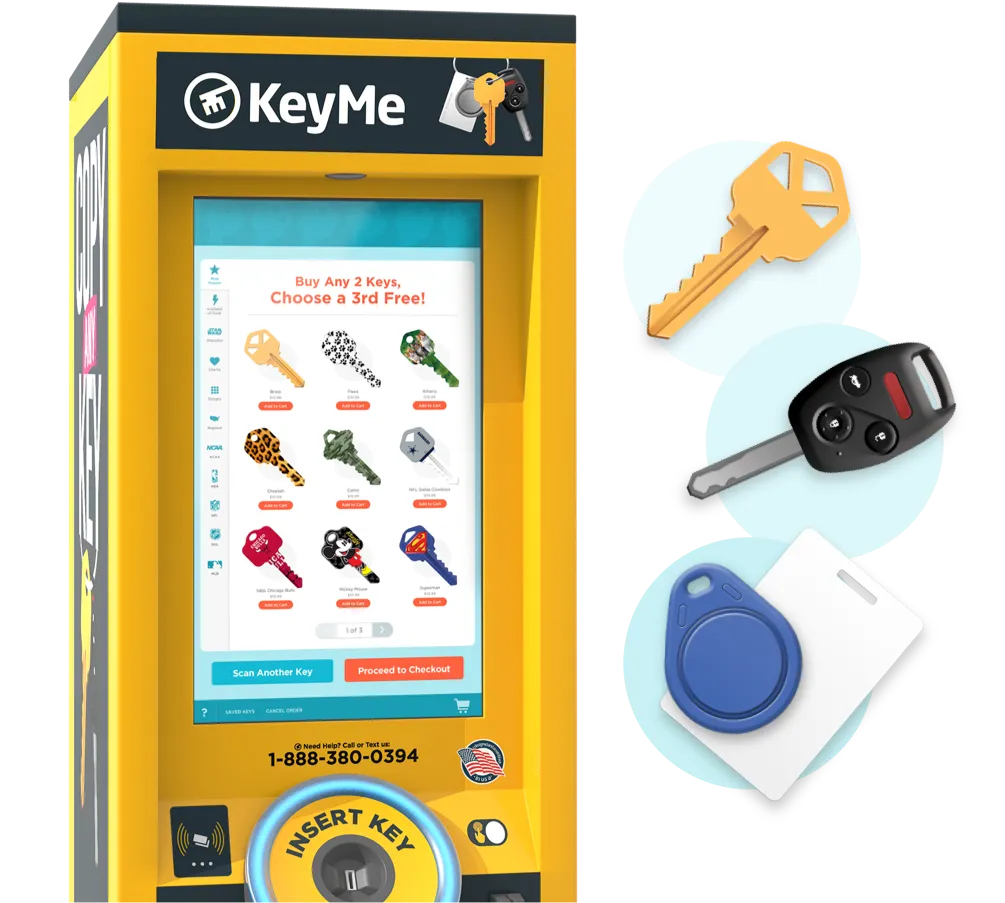
Need a spare key fast? Find a KeyMe kiosk near you to copy many house, office, and eligible car keys in just minutes.
Why a Working Key Is the Best Time to Think About a Spare
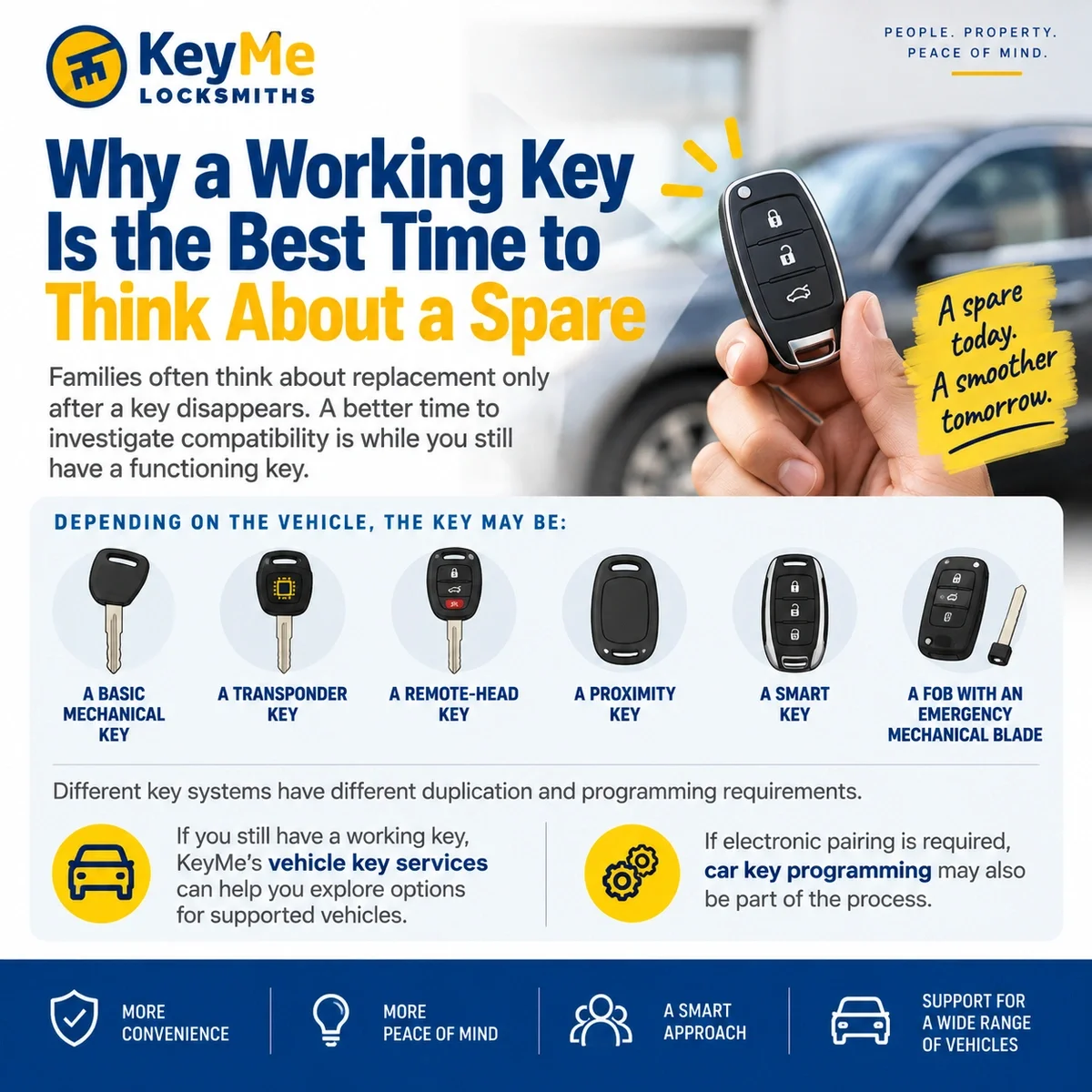
Families often think about replacement only after a key disappears.
A better time to investigate compatibility is while you still have a functioning key.
Depending on the vehicle, the key may be:
- A basic mechanical key
- A transponder key
- A remote-head key
- A proximity key
- A smart key
- A fob with an emergency mechanical blade
Different key systems have different duplication and programming requirements.
If you still have a working key, KeyMe's vehicle key services can help you explore options for supported vehicles.
If electronic pairing is required, car key programming may also be part of the process.
Your Teen Does Not Necessarily Need to Carry the Spare
Creating a spare does not mean handing both keys to the new driver.
For many families, the better arrangement is:
Primary key: Used by the new driver or shared among household members.
Spare key: Stored securely with a parent, guardian, or other trusted family member.
This keeps the backup available without increasing the chance that both keys disappear together.
For example, if the teen accidentally leaves the everyday key in a sports bag at school, the backup remains available at home.
Pair the Spare-Key Plan With Safe-Driving Rules
A spare should sit alongside the family's larger new-driver plan rather than being treated as a safety measure by itself.
CDC identifies several important teen-driving risk areas, including:
- Inexperience
- Young passengers
- Nighttime driving
- Seat belt use
- Distracted driving
NHTSA also recommends that families understand their state's graduated driver licensing rules because passenger and nighttime restrictions vary.
The broader lesson applies to key responsibility too:
New independence works best when expectations are established before a problem occurs.
Copy Your Key from Anywhere - Right from Your Phone
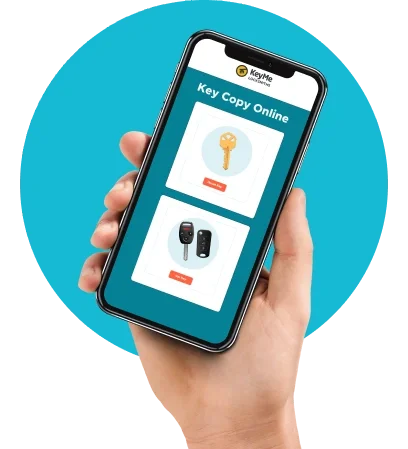
Skip the kiosk and copy your key from home. Upload a clear photo of an eligible house or car key, and KeyMe will create a precise duplicate and mail it directly to your door.
Best Way to Add a Spare Key to the New-Driver Plan
1. Identify the Vehicle's Key Type
Determine whether the vehicle uses a mechanical key, transponder, remote fob, or smart key.
2. Check Compatibility While You Still Have a Working Key
Explore car key replacement or duplication options before an all-keys-lost situation occurs.
3. Decide Who Controls the Spare
Choose a secure location and determine who is responsible for it.
4. Create a Key Return Routine
Make returning the key part of returning the vehicle.
5. Include Key Problems in the Family Emergency Plan
The new driver should understand the difference between:
- Key left at home
- Key locked in the vehicle
- Key genuinely lost
- Key damaged
- Key fob not recognized
6. Review the Plan at the Start of the School Year
Schedules change. Revisit the routine when school, work, sports, or other responsibilities change.
Make the Spare Key Part of the Milestone
Getting a driver's license is a major step toward independence.
It also changes the way a family manages transportation. School schedules, practices, jobs, errands, and social activities may all begin revolving around a vehicle that was previously controlled by one or two adults.
CDC and NHTSA emphasize continued parental involvement during the earliest period of independent teen driving. That preparation can extend beyond driving rules to include practical vehicle responsibilities.
Decide how the car will be shared, establish clear expectations, make sure the new driver knows what to do when something goes wrong, and include an authorized spare key in the plan when appropriate.
For supported vehicles, KeyMe offers vehicle key services, car key replacement, car key programming, and automotive locksmith services.
References
- Centers for Disease Control and Prevention. Eight Danger Zones for Teen Drivers.
https://www.cdc.gov/teen-drivers/parents-are-the-key/danger-zones.html - Centers for Disease Control and Prevention. Risk Factors for Teen Drivers.
https://www.cdc.gov/teen-drivers/risk-factors/index.html - National Highway Traffic Safety Administration. Teen Safe Driving.
https://www.nhtsa.gov/road-safety/teen-driving - National Highway Traffic Safety Administration. Graduated Driver Licensing.
https://www.nhtsa.gov/book/countermeasures-that-work/young-drivers/countermeasures/legislation-and-licensing/graduated