


Summary
- Never force a broken key deeper into the ignition or attempt to start the vehicle with the remaining fragment.
- Most broken keys result from metal fatigue, worn keys, damaged ignition cylinders, or excessive force.
- Professional locksmiths use specialized extraction tools designed to remove broken keys while minimizing damage to the ignition.
- After the key is removed, the locksmith will determine whether only the key needs replacement or if the ignition also requires repair.
- Replacing worn keys before they fail can help prevent ignition damage and unexpected breakdowns
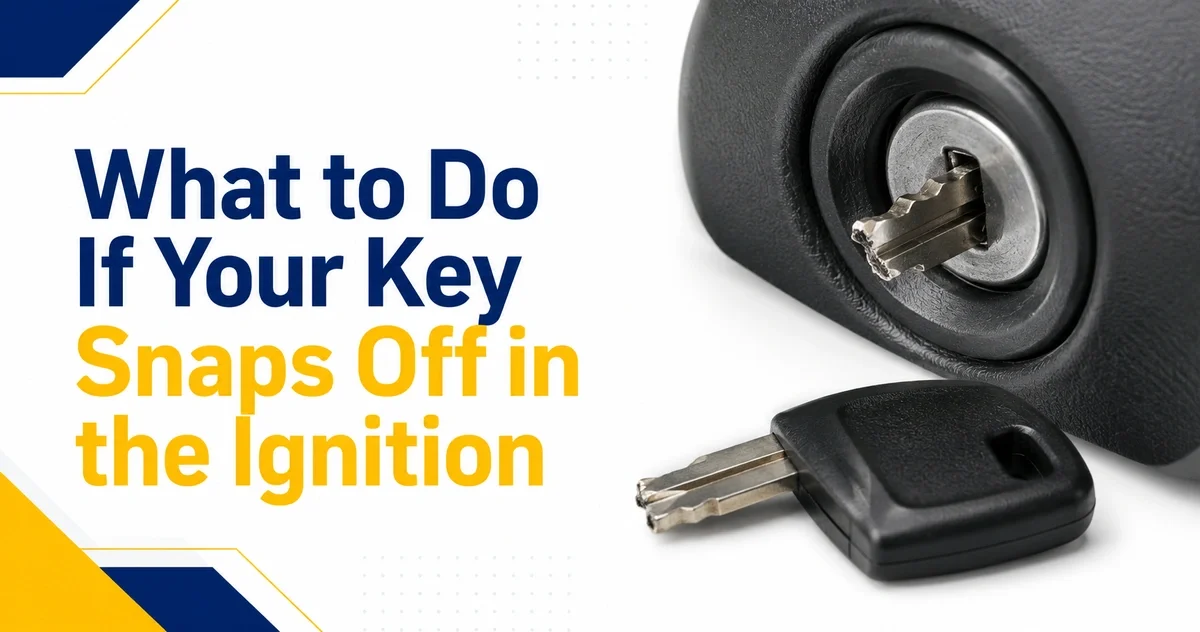
If your key snaps off in the ignition, don't try to force the remaining piece out or continue turning the ignition. Doing so can push the broken fragment deeper into the cylinder or damage the ignition itself. Instead, turn off the vehicle if possible, leave the broken key where it is, and determine whether professional key extraction or ignition repair is needed.
A broken key can happen unexpectedly, especially if the key has become worn, bent, or weakened over years of daily use. Fortunately, automotive locksmiths regularly remove broken keys from ignitions and can often create a replacement key during the same service appointment.
Why Choose KeyMe Locksmiths?
A broken key in the ignition can leave you stranded with no way to drive your vehicle. KeyMe Locksmiths connects drivers with experienced automotive locksmiths who regularly handle broken key extractions, ignition-related issues, and replacement car keys.
Depending on your vehicle and the situation, services may include:
- Broken key extraction
- Car key replacement
- Transponder key programming
- Smart key programming
- Ignition repair
- Vehicle lockout assistance
For supported vehicle keys, KeyMe also offers retail-based Car Key Vans at select locations, along with online ordering through mobile key scanning technology for eligible keys.
"When a key breaks inside the ignition, the goal is to remove it without creating additional damage. Specialized extraction tools allow locksmiths to remove many broken key fragments while preserving the ignition cylinder." — KeyMe Locksmiths
Need a Locksmith? We're here to help
Connect with a trusted local locksmith for fast, professional assistance when you need it most.
Why Do Car Keys Break in the Ignition?
Car keys are designed to withstand years of use, but they're still made of metal that gradually weakens over time.
The ignition cylinder also experiences wear, and when worn components meet an aging key, the risk of breakage increases.
Common causes include:
- Metal fatigue
- Bent or damaged keys
- Worn ignition cylinders
- Dirt or debris inside the ignition
- Excessive force when turning the key
- Heavy keychains placing additional stress on the ignition
Most broken keys don't fail suddenly—they often show warning signs first.
Warning Signs Your Key May Be About to Break
Many drivers unknowingly continue using keys that are nearing the end of their lifespan.
Watch for:
- Visible bends
- Cracks near the head of the key
- Worn or rounded cuts
- Difficulty turning the ignition
- Needing to jiggle the key
- Increased resistance while starting the vehicle
"A key rarely snaps without warning. Small changes in how the key feels or turns are often early indicators that replacement should be considered before a complete failure occurs." — KeyMe Locksmiths
Find a KeyMe Kiosk Near You
Need a spare key fast? Find a KeyMe kiosk near you to copy many house, office, and eligible car keys in just minutes.
What to Do Immediately
1. Stop Turning the Key
If part of the key is still protruding from the ignition, stop applying pressure immediately.
Continuing to twist the key can:
- Break it into smaller pieces.
- Damage the ignition cylinder.
- Make extraction more difficult.
2. Turn Off the Vehicle (If Possible)
If the engine is still running and it's safe to do so, follow your vehicle manufacturer's recommended shutdown procedure.
If the key breaks while the engine is already off, avoid inserting tools into the ignition.
3. Leave the Broken Piece in Place
Many people instinctively reach for:
- Tweezers
- Needle-nose pliers
- Screwdrivers
- Paper clips
Unfortunately, these tools often push the broken fragment farther into the ignition, making professional extraction more difficult.
4. Inspect the Remaining Portion of the Key
The broken portion may help identify why the failure occurred.
Look for:
- Bent metal
- Heavy wear
- Cracks
- Corrosion
- Signs of previous repairs
This information can help determine whether only the key failed or whether the ignition also contributed to the break.
Can You Remove the Broken Key Yourself?
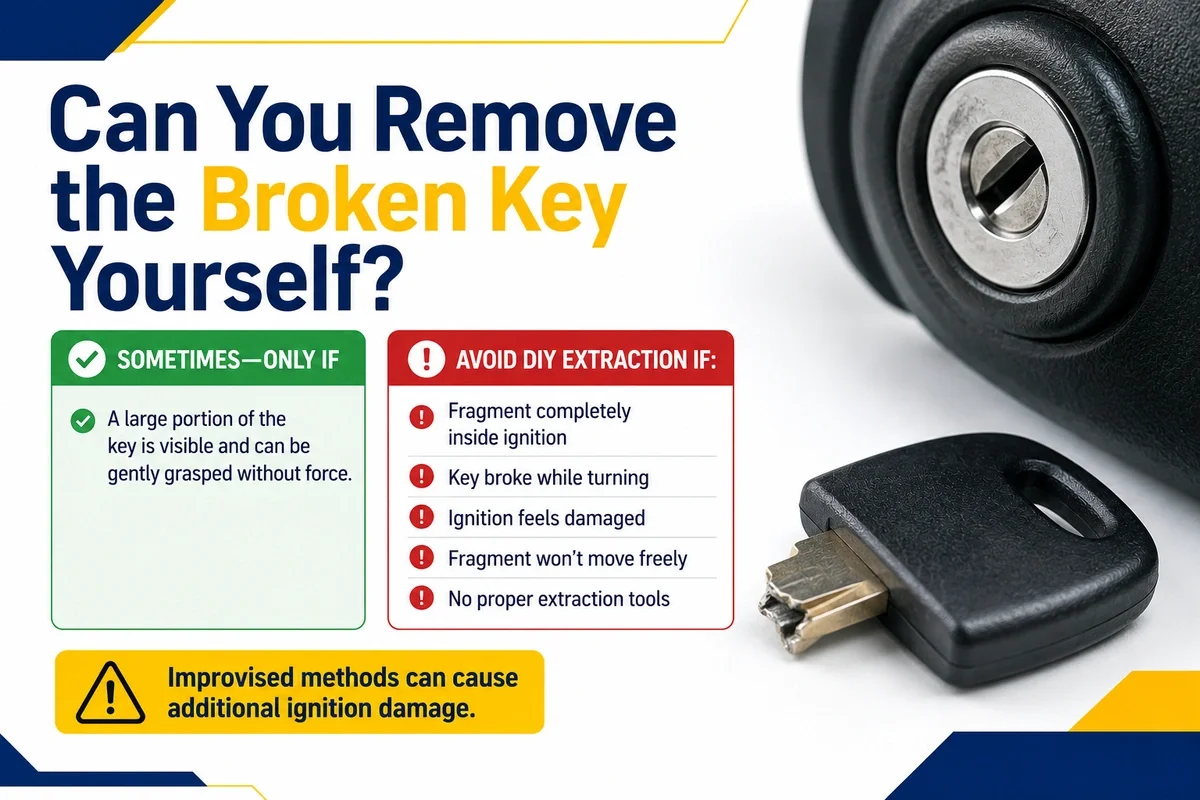
Sometimes—but only under limited circumstances.
If a large portion of the broken key is still visible and can be grasped easily without forcing it, careful removal may be possible.
However, you should avoid DIY extraction if:
- The fragment is completely inside the ignition.
- The key broke while turning.
- The ignition feels damaged.
- The fragment won't move freely.
- You don't have proper extraction tools.
Improvised methods frequently cause more damage than the original broken key.
Copy Your Key from Anywhere - Right from Your Phone
Skip the kiosk and copy your key from home. Upload a clear photo of an eligible house or car key, and KeyMe will create a precise duplicate and mail it directly to your door.
How Locksmiths Remove Broken Keys from an Ignition
Automotive locksmiths use specialized extraction tools designed specifically for broken key removal.
The process typically involves:
- Inspecting the ignition cylinder.
- Determining how deeply the key is lodged.
- Selecting an appropriate extraction tool.
- Carefully removing the broken fragment.
- Inspecting the ignition for damage.
- Testing ignition operation.
- Creating or programming a replacement key if needed.
Whenever possible, the goal is to remove the broken key without replacing the ignition.
"Successful extraction isn't about pulling harder—it's about using the correct tool and technique for the specific position of the broken key inside the ignition." — KeyMe Locksmiths
Will You Need a New Ignition?
Not necessarily.
In many cases, only the key has failed.
However, ignition repair or replacement may be recommended if:
- The ignition was already worn.
- Internal components are damaged.
- The key broke because the cylinder was binding.
- Previous repairs have compromised the ignition.
A professional inspection can determine whether the ignition remains safe and reliable after extraction.
How to Prevent Future Broken Keys
While keys eventually wear out, a few simple habits can reduce the likelihood of another break.
Replace Worn Keys Early
Don't wait until the key begins sticking consistently.
Replacing a worn key before it fails can help protect the ignition cylinder.
Reduce Weight on Your Keychain
Heavy keychains place additional stress on the ignition while driving, particularly on older vehicles with traditional keyed ignitions.
Address Ignition Problems Promptly
If your ignition:
- Feels rough
- Requires excessive force
- Sticks frequently
- Doesn't turn smoothly
have it inspected before continuing to use the vehicle.
Keep a Spare Key
Having a spare key available can help avoid emergencies if your primary key becomes damaged or lost.
For supported keys, KeyMe offers online ordering through mobile key scanning technology, retail-based Car Key Vans for automotive key services, and nationwide locksmith support.
Don't Let a Broken Key Leave You Stranded
A key that snaps off in the ignition can be frustrating, but it's usually a repairable problem. Avoid forcing the broken fragment, prioritize preventing additional damage, and have the ignition inspected if the key was already difficult to turn before it broke.
Professional automotive locksmiths can often remove the broken key, evaluate the condition of the ignition, and provide a replacement key during the same visit, helping you get back on the road safely.
References
- National Highway Traffic Safety Administration (NHTSA). Vehicle Maintenance & Safety Resources. https://www.nhtsa.gov/
- AAA Exchange. Vehicle Maintenance Resources. https://exchange.aaa.com/
- Associated Locksmiths of America (ALOA). Consumer Resources. https://www.aloa.org/
- KeyMe Locksmiths service information for automotive locksmith services, broken key extraction, mobile key scanning, and retail-based Car Key Vans.