
Why Some Vehicles Reject Newly Programmed Keys
Getting a replacement car key programmed should restore access to your vehicle, but sometimes the process doesn't go as planned. A key may be cut correctly, programmed successfully, and still fail to start the vehicle. In other cases, the vehicle may display a security warning, refuse to recognize the key, or show a "Key Not Detected" message.
Modern vehicles use sophisticated anti-theft systems that require more than a physical match between the key and lock. The key and vehicle must also communicate electronically and verify each other's identity before the engine will start.
KeyMe Locksmiths helps drivers with car key replacement, key programming, smart key services, and automotive locksmith support nationwide.
Modern Vehicle Keys Are Digital Security Devices
Many drivers think of a car key as a simple piece of metal, but today's vehicle keys function more like electronic credentials.
Modern systems may include:
- Transponder chips
- Immobilizer systems
- Smart keys
- Proximity fobs
- Push-to-start technology
- Encrypted authentication protocols
Before a vehicle starts, it must verify that the key is authorized to operate the vehicle.
If that verification process fails, the vehicle may reject the key entirely.
"Modern car keys are part of the vehicle's security system, not just a tool for unlocking doors and starting the engine." — KeyMe Locksmiths
The Key Is Not Actually Compatible
One of the most common causes of programming failure is using an incompatible key.
Two keys may look identical externally while having completely different:
- Transponder chips
- Electronic configurations
- Security protocols
- Frequency requirements
Compatibility can vary based on:
- Model year
- Trim package
- Production date
- Vehicle market
- Security system generation
A key that physically fits the ignition may still be rejected electronically.
The Programming Process Was Incomplete
Programming a key often involves more than one step.
Depending on the vehicle, the process may require:
- Registering the transponder
- Synchronizing the immobilizer
- Programming remote functions
- Pairing smart key features
- Updating vehicle security records
If any step is interrupted or unsuccessful, the vehicle may fail to recognize the key properly.
The Immobilizer Is Rejecting the Key
Most modern vehicles use an immobilizer system.
According to the National Highway Traffic Safety Administration (NHTSA), immobilizers help prevent vehicle theft by requiring electronic authentication before the vehicle can start.
The immobilizer:
- Reads information from the key.
- Compares it to authorized credentials.
- Approves or denies engine operation.
If authentication fails, the vehicle may:
- Crank but not start
- Display security warnings
- Disable ignition functions
- Show key recognition errors
Encryption Data Doesn't Match
Newer vehicles increasingly rely on encrypted communication between the key and vehicle.
This means both sides must exchange matching security information before access is granted.
Problems may occur if:
- Programming data is incomplete
- Authentication values don't match
- Security credentials are incorrect
- The programming session failed
Even a properly cut and partially programmed key may be rejected if encryption requirements aren't met.
Existing Keys Were Not Included During Programming
Some manufacturers require all authorized keys to be present during programming.
If one or more keys are missing, the vehicle may:
- Refuse the programming process
- Remove previously authorized keys
- Reject newly added keys
Requirements vary significantly between manufacturers.
A Weak Key Battery Can Cause Communication Problems
For smart keys and proximity fobs, battery condition matters.
A weak battery can contribute to:
- Intermittent detection
- Failed pairing attempts
- Reduced signal strength
- Inconsistent communication
In some cases, replacing the battery may resolve what appears to be a programming problem.
Vehicle Software Issues Can Interfere
The key isn't always the source of the problem.
Vehicle-side issues may include:
- Security module faults
- Communication network errors
- Outdated software
- Control module malfunctions
Because key programming relies on multiple electronic systems working together, faults elsewhere in the vehicle can cause programming failures.
Previously Authorized Keys May Create Conflicts
Many vehicles can store multiple authorized keys simultaneously.
Over time, security records may contain:
- Lost keys
- Old spare keys
- Previously programmed credentials
In some situations, clearing and rebuilding authorized key records may be necessary before a new key can be accepted.
Luxury & Newer Vehicles Often Have Additional Security Layers
Vehicle security systems continue to become more advanced.
Many newer models use:
- Encrypted smart key technology
- Secure gateway modules
- Rolling security codes
- Multi-step authentication systems
According to SAE International, vehicle manufacturers continue to expand electronic security measures to help reduce unauthorized access and theft.
These systems often require specialized diagnostic equipment and manufacturer-specific programming procedures.
How Locksmiths Diagnose Programming Problems
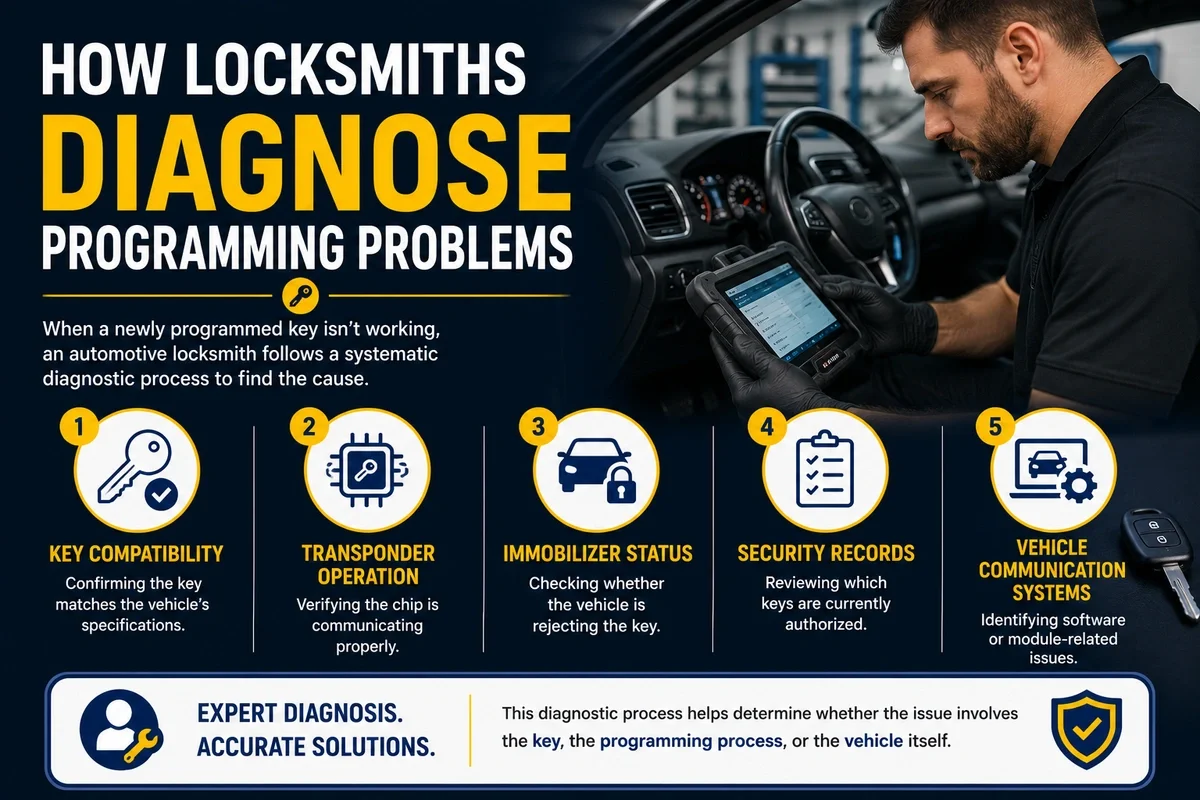
When a newly programmed key isn't working, an automotive locksmith may evaluate:
Key Compatibility
Confirming the key matches the vehicle's specifications.
Transponder Operation
Verifying the chip is communicating properly.
Immobilizer Status
Checking whether the vehicle is rejecting the key.
Security Records
Reviewing which keys are currently authorized.
Vehicle Communication Systems
Identifying software or module-related issues.
This diagnostic process helps determine whether the issue involves the key, the programming process, or the vehicle itself.
Why Having a Spare Key Helps
Programming replacement keys is often simpler when at least one working key remains available.
Having a spare key may:
- Simplify programming procedures
- Reduce downtime
- Help avoid all-keys-lost situations
- Provide a backup if programming issues occur
KeyMe offers several solutions for supported vehicles, including:
- Self-service car key duplication kiosks
- Online key copying for eligible key types
- Car key vans providing in-person cutting and programming at select retail locations
Creating a spare key before an emergency can make future key replacement significantly easier.
Frequently Asked Questions
Can a newly programmed key unlock the doors but still fail to start the vehicle?
Yes. Door lock operation and engine authorization are often controlled by different systems. A key may unlock the vehicle while still being rejected by the immobilizer.
Why does one replacement key work while another does not?
Differences in chip type, programming status, battery condition, or compatibility can affect whether a key is successfully recognized.
Can replacing the vehicle battery affect key programming?
Some vehicles may experience communication or security system issues after battery replacement, though this varies by manufacturer and model.
Are smart keys more difficult to program than traditional transponder keys?
Generally, yes. Smart keys often require additional authentication and communication procedures beyond standard transponder programming.
Should I test a replacement key immediately after programming?
Yes. Verifying locking, unlocking, remote functions, and engine starting helps confirm that programming was completed successfully.
Vehicle Security Systems Are Designed to Be Selective
When a vehicle rejects a newly programmed key, it's often doing exactly what it was designed to do, prevent unauthorized access. While the cause may be as simple as a weak battery or incompatible key, it can also involve sophisticated encryption, immobilizer systems, and vehicle security protocols. Understanding these factors helps explain why modern key programming requires both precision and specialized expertise.
Explore car key programming, replacement, and smart key solutions with KeyMe Locksmiths.
References
- National Highway Traffic Safety Administration (NHTSA) — Vehicle Theft Prevention Technologies https://www.nhtsa.gov/vehicle-safety/theft-prevention
- SAE International — Automotive Security & Immobilizer Systems https://www.sae.org/
- Consumer Reports — Smart Keys and Vehicle Security Technology https://www.consumerreports.org/cars/