

Summary
- Different doors throughout a multifamily property require different types of commercial hardware based on traffic, security, and intended use.
- Locks, exit devices, door closers, hinges, and access control systems should be selected as part of a complete door opening rather than as individual components.
- High-use common areas benefit from durable commercial-grade hardware designed for frequent operation.
- Regular inspections and preventive maintenance help extend hardware life and reduce service requests.
- Experienced commercial locksmiths can assist with hardware selection, installation, maintenance, and upgrades.
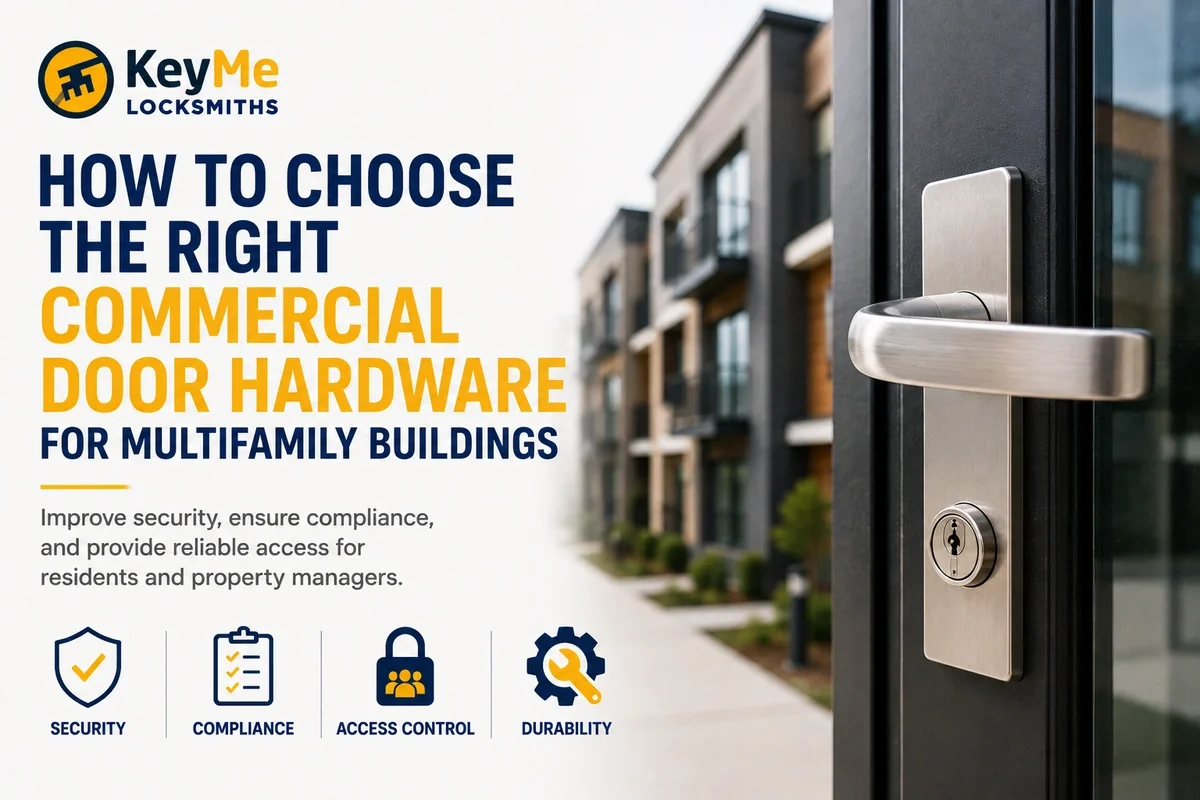
Commercial door hardware plays a critical role in the security, accessibility, and day-to-day operation of multifamily properties. From main entrances and package rooms to fitness centers, leasing offices, utility spaces, and emergency exits, every door must withstand frequent use while supporting safe and reliable access. Choosing the right hardware means balancing durability, building security, code compliance, resident convenience, and long-term maintenance needs. By selecting hardware designed for the specific function of each opening, property managers can improve operational efficiency while helping extend the life of their doors and locks.
Why Commercial Door Hardware Matters
Apartment communities rely on hundreds of doors that are opened and closed throughout the day.
These may include:
- Building entrances
- Apartment building lobbies
- Leasing offices
- Mail and package rooms
- Fitness centers
- Clubhouses
- Laundry facilities
- Storage rooms
- Mechanical rooms
- Maintenance shops
- Parking garages
- Stairwells
- Emergency exits
Unlike residential hardware, commercial hardware is designed to withstand higher traffic levels and more demanding operating conditions.
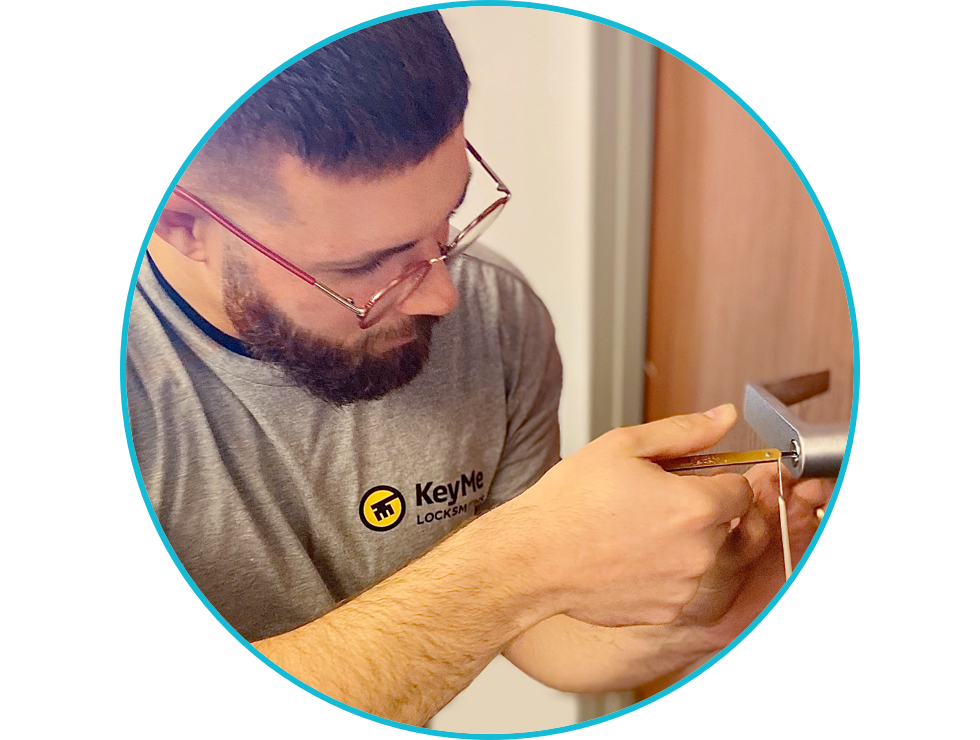
When locks or related components become worn or stop operating correctly, professional lock repair and installation services can help property managers evaluate whether the existing hardware can be serviced or whether replacement is more appropriate.
Consider the Purpose of Each Door
Every opening within a multifamily property serves a different purpose.
For example:
Public Entrances
Main entrances often require hardware that supports controlled access while accommodating frequent resident and visitor traffic.
These openings may combine commercial-grade mechanical hardware with electronic access systems. If an existing lock no longer meets the property's needs, commercial lock installation can be incorporated into a broader entrance upgrade.
Amenity Spaces
Fitness centers, pools, business centers, and clubhouses may require hardware that integrates with electronic access systems or scheduled access permissions.
Properties that use compatible RFID credentials can also consider key fob services as part of their access-management strategy, subject to the property's authorization and credential policies.
Service Areas
Maintenance rooms, utility spaces, and mechanical rooms typically require hardware that limits access to authorized personnel.
A structured keying strategy can help property managers control which employees or vendors can enter these spaces without unnecessarily distributing keys to other parts of the building.
Emergency Exits
Exit doors should allow occupants to leave quickly while helping prevent unauthorized entry from the outside.
Choosing hardware based on how each door is used helps improve both security and functionality. Fire, life-safety, accessibility, and building-code requirements should also be evaluated for the specific property and opening.
Need a Locksmith? We're here to help
Connect with a trusted local locksmith for fast, professional assistance when you need it most.
Types of Commercial Door Hardware
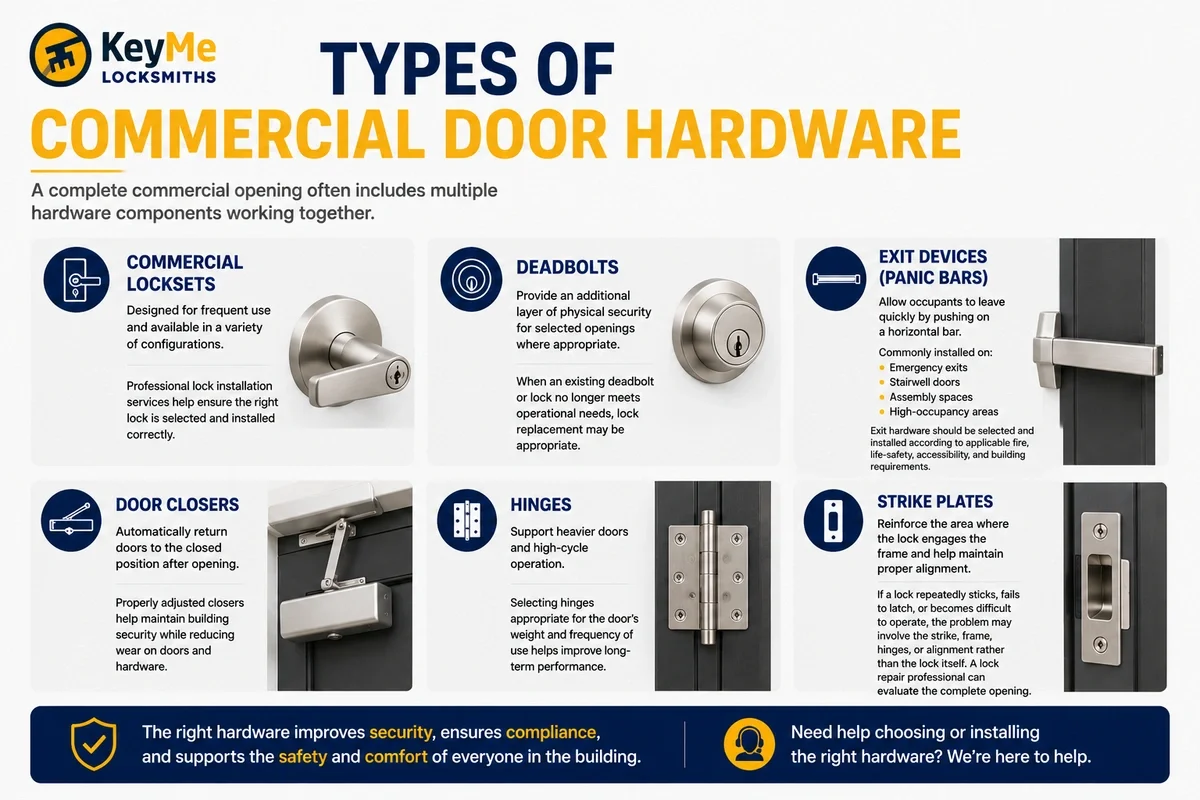
A complete commercial opening often includes multiple hardware components working together.
Common examples include:
Commercial Locksets
Commercial locksets are designed for frequent use and are available in a variety of configurations depending on the door's function.
Property managers planning new or replacement hardware can use professional lock installation services to help ensure the lock is appropriate for the opening and installed correctly.
Deadbolts
Deadbolts provide an additional layer of physical security for selected openings where appropriate.
When an existing deadbolt or lock no longer meets operational needs, lock replacement may be appropriate.
Exit Devices (Panic Bars)
Exit devices allow occupants to leave quickly by pushing on a horizontal bar.
They are commonly installed on:
- Emergency exits
- Stairwell doors
- Assembly spaces
- High-occupancy areas
Exit hardware should be selected and installed according to applicable fire, life-safety, accessibility, and building requirements.
Door Closers
Door closers automatically return doors to the closed position after opening.
Properly adjusted closers help maintain building security while reducing wear on doors and hardware.
Hinges
Commercial hinges support heavier doors and high-cycle operation.
Selecting hinges appropriate for the door's weight and frequency of use helps improve long-term performance.
Strike Plates
Strike plates reinforce the area where the lock engages the frame and help maintain proper alignment.
If a lock repeatedly sticks, fails to latch, or becomes difficult to operate, the problem may involve the strike, frame, hinges, or alignment rather than the lock itself. A lock repair professional can evaluate the complete opening.
Mechanical or Electronic Access?
Many multifamily communities combine traditional hardware with electronic access systems.
Electronic solutions may include:
- Smart locks
- Keypad entry
- Mobile credentials
- Electronic fobs
- Card readers
- Cloud-based access management
Mechanical hardware often remains part of the system by providing backup or secondary access where appropriate.
Properties using supported RFID access credentials can explore KeyMe key fob duplication for authorized copies. Property managers should maintain their own access policies and ensure duplication is permitted within the building's credential-management procedures.
The best combination of mechanical and electronic access depends on the property's operational needs, security requirements, existing infrastructure, and applicable codes.
Consider Traffic Levels
Not every door experiences the same amount of use.
High-traffic areas often include:
- Main building entrances
- Lobby doors
- Mailrooms
- Package rooms
- Parking garages
- Fitness centers
- Community rooms
These locations generally benefit from hardware designed for frequent daily operation and long-term durability.
Less frequently used storage or utility spaces may have different hardware requirements.
Traffic levels can also influence maintenance planning. A heavily used entrance may require more frequent inspections and lock repair than a mechanical-room door that is opened only periodically.
Think Beyond the Lock
A lock is only one part of the opening.
Property managers should also evaluate:
- Door condition
- Frame integrity
- Hinges
- Door closers
- Thresholds
- Weatherstripping
- Strike alignment
- Access control devices
Improving one component while overlooking the others may limit the effectiveness of the entire door system.
If the lock itself is worn but the rest of the opening remains serviceable, lock replacement may address the issue. If the existing lock is functional but access permissions need to change, rekeying may be a better fit.
Find a KeyMe Kiosk Near You
Need a spare key fast? Find a KeyMe kiosk near you to copy many house, office, and eligible car keys in just minutes.
Plan for Maintenance
Commercial hardware benefits from routine inspection.
Maintenance programs may include:
- Tightening loose hardware
- Testing lock operation
- Inspecting exit devices
- Adjusting door closers
- Lubricating moving components when appropriate
- Checking door alignment
- Verifying access control operation
Routine inspections help identify wear before it develops into a larger maintenance issue.
A lock that begins sticking, requires excessive force, or does not latch consistently should be investigated rather than ignored. Commercial lock repair can help determine whether the problem originates with the lock or another component of the opening.
If hardware has reached the end of its useful service life or no longer meets the property's requirements, lock replacement services can provide the next step.
Consider Accessibility
Door hardware should support safe and convenient use by residents, guests, staff, and service providers.
When evaluating upgrades, property managers may consider features such as:
- Lever-style hardware
- Smooth door operation
- Proper door closing speed
- Clearly functioning exit devices
- Accessible entry systems where appropriate
Accessibility considerations should be evaluated alongside applicable building codes, ADA requirements, fire and life-safety requirements, and project specifications.
Maintain Key Control Alongside Door Hardware
Even well-selected commercial hardware depends on effective key control.
Multifamily properties may have keys circulating among:
- Property managers
- Leasing teams
- Maintenance employees
- Contractors
- Cleaning personnel
- Vendors
- Other authorized staff
If access permissions change but the hardware remains in good condition, rekeying locks can change which keys operate compatible locks without replacing the entire lock assembly.
When authorized spare keys are needed, key duplication services can support the property's key-management process for eligible keys.
Property managers should maintain their own procedures for issuing, documenting, collecting, and securing keys.
Work With a Commercial Locksmith
Commercial locksmiths can help property managers:
- Evaluate existing hardware
- Recommend appropriate replacement options
- Install commercial-grade locks
- Support master key systems
- Rekey existing locks
- Repair worn locks and hardware
- Support compatible electronic access systems
- Develop long-term maintenance plans
Professional guidance can help property teams consider the entire opening rather than selecting a new lock without evaluating the surrounding door, frame, hinges, strike, and closer.
For unexpected access problems outside normal maintenance schedules, KeyMe also provides emergency locksmith services.
Copy Your Key from Anywhere - Right from Your Phone
Skip the kiosk and copy your key from home. Upload a clear photo of an eligible house or car key, and KeyMe will create a precise duplicate and mail it directly to your door.

Best Practices for Selecting Commercial Door Hardware
When planning hardware upgrades, consider:
- Matching hardware to the function of each door.
- Choosing commercial-grade components designed for expected traffic levels.
- Evaluating the entire door opening, not just the lock.
- Planning for future maintenance and replacement needs.
- Maintaining consistent key-control policies.
- Coordinating mechanical and electronic access systems where appropriate.
- Scheduling routine inspections of high-use openings.
- Working with experienced commercial locksmith professionals.
A thoughtful hardware strategy supports security, durability, and efficient property operations.
Why Choose KeyMe Locksmiths?
Managing a multifamily property requires dependable door hardware that supports residents, staff, and visitors every day. KeyMe Locksmiths connects property managers with experienced commercial locksmith professionals who can assist with lock installation, door hardware replacement, lock repair, rekeying, master key systems, smart lock support, and ongoing maintenance for apartment communities.
Available services may include:
- Commercial lock installation
- Lock replacement
- Lock repair
- Lock rekeying
- Master key system services
- Smart lock support
- Key duplication
- Commercial locksmith services
Property managers can also take advantage of KeyMe's nationwide locksmith network, along with mobile key scanning for eligible key duplication.
"Commercial door hardware works as a complete system. A high-quality lock can't perform as intended if the door, frame, hinges, closer, or strike are worn or improperly matched. Evaluating the entire opening, not just the lock, helps property managers improve security, reduce maintenance issues, and create a more reliable experience for residents and staff." — KeyMe Locksmiths
The Right Hardware Supports Long-Term Property Performance
Commercial door hardware influences nearly every aspect of a multifamily property's daily operations, from resident security and emergency egress to maintenance efficiency and access management.
Selecting hardware based on each door's purpose, expected traffic, and maintenance requirements helps create more reliable buildings that are easier to manage over time.
By partnering with an experienced commercial locksmith and incorporating routine inspections into a preventive maintenance program, property managers can address worn hardware, plan upgrades, and maintain more consistent access across their communities.
When individual components require attention, KeyMe also provides dedicated services for lock repair and installation, lock replacement, and lock rekeying.
References
- Door Security & Safety Foundation. Door Safety Resources.
https://www.doorsecuritysafety.org/ - Builders Hardware Manufacturers Association (BHMA). Commercial Door Hardware Resources.
https://buildershardware.com/ - National Apartment Association (NAA). Property Management Resources.
https://naahq.org/ - Institute of Real Estate Management (IREM). Property Management Best Practices.
https://www.irem.org/ - KeyMe Locksmiths service information for commercial locksmith, lock installation, lock repair, lock replacement, rekeying, key duplication, RFID, and emergency locksmith services.