

Summary
- Inspect exterior locks, doors, windows, and entry hardware before putting a home on the market.
- Repair or replace damaged locks and hardware before they interfere with a showing, inspection, or final walkthrough.
- Account for property keys and control who receives temporary access during the listing period.
- NAR recommends securing valuables, sensitive documents, medications, and other personal items before visitors enter the home.
- Electronic lockboxes can provide controlled, trackable access during showings.
- Consider rekeying when property keys have been lost or cannot be fully accounted for.
- Vacant listings require additional attention because no resident is routinely present to notice an access or maintenance problem.
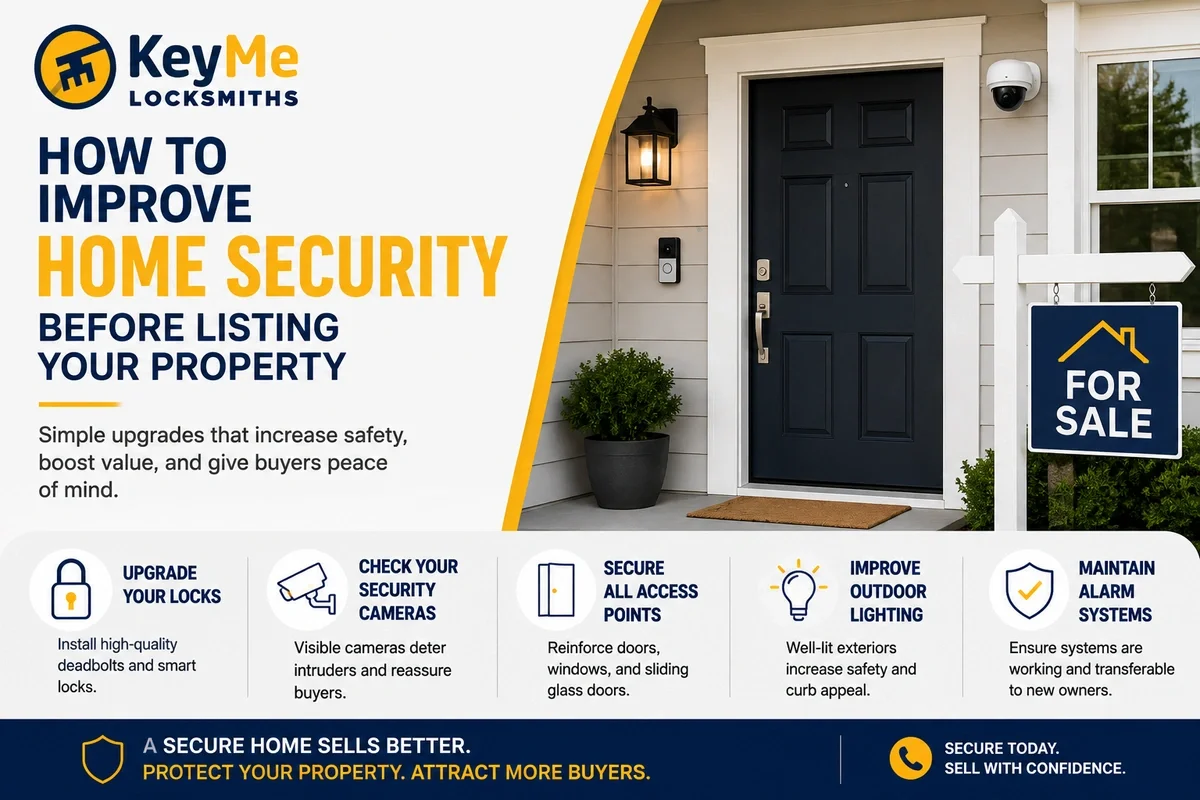
Preparing a home for sale involves more than cleaning, staging, and making cosmetic updates. The listing process can bring agents, prospective buyers, inspectors, appraisers, contractors, photographers, and other visitors into the property, making security and access control particularly important.
Before listing, inspect locks, doors, windows, and access systems, account for property keys, and address hardware that is damaged or difficult to operate. The National Association of REALTORS® (NAR) also advises sellers to secure valuables and sensitive information during showings and notes that electronic lockboxes can provide greater control over who accesses a property and when.
If you discover lock or key problems while preparing the property, KeyMe offers residential locksmith services, including lock repair, lock replacement, and rekeying.
Why Home Security Matters During the Selling Process
Once a home is listed, access may be needed by:
- Real estate agents
- Prospective buyers
- Home inspectors
- Appraisers
- Contractors
- Photographers
- Stagers
- Cleaning professionals
That increased traffic makes access management an important part of preparing a property for sale.
NAR's current Consumer Guide: Home Selling Tips for Privacy and Safety recommends that sellers secure jewelry, important documents, medications, and other valuables before allowing visitors into the home. NAR also recommends removing or concealing information that could expose personal details, such as mail, calendars, computer login information, and Wi-Fi passwords.
NAR's professional guidance for real estate practitioners similarly emphasizes securing a property after a showing and promptly returning keys.
For sellers, that means home security during a listing involves two related tasks: keeping the physical property secure and controlling how people gain access to it.
Need a Locksmith? We're here to help
Connect with a trusted local locksmith for fast, professional assistance when you need it most.
1. Test Every Exterior Door Lock
Start by checking every exterior entry point.
This includes:
- Front door
- Back door
- Side entrances
- Garage entry door
- Patio doors
- Basement entrances
Verify that each lock:
- Turns smoothly
- Latches securely
- Locks and unlocks without excessive force
- Shows no signs of damage or excessive wear
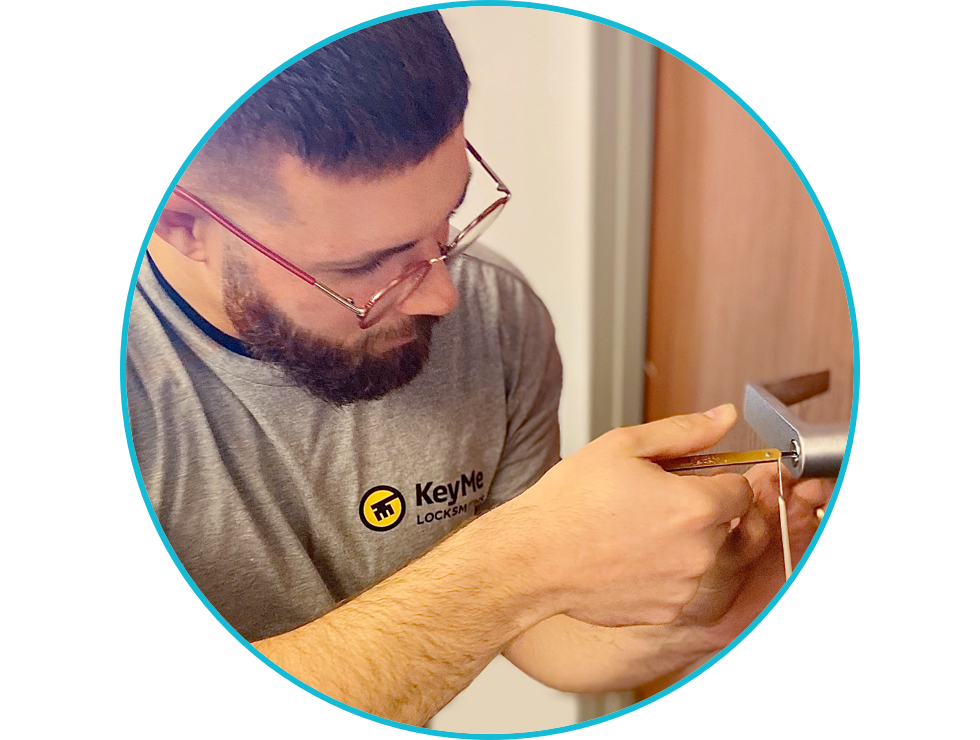
If a lock sticks, feels loose, or does not operate consistently, lock repair may be appropriate.
If the hardware itself is significantly damaged or no longer meets the property's needs, lock replacement may be the better option.
This type of inspection fits into a broader home-maintenance routine. The National Association of Home Builders (NAHB) recommends inspecting exterior windows and doors regularly, including checking the condition of surrounding materials such as caulking.
Addressing visible or functional problems before listing can prevent a minor maintenance issue from becoming something a prospective buyer notices during a showing.
2. Inspect Deadbolts
Deadbolts provide an additional layer of security on many exterior doors.
Check that they:
- Extend fully into the strike plate
- Retract smoothly
- Align properly with the door frame
- Operate easily with the key
If a deadbolt becomes difficult to use, the problem may not necessarily be the lock itself.
Door movement or alignment can prevent a deadbolt from lining up correctly with its strike plate. If the lock operates normally when the door is open but binds when the door is closed, inspect the alignment before assuming the cylinder needs replacement.
A residential locksmith can evaluate whether the problem involves the lock, strike plate, door alignment, or related hardware.
3. Check Door Alignment
Doors can shift over time due to settling, seasonal changes, hardware movement, and everyday use.
Look for:
- Doors rubbing against the frame
- Deadbolts that do not fully engage
- Latches that miss the strike plate
- Doors that require lifting to close
- Doors that need excessive pressure to latch
A sticky or poorly aligned door is also worth addressing from a presentation standpoint.
NAR's home-showing guidance specifically identifies sticky doors and other minor repair issues as details that can give prospective buyers the impression that a property has not been well maintained.
Correcting these problems before the first showing can therefore improve both security and the buyer's experience of the property.
4. Inspect Windows and Sliding Doors
Doors are not the only entry points that deserve attention before a listing goes live.
Check that:
- Window locks function properly.
- Sliding doors close securely.
- Patio door locks engage fully.
- Damaged latches are repaired.
- Windows close correctly.
- Exterior frames show no obvious maintenance issues.
NAHB recommends regular inspection of exterior windows and doors as part of routine home maintenance, including checking for cracked or deteriorated caulking.
For sellers, this is a useful reminder to evaluate the complete opening rather than looking only at the lock.
5. Repair Loose or Damaged Hardware
Inspect:
- Door handles
- Knobs
- Deadbolts
- Strike plates
- Hinges
- Sliding door hardware
Loose hardware can affect how a door closes and locks, and it may also make an otherwise maintained property feel neglected.
NAR advises sellers to address minor repair issues before showings because details such as sticky doors and torn screens can influence a buyer's perception of the home's overall maintenance.
When a problem involves a lock or its related hardware, lock repair and installation services can help determine whether the existing components can be serviced or whether replacement is more appropriate.
Find a KeyMe Kiosk Near You
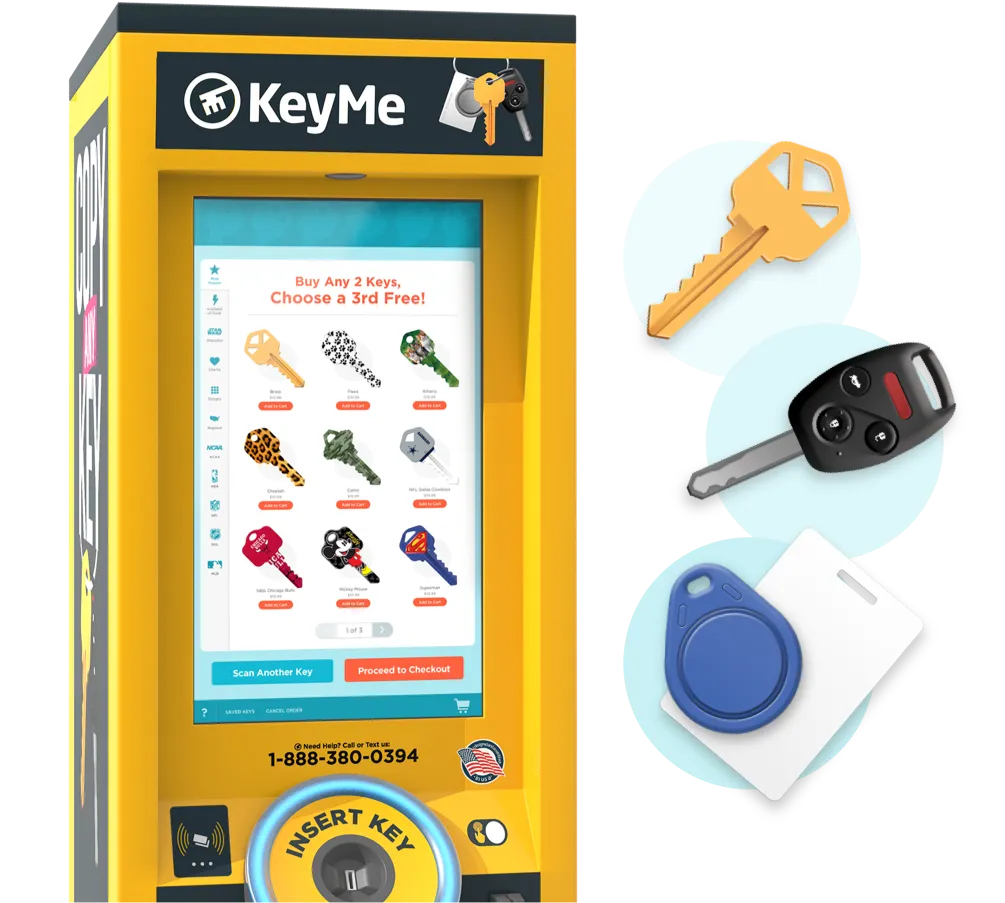
Need a spare key fast? Find a KeyMe kiosk near you to copy many house, office, and eligible car keys in just minutes.
6. Organize Every Property Key
Before listing your home, gather the keys associated with the property.
These may include:
- House keys
- Garage entry keys
- Mailbox keys
- Storage room keys
- Gate keys
- Shed keys
- Smart lock backup keys
Determine which keys are still active and which doors or spaces they operate.
If authorized spare copies are needed, KeyMe offers key duplication and key cutting for many supported key types. Eligible keys may also be copied at participating KeyMe kiosks.
Avoid distributing more keys than necessary during the listing period. When temporary access is required, maintain a clear process for who receives access and when it should be returned or revoked.
7. Use Showing Access Carefully
How agents, inspectors, appraisers, and other authorized visitors enter the home matters.
NAR's 2026 lockbox policy requires qualifying lockbox systems to use security controls designed to restrict access to authorized users. Its policy also permits temporary codes or access under certain circumstances, subject to specific controls and local rules.
NAR's consumer guidance recommends electronic lockboxes because they can restrict access to authorized real estate professionals, provide temporary access for service providers, and create a record showing who entered the property and when.
For sellers, this can provide greater visibility into property access than simply circulating copies of a house key.
Work with your listing agent to determine the appropriate access process for the property and local MLS requirements.
8. Evaluate Smart Locks and Electronic Access
If your home uses smart locks, verify that they operate properly before listing.
Review:
- Battery levels
- Keypad functionality
- Mobile app access
- Temporary access codes
- Administrator accounts
- Mechanical backup keys
- Firmware updates when supported by the manufacturer
If agents, contractors, or service providers receive temporary credentials, remove those credentials when access is no longer required.
Do not forget the physical backup system. A smart lock may work electronically while its mechanical key cylinder has gone unused for years. Test both before the home is listed.
If new hardware is needed, lock installation may be appropriate depending on the door and device.
9. Secure Personal Property During Showings
Property security is not limited to locks.
NAR specifically recommends that sellers secure:
- Jewelry
- Sensitive documents
- Prescription medications
- Firearms
- Collectibles
- Electronic devices
- Other valuables
NAR also recommends putting away items that reveal personal information, including visible mail, calendars, Wi-Fi credentials, and computer login information.
This is particularly important during open houses and other situations where several prospective buyers may be inside the property.
Do not rely on an agent being able to monitor every person and every room continuously.
10. Consider Rekeying When Key Control Is Uncertain
Whether to rekey before selling depends on the circumstances.
Rekeying may be worth considering if:
- House keys have been lost.
- Copies cannot be fully accounted for.
- Previous contractors or service providers received keys.
- Former occupants may still possess keys.
- Access circumstances have changed.
The Associated Locksmiths of America (ALOA) emphasizes key control when discussing rekeying after a property changes hands. ALOA notes that it can be difficult to know whether every previously issued key has actually been returned and identifies rekeying as a way to prevent former key holders from continuing to use existing copies.
That same principle can apply before a sale when a seller knows that active keys are unaccounted for.
Rekeying changes which key operates a compatible existing lock. If the hardware itself is damaged or unsuitable, lock replacement may make more sense.
11. Secure the Home Between Showings
After each showing, confirm that:
- Exterior doors are locked.
- Windows remain secured.
- Sliding doors are latched.
- Smart locks have returned to the correct status.
- Temporary access methods remain controlled.
- No keys have been left unsecured inside the property.
NAR's Pathways to Professionalism guidance tells real estate professionals to leave properties as they found them, secure the property and lockbox, and promptly return keys.
Sellers should discuss showing and lockup procedures with their listing agent so everyone understands how the property should be left after each visit.
12. Complete a Final Security Walkthrough
Before the first showing, conduct one final inspection.
Confirm that:
- Every exterior lock operates properly.
- Windows lock securely.
- Garage entry doors function correctly.
- Smart locks work as intended.
- Spare keys are accounted for.
- Door hardware is secure.
- Exterior lighting operates properly.
- Access instructions for agents are accurate.
NAR's current seller checklist recommends preparing a property before every showing, including securing valuables and making sure exterior pathways are safe and clear.
A repeatable pre-showing checklist can make security part of the listing routine rather than something that is considered only once.
Security Tips for Vacant Homes
Vacant listings deserve additional attention because there is no resident routinely present to notice a door left unlocked, a damaged window, or another problem.
NAR has specifically highlighted safety concerns associated with real estate professionals working in vacant properties. Its 2026 reporting on showing safety notes that agents can face heightened vulnerability while touring vacant homes with people they do not know.
If a listed property is vacant:
- Visit the property regularly.
- Limit physical key distribution.
- Use controlled showing access.
- Inspect doors and windows after visits.
- Maintain exterior lighting.
- Keep landscaping maintained.
- Monitor for signs of unauthorized entry.
- Remove valuables and sensitive documents.
- Confirm the property is secured after contractors or inspectors leave.
If active keys cannot be accounted for, consider rekeying the locks to restore control over physical access.
Copy Your Key from Anywhere - Right from Your Phone
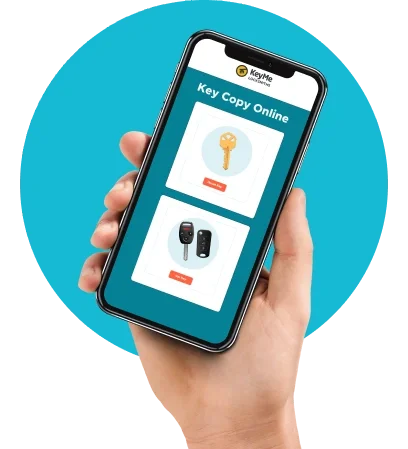
Skip the kiosk and copy your key from home. Upload a clear photo of an eligible house or car key, and KeyMe will create a precise duplicate and mail it directly to your door.
Best Way to Prepare Home Security Before Listing
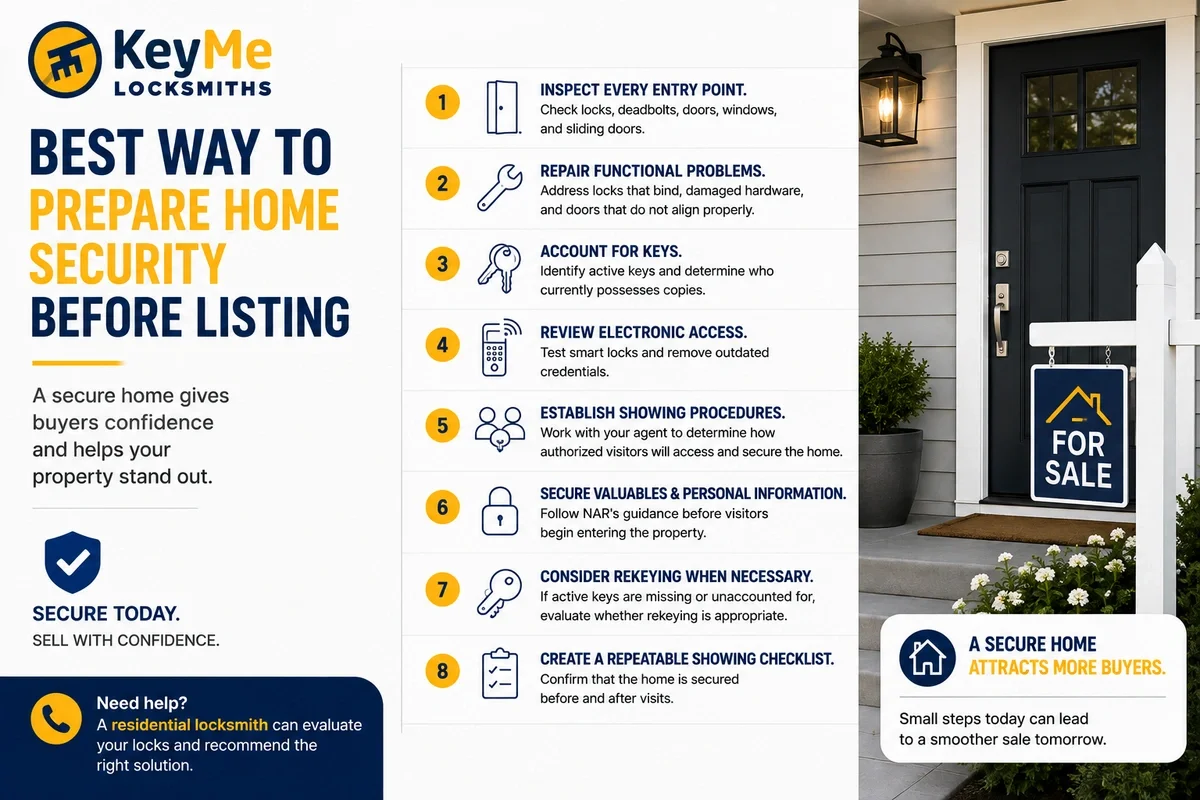
A practical pre-listing process is:
- Inspect every entry point. Check locks, deadbolts, doors, windows, and sliding doors.
- Repair functional problems. Address locks that bind, damaged hardware, and doors that do not align properly.
- Account for keys. Identify active keys and determine who currently possesses copies.
- Review electronic access. Test smart locks and remove outdated credentials.
- Establish showing procedures. Work with your agent to determine how authorized visitors will access and secure the home.
- Secure valuables and personal information. Follow NAR's guidance before visitors begin entering the property.
- Consider rekeying when necessary. If active keys are missing or unaccounted for, evaluate whether rekeying is appropriate.
- Create a repeatable showing checklist. Confirm that the home is secured before and after visits.
If the inspection uncovers a problem that requires specialized help, a residential locksmith can evaluate the locks and recommend an appropriate service.
When to Call a Locksmith Before Listing
Professional assistance may make sense if:
- A lock repeatedly sticks or binds.
- Multiple keys do not operate a lock correctly.
- A key has broken inside a lock.
- Exterior lock hardware is loose or damaged.
- Existing locks need to be rekeyed.
- New locks need to be installed.
- A vacant property has uncertain key control.
- A lockout interrupts a showing or property visit.
Relevant KeyMe services include:
Why Choose KeyMe Locksmiths?
Whether you're preparing a primary residence, vacation home, or investment property for sale, KeyMe Locksmiths connects homeowners and real estate professionals with experienced residential locksmiths who can address lock and access issues before listing.
Available services may include:
- Lock repair
- Lock replacement
- Lock rekeying
- Lock installation
- Key duplication
- Smart lock installation and support
- Residential lockout assistance
- Commercial locksmith services for mixed-use and investment properties
KeyMe also offers mobile key scanning for eligible keys. An authorized user can upload a photo of a supported key, which is processed and cut at a central facility before the finished key is shipped to the requested address.
"Preparing a home for sale isn't only about creating curb appeal. It's also about creating confidence. Buyers notice when doors close properly, locks operate smoothly, and entry points feel secure. Taking time to inspect and maintain those details before listing demonstrates that the property has been thoughtfully cared for throughout ownership." - KeyMe Locksmiths
A Secure Home Makes a Strong First Impression
Preparing a home for sale is an opportunity to address security and access issues before a larger number of people begin entering the property.
NAR's seller guidance reinforces the importance of securing valuables, protecting personal information, and using controlled access during showings. NAHB's maintenance recommendations support routinely inspecting exterior doors and windows, while ALOA's consumer guidance highlights why key control and rekeying matter when previous keys cannot be accounted for.
Combined with a careful inspection of locks, doors, windows, keys, and electronic access, these steps can help homeowners and real estate professionals maintain better control of the property throughout the listing process.
When specialized assistance is needed, KeyMe offers residential locksmith services, including lock repair, rekeying, lock replacement, and key duplication.
References
- National Association of REALTORS®. Consumer Guide: Home Selling Tips for Privacy and Safety. Guidance for sellers on securing valuables and personal information and using electronic lockboxes to manage property access.
https://www.nar.realtor/the-facts/consumer-guide-home-selling-tips-for-privacy-and-safety - National Association of REALTORS®. Consumer Guide: Seller Checklist, 15 Things to Do Before Every Showing. Current seller guidance covering valuables, property preparation, and exterior pathways before showings.
https://www.nar.realtor/the-facts/consumer-guide-seller-checklist-15-things-to-do-before-every-showing - National Association of REALTORS®. Pathways to Professionalism. Professional guidance addressing property access, showing conduct, securing properties, lockboxes, and returning keys.
https://www.nar.realtor/code-of-ethics-and-arbitration-manual/pathways-to-professionalism - National Association of REALTORS®. Lock Box Security Requirements, MLS Policy Statement 7.31. Current NAR policy covering authorized lockbox access, security controls, and temporary access credentials.
https://www.nar.realtor/handbook-on-multiple-listing-policy/lock-box-section-1-lock-box-security-requirements-mls-policy-statement-7-31 - National Association of REALTORS®. Tackling the Safety Gap in Real Estate Showings. 2026 discussion of security and personal-safety considerations surrounding real estate showings, including vacant properties.
https://www.nar.realtor/news/real-estate-news/technology/tackling-the-safety-gap-in-real-estate-showings - National Association of Home Builders. Routine Home Maintenance. Home-maintenance guidance covering regular inspection of exterior windows and doors.
https://www.nahb.org/other/consumer-resources/routine-home-maintenance - Associated Locksmiths of America. Should I Change My Locks When I Move Into a House? Consumer guidance explaining key-control concerns and the role of rekeying when previous keys may remain in circulation.
https://www.aloa.org/consumers/changelocks