

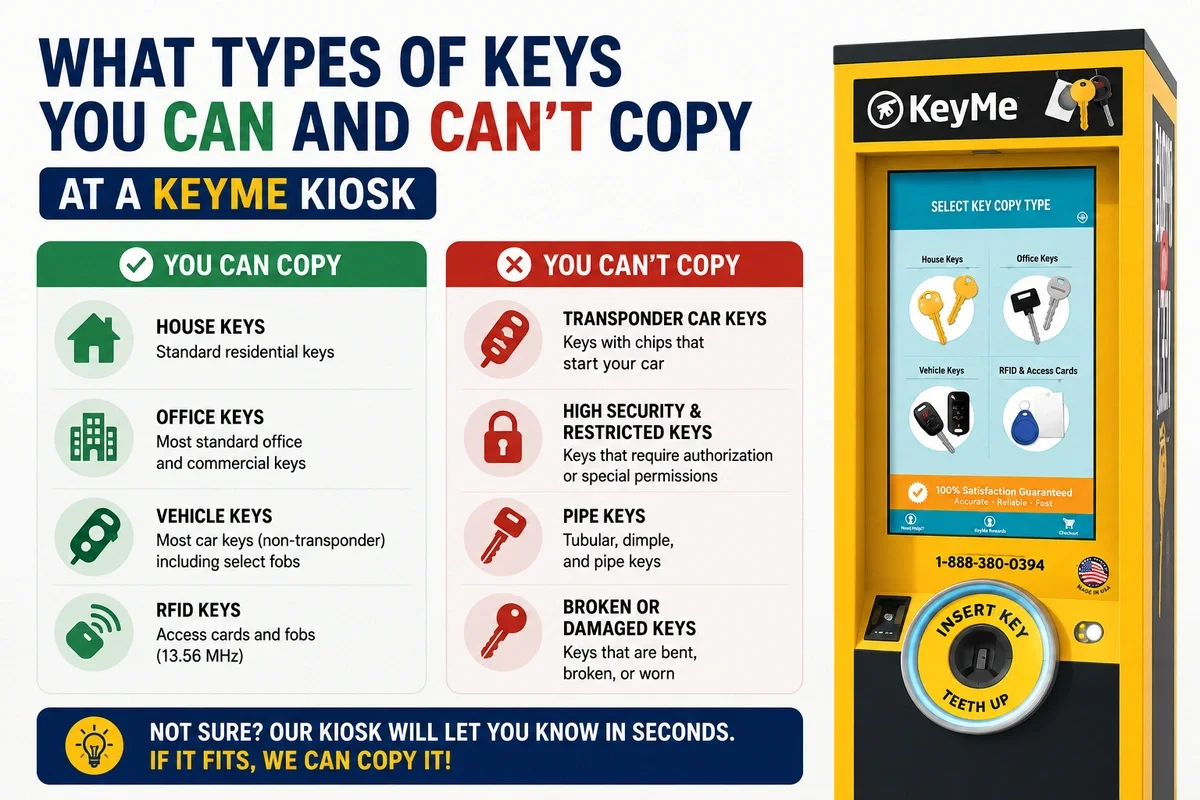
KeyMe self-service kiosks can duplicate many common residential, office, mailbox, padlock, and select automotive keys. However, not every key is eligible for kiosk duplication. Some keys are protected by restricted keyways, require owner authorization, or contain electronic security features that require specialized programming instead of traditional key cutting.
Understanding which keys are commonly supported—and why some aren't—can help you choose the right solution before you visit a kiosk.
Summary
- KeyMe kiosks can duplicate many standard mechanical house, office, padlock, and mailbox keys.
- Many automotive keys are also supported, although compatibility depends on the vehicle's make, model, year, and security system.
- Some compatible RFID access devices can also be duplicated at participating kiosks.
- Restricted, proprietary, or highly encrypted keys may require authorization or locksmith-assisted replacement instead of kiosk duplication.
- If a key isn't supported at a kiosk, KeyMe may offer alternative solutions through its nationwide locksmith network.
Why Choose KeyMe Locksmiths?
Key duplication is one of the most common locksmith services, but today's keys range from simple mechanical designs to sophisticated electronic credentials. KeyMe offers multiple ways to duplicate supported keys while also connecting customers with professional locksmith services when additional expertise is required.
Available services may include:
- House key duplication
- Automotive key duplication
- Select transponder key duplication
- RFID access device duplication for compatible systems
- Lock rekeying
- Lock replacement
- Residential locksmith services
- Automotive locksmith services
In addition to thousands of self-service kiosks across the United States, KeyMe offers Online Key Copying, allowing eligible house keys to be duplicated by securely uploading a photo and shipped directly to your home. For many supported vehicles, Car Key Vans at select retail locations provide on-site automotive key cutting and programming.
"Not every key is built the same. Some are designed for quick mechanical duplication, while others incorporate patented designs or electronic security features that intentionally control how replacements are made. Understanding those differences helps customers choose the right duplication method." — KeyMe Locksmiths
How KeyMe Kiosks Copy Keys
Modern KeyMe kiosks use digital scanning technology to analyze a key's dimensions before creating a duplicate.
Rather than simply tracing the original key, the kiosk creates a digital model of the key's cutting pattern and uses precision equipment to produce a replacement for many supported key types.
Because each key is evaluated individually, compatibility depends on both the physical design of the key and any security features associated with it.
Need a Locksmith? We're here to help
Connect with a trusted local locksmith for fast, professional assistance when you need it most.
Keys Commonly Supported at KeyMe Kiosks
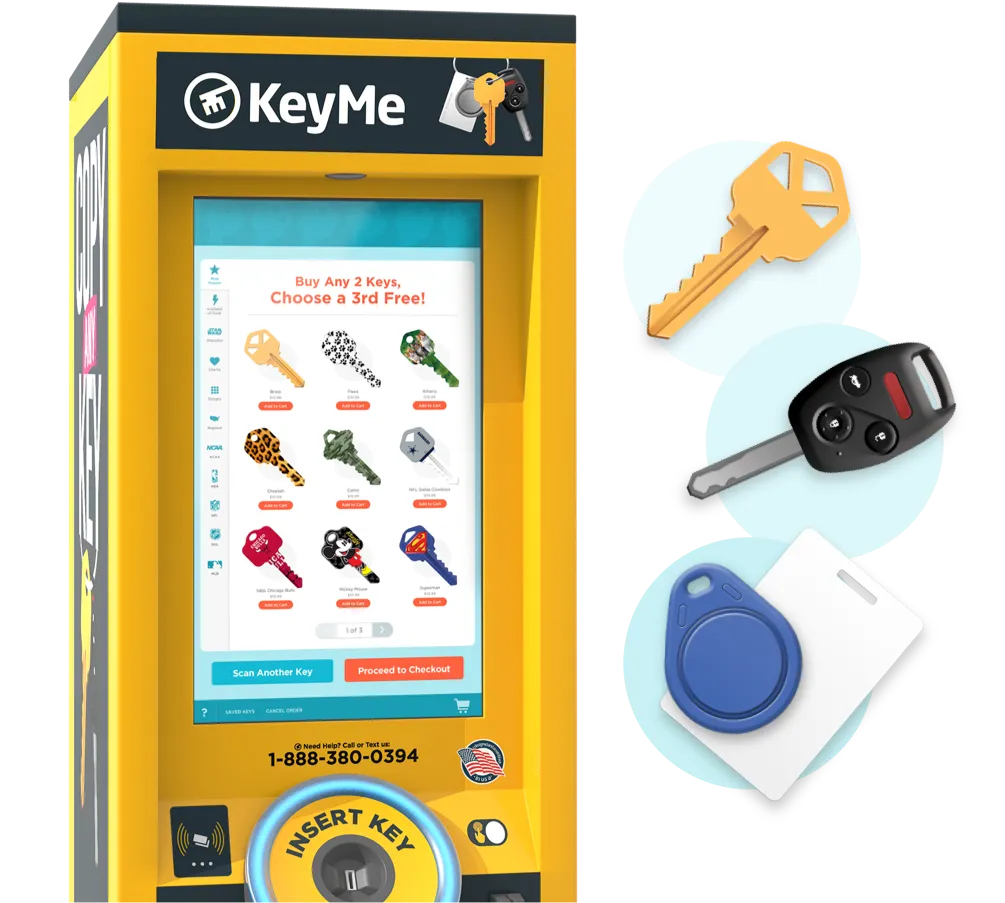
Standard House Keys
The majority of keys duplicated at KeyMe kiosks are traditional residential keys.
Common examples include:
- Front door keys
- Back door keys
- Side entrance keys
- Garage entry door keys
- Interior residential door keys
These keys typically use standard mechanical cuts and do not require electronic programming.
Because they remain one of the most common key types used in North America, they're often well suited for kiosk duplication.
Padlock Keys
Many common padlock keys are also compatible.
Examples include keys used for:
- Storage units
- Gates
- Toolboxes
- Utility locks
- Outdoor storage
Compatibility depends on the lock manufacturer and key design.
Mailbox Keys
Many privately owned mailbox keys can be duplicated.
Examples include:
- Residential mailbox keys
- Locking curbside mailbox keys
- Cabinet mailbox locks
- Privately managed apartment mailbox systems
Mailbox ownership matters.
Some USPS-managed mailbox systems and restricted property-managed mailbox keys follow different replacement procedures and may not be eligible for kiosk duplication.
Cabinet, Desk, and Office Keys
Many small mechanical keys used in offices and homes are also compatible.
Examples include:
- Filing cabinets
- Office desks
- Storage cabinets
- Locking drawers
- Utility cabinets
As with residential keys, compatibility depends on the specific keyway.
Select Automotive Keys
Many vehicle keys are supported through KeyMe's automotive services.
Depending on the vehicle, this may include:
- Mechanical car keys
- Select transponder keys
- Some remote-head keys
- Many replacement key fobs through supported services
Because every vehicle uses a different security system, compatibility varies based on:
- Manufacturer
- Model
- Model year
- Immobilizer technology
- Programming requirements
For vehicles requiring electronic programming, KeyMe may offer locksmith-assisted services or Car Key Van solutions for supported makes and models.
Compatible RFID Access Devices
Some participating KeyMe kiosks can duplicate compatible RFID credentials used for controlled-access properties.
Depending on system compatibility, these may include credentials used for:
- Apartment communities
- Office buildings
- Fitness centers
- Parking facilities
- Gated communities
Because every access control system is different, compatibility is verified before duplication begins.
Keys That Typically Cannot Be Copied at a KeyMe Kiosk
While KeyMe kiosks support many common key types, some keys are intentionally designed to limit duplication. These restrictions help protect homes, businesses, and controlled-access properties by ensuring replacement keys are issued only through authorized channels.
If a key isn't supported at a kiosk, it doesn't necessarily mean it can't be replaced—it simply means a different process may be required.
Restricted Keys
Some residential and commercial keys use restricted keyways that are designed to control duplication.
These keys may:
- Require proof of authorization
- Be protected by patented key designs
- Be issued only by authorized locksmiths
- Require replacement through the original lock manufacturer
Some restricted keys are stamped with phrases such as:
- "Do Not Duplicate"
- "Restricted"
- Manufacturer-specific markings
However, markings alone don't always determine whether a key can legally or practically be duplicated. The lock's design, ownership, and manufacturer policies all play a role.
"Restricted keys aren't intended to make duplication difficult—they're designed to maintain control over who can obtain additional copies. That added layer of authorization helps protect homes, businesses, and shared properties." — KeyMe Locksmiths
High-Security Keys
Many modern locks use high-security key systems that offer additional protection against unauthorized duplication and lock manipulation.
Compared with standard house keys, high-security keys may feature:
- Patented keyways
- Side cuts
- Internal grooves
- Dimples
- Specialized milling
- Additional security elements
Because these systems are designed around controlled key management, replacement keys often require authorization from the lock manufacturer or an authorized provider.
Certain Commercial Master Key Systems
Businesses, schools, hospitals, and multifamily properties often use master key systems.
These systems allow:
- Individual keys to open designated doors
- Master keys to access multiple areas
- Different users to have different levels of access
To preserve that access hierarchy, many master key systems use restricted keyways that are intentionally controlled.
Rather than duplicating these keys at a self-service kiosk, replacements are often coordinated through:
- Property managers
- Facility managers
- Building owners
- Authorized locksmith providers
Some Automotive Keys
Vehicle technology continues to evolve, and not every automotive key can be duplicated using the same process.
Some newer vehicles use:
- Advanced encrypted Smart Keys
- Proprietary proximity systems
- Manufacturer-specific programming
- Enhanced immobilizer technology
Although KeyMe supports many vehicle makes and models, some keys require specialized programming equipment or manufacturer-specific procedures.
When additional programming is required, KeyMe may provide locksmith-assisted services or Car Key Van solutions for supported vehicles.
Severely Worn or Damaged Keys
Even if a key type is normally supported, its condition can affect duplication.
A key that has become:
- Bent
- Cracked
- Broken
- Excessively worn
- Heavily corroded
may not produce the best duplicate because the original no longer reflects its intended dimensions.
Whenever possible, it's best to create spare keys while the original remains in good condition.
Doing so helps produce a more accurate duplicate and reduces the risk of future lock or key problems.
Find a KeyMe Kiosk Near You
Need a spare key fast? Find a KeyMe kiosk near you to copy many house, office, and eligible car keys in just minutes.
Why Some Keys Can't Be Copied
Many people assume unsupported keys are simply "too difficult" to duplicate.
In reality, restrictions usually exist for security reasons.
Depending on the application, controlled duplication helps:
- Protect homes from unauthorized access.
- Secure commercial facilities.
- Maintain master key systems.
- Protect apartment communities.
- Preserve patented lock designs.
- Comply with manufacturer requirements.
- Support postal and property management policies.
These safeguards help ensure replacement keys are issued only through appropriate channels.
What Happens If Your Key Isn't Supported?
If a KeyMe kiosk determines that a key isn't eligible for duplication, you still have several options.
Depending on the key type, you may be able to:
- Contact your property manager.
- Request authorization from the building owner.
- Order a replacement through the original manufacturer.
- Work with a professional locksmith.
- Use KeyMe's nationwide locksmith network for supported replacement services.
Understanding why a key isn't supported often makes it easier to determine the appropriate next step.
Tips for Getting the Best Duplicate
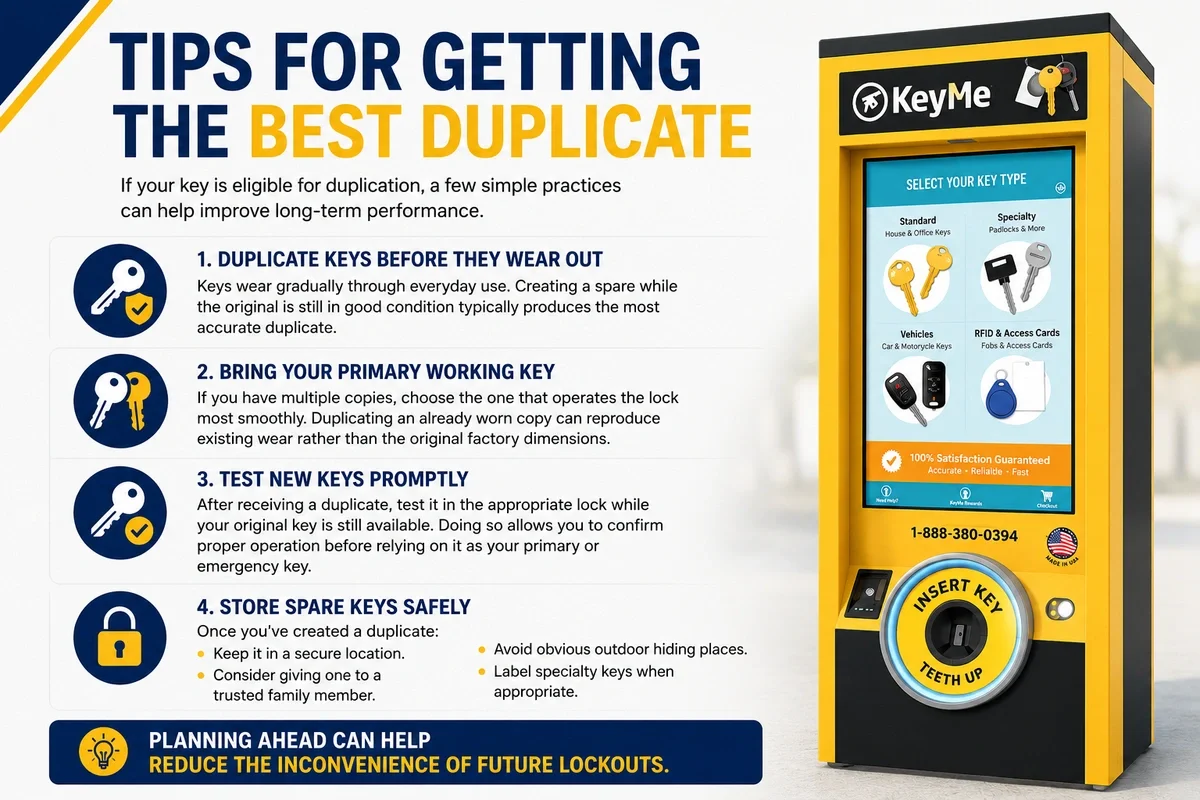
If your key is eligible for duplication, a few simple practices can help improve long-term performance.
Duplicate Keys Before They Wear Out
Keys wear gradually through everyday use.
Creating a spare while the original is still in good condition typically produces the most accurate duplicate.
Bring Your Primary Working Key
If you have multiple copies, choose the one that operates the lock most smoothly.
Duplicating an already worn copy can reproduce existing wear rather than the original factory dimensions.
Test New Keys Promptly
After receiving a duplicate, test it in the appropriate lock while your original key is still available.
Doing so allows you to confirm proper operation before relying on it as your primary or emergency key.
Store Spare Keys Safely
Once you've created a duplicate:
- Keep it in a secure location.
- Consider giving one to a trusted family member.
- Avoid obvious outdoor hiding places.
- Label specialty keys when appropriate.
Planning ahead can help reduce the inconvenience of future lockouts.
Copy Your Key from Anywhere - Right from Your Phone
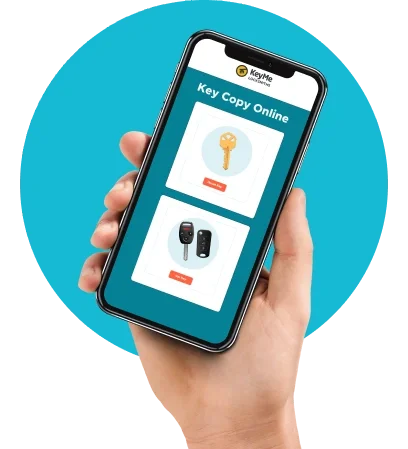
Skip the kiosk and copy your key from home. Upload a clear photo of an eligible house or car key, and KeyMe will create a precise duplicate and mail it directly to your door.
Understanding Which Keys Can Be Copied Helps You Plan Ahead
KeyMe kiosks are designed to duplicate many of the keys people use every day, from standard house keys and padlocks to compatible automotive keys and access devices. At the same time, some keys are intentionally restricted to protect homes, businesses, and controlled-access properties.
Knowing which keys are commonly supported—and why certain keys require a different replacement process—can help you choose the right solution while avoiding unnecessary delays. When possible, creating spare keys before they're needed remains one of the easiest ways to prepare for lost or damaged keys.
References
- Associated Locksmiths of America (ALOA). Consumer Resources. https://www.aloa.org/
- United States Postal Service (USPS). Mailbox and Key Information. https://www.usps.com/
- Security Industry Association (SIA). Physical Security Resources. https://www.securityindustry.org/
- KeyMe Locksmiths service information for self-service kiosks, Mobile Key Scanning, Car Key Vans, and locksmith services.