

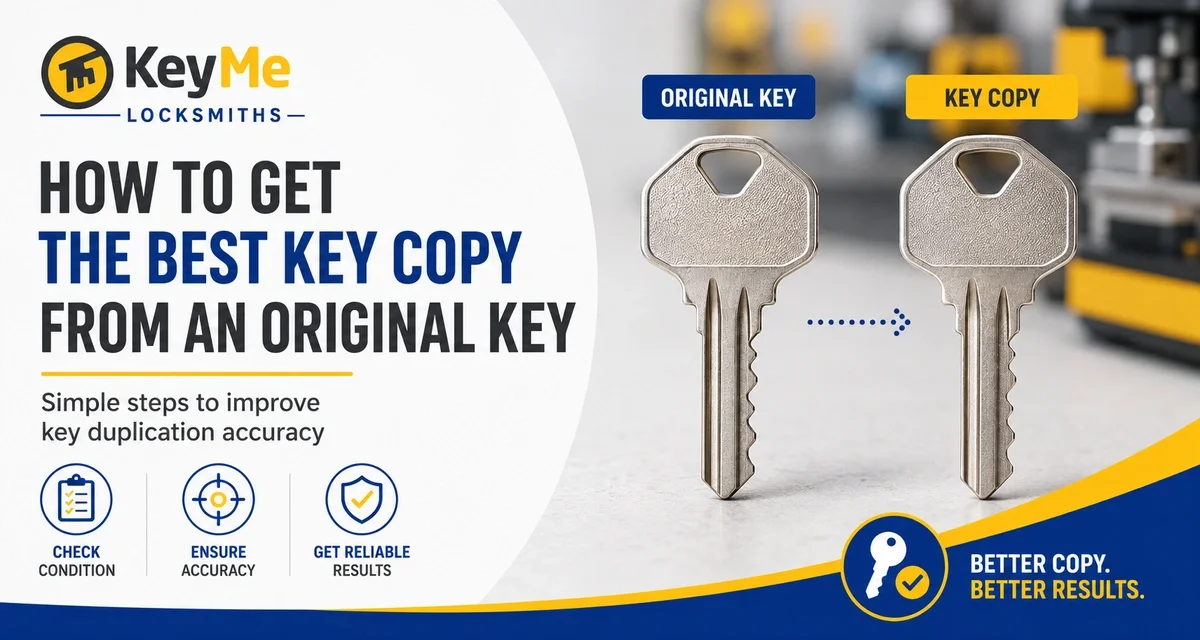
To get the best key copy, start with the cleanest, least-worn working original available. Choose a key that enters and turns smoothly, lies flat, has no cracks or significant bending, and does not require jiggling or unusual pressure to operate.
If you have several keys for the same lock, do not automatically copy whichever one is closest.
The condition and history of the source key matter.
A heavily used key can still open a lock while being a poor source for another generation of duplicates. Likewise, a newer-looking key may actually be a copy of a copy rather than the original.
The best key-copy process therefore starts before duplication.
Summary
- Use the best-condition working key available as your source.
- Prefer a known original over a copy when possible.
- Do not judge a source key only by whether it still opens the lock.
- Avoid using keys that are bent, cracked, heavily worn, or difficult to operate.
- If you have several keys, compare how smoothly each one works.
- Avoid repeatedly creating copies from other copies when a better source is available.
- Confirm that your key is supported by the duplication method you plan to use.
- Mechanical house keys, specialty keys, and electronic vehicle keys may require different duplication methods.
- Test the new copy soon after receiving it.
- Once you have a good duplicate, consider preserving a good-condition spare as a future reference key.
Why the Source Key Matters
A duplicate begins with information from another key.
That makes the condition of the source important.
Associated Locksmiths of America notes that keys show wear as they age and that duplicating old or worn keys can create operating problems.
A key does not need to be completely unusable before wear matters.
An everyday key may still open the door while requiring:
- Slight jiggling
- Extra pressure
- Partial withdrawal before turning
- More effort than another key
Those are useful signs when deciding which key should become the source.
"The best time to think about key-copy quality is before the copy is made. If several keys open the same lock, start with the one that is in the best condition and operates most consistently rather than automatically choosing the key you use every day." - KeyMe Locksmiths
Need a Locksmith? We're here to help
Connect with a trusted local locksmith for fast, professional assistance when you need it most.
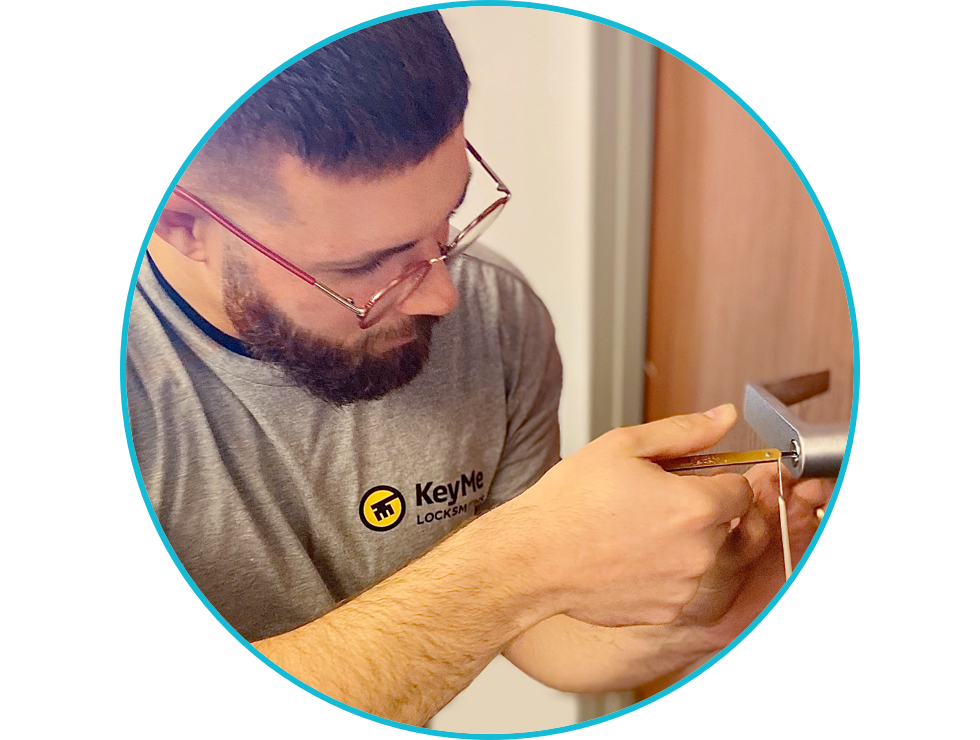
Step 1: Find the Best Key You Have
If you have several keys that operate the same lock, compare them.
A good source key should ideally:
- Insert smoothly
- Turn consistently
- Remove normally
- Lie flat
- Have no visible cracks
- Show minimal wear
- Require no special technique
Do not automatically choose the newest-looking key.
Ask where each key came from.
If one is the known original and another was duplicated from an older copy, the original may provide the better starting point if it remains in good condition.
Step 2: Know the Difference Between a Working Key and a Good Source Key
This distinction is important.
A key can work without being an ideal duplication source.
Suppose a house key opens the front door only after you pull it slightly outward.
You may have learned that technique so well that it feels normal.
But the behavior suggests that the key, lock, or both deserve evaluation.
Creating another copy from that key may not be the best first step.
If another authorized key operates the same lock smoothly, compare the two before choosing your source.
Step 3: Inspect the Key for Wear
Look at the source under good lighting.
Check for:
- Rounded cuts
- Worn edges
- Bending
- Cracks
- Significant surface damage
- Distortion
Normal cosmetic wear does not necessarily make a key unusable.
The more important question is whether the wear affects the geometry or operation of the key.
If the key is visibly damaged or increasingly difficult to use, consider locksmith evaluation rather than assuming another duplicate is the right solution.
Step 4: Avoid Copying a Copy When a Better Source Exists
A duplicate can itself become the source for another duplicate.
But that creates a chain:
Original → Duplicate → Duplicate of duplicate
ALOA specifically notes that duplicating old or worn keys can contribute to key problems and that returning to an original source may sometimes resolve them.
If you know which key is the original and it remains in good condition, use it when practical.
If you do not know which key is original, choose based on condition and performance rather than guessing from appearance alone.
Step 5: Clean the Key Enough to Inspect It
A key that has spent years in a pocket, purse, drawer, or garage may accumulate surface debris.
Gently cleaning ordinary surface dirt can make the key easier to inspect and handle during duplication.
The objective is not to modify the key.
Do not:
- File the cuts
- Grind the edges
- Reshape the blade
- Attempt to "restore" worn cuts manually
If the key appears physically damaged, use another source if available or seek professional evaluation.
Step 6: Test the Source Before Copying It
Before making the duplicate, use the source key normally in the lock it is intended to operate.
Pay attention to:
- Insertion
- Turning
- Removal
- Consistency
If the key is intended to operate multiple keyed-alike locks, test those relevant openings too.
A key that works smoothly in one cylinder but struggles in another may reveal a lock-specific issue that should be understood before making additional copies.
Find a KeyMe Kiosk Near You
Need a spare key fast? Find a KeyMe kiosk near you to copy many house, office, and eligible car keys in just minutes.
Step 7: Choose the Right Duplication Method
Different keys have different duplication requirements.
KeyMe currently provides several duplication paths depending on the key and situation.
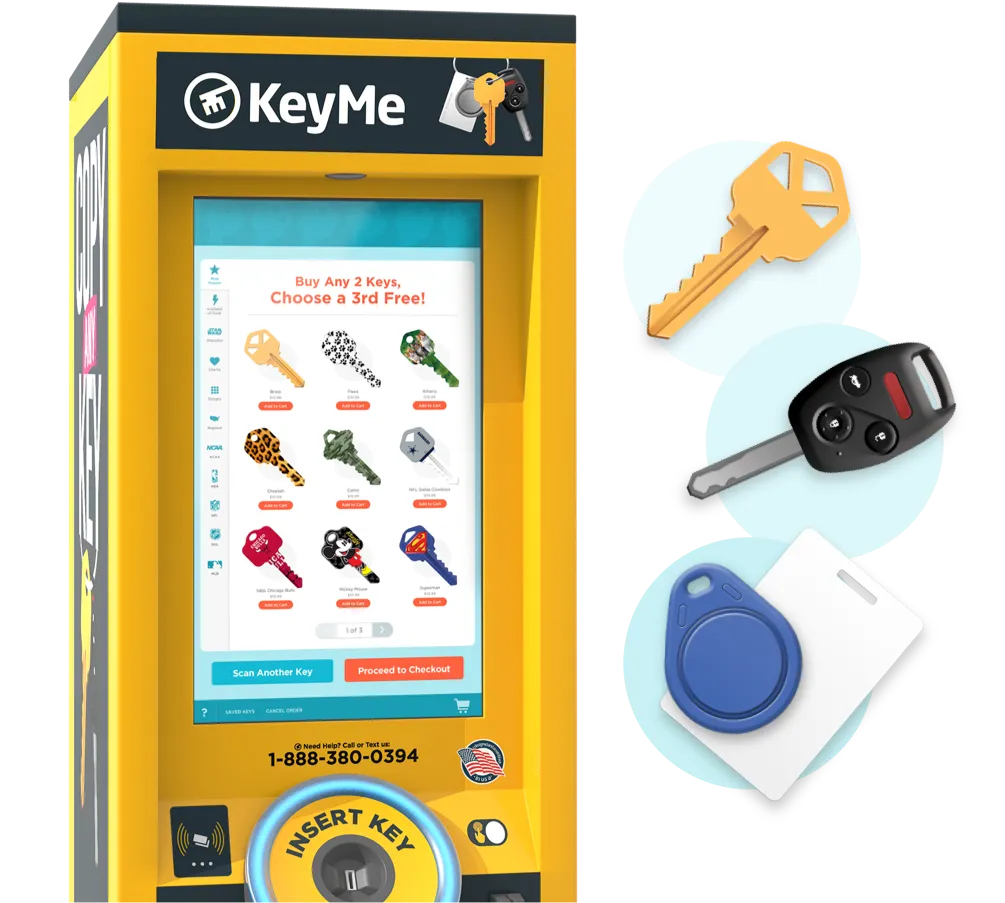
KeyMe Kiosks
KeyMe kiosks support eligible keys through in-person scanning and duplication.
The kiosk guides the customer through compatibility during the process.
For more detail, see What Types of Keys You Can and Can't Copy at a KeyMe Kiosk.
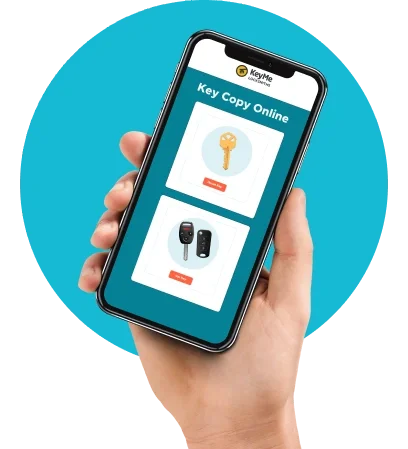
Online/Mobile Key Scanning
KeyMe's online key-copying option allows customers to upload a photo of an eligible key.
The photo is processed, the key is cut at a central facility, and the finished duplicate is shipped to the customer's home.
This option is intended for proactive duplication when you already have a working key, rather than for a lockout or damaged-lock situation.
For a complete explanation, see What Is Online Key Copying and When Should You Use It?.
Locksmith-Assisted Duplication
Some keys or situations are better suited to professional evaluation.
Examples can include:
- Uncommon key types
- Worn or damaged source keys
- Certain commercial systems
- Keys not supported by the selected duplication method
- Situations where the lock itself may be malfunctioning
KeyMe can also connect customers with local locksmith services for supported needs.
Vehicle Key Duplication
Vehicle keys require additional consideration because some contain electronic components.
Depending on the vehicle, duplication may involve:
- Key cutting
- Transponder functionality
- Remote functions
- Programming
KeyMe offers vehicle key services for supported vehicles as well as Car Key Vans for in-person vehicle key duplication and programming at participating retail locations.
Step 8: Confirm the Key Type Is Supported
Do this before assuming a particular duplication method will work.
Some keys can have:
- Specialized profiles
- Restricted duplication requirements
- Electronic components
- Manufacturer-specific features
A key's outward appearance does not necessarily tell you everything required to duplicate it.
If a kiosk, online process, or locksmith identifies the key as unsupported by that method, use an appropriate alternative rather than trying to substitute a similar-looking blank.
Step 9: Make the Copy Before the Original Becomes a Problem
One of the better times to create a spare is while you still have a reliable working key.
Waiting until the only key is:
- Heavily worn
- Bent
- Cracked
- Missing
- Broken
can turn a straightforward duplication need into a different problem.
KeyMe's online/mobile key scanning is similarly intended as a proactive spare-key option for customers who already have a working eligible key.
If you currently have only one reliable house key, consider whether an authorized backup would be useful before that key deteriorates or goes missing.
Step 10: Test the New Copy
Once you receive the duplicate, test it in the appropriate lock.
For a mechanical house key, evaluate whether it:
- Inserts normally
- Turns smoothly
- Operates the lock
- Removes normally
If the key is supposed to operate several compatible keyed-alike locks, test those as well.
For a vehicle key, test the functions that apply to the particular key and vehicle.
Those may include:
- Door access
- Ignition
- Remote lock/unlock
- Start function
- Push-to-start authorization
Do not wait until the original is missing to discover that a backup has never been tested.
Step 11: Don't Force a New Copy That Doesn't Work
If the duplicate does not operate normally, stop.
Do not:
- Force it farther into the keyway
- Twist harder
- File the key yourself
- Assume repeated use will automatically correct the problem
Instead, compare the duplicate with the source and note the exact symptom.
If the duplicate has already been made and isn't working correctly, continue with Why Some Copied Keys Don't Work.
That article owns the post-copy troubleshooting process.
Step 12: Preserve a Good Source for the Future
Once you have several working keys, consider which one you want to use as your long-term reference.
An everyday key experiences:
- Pocket wear
- Key-ring contact
- Repeated insertion
- Drops
- Bending forces
- Continuous use
A good-condition authorized spare stored appropriately may experience much less wear.
That can give you a better source if another duplicate is needed years later.
This is particularly useful in households where several family members eventually need copies.
What If Your Only Key Is Already Worn?
Do not assume that making another copy is automatically the best answer.
First evaluate how the key behaves.
If it:
- Requires jiggling
- Works only after being partially withdrawn
- Is visibly bent
- Has significant wear
- Works inconsistently
the key or lock may need professional evaluation.
ALOA notes that in some circumstances a locksmith may need to generate an original key using information associated with the lock rather than simply reproducing a worn source.
A residential locksmith can evaluate the situation when the available source is unreliable.
Copy Your Key from Anywhere - Right from Your Phone
Skip the kiosk and copy your key from home. Upload a clear photo of an eligible house or car key, and KeyMe will create a precise duplicate and mail it directly to your door.
What If the Lock Is the Actual Problem?
A new duplicate cannot correct a mechanical problem with the lock or door.
If several good keys all have difficulty, investigate:
- Cylinder
- Latch
- Deadbolt
- Strike
- Door alignment
- Hardware condition
ALOA identifies worn locks and poor door alignment among common causes of difficult lock operation.
For detailed troubleshooting, see The Most Common Home Lock Problems.
KeyMe also provides lock repair and installation for supported residential needs.
Best Way to Get a Good Key Copy
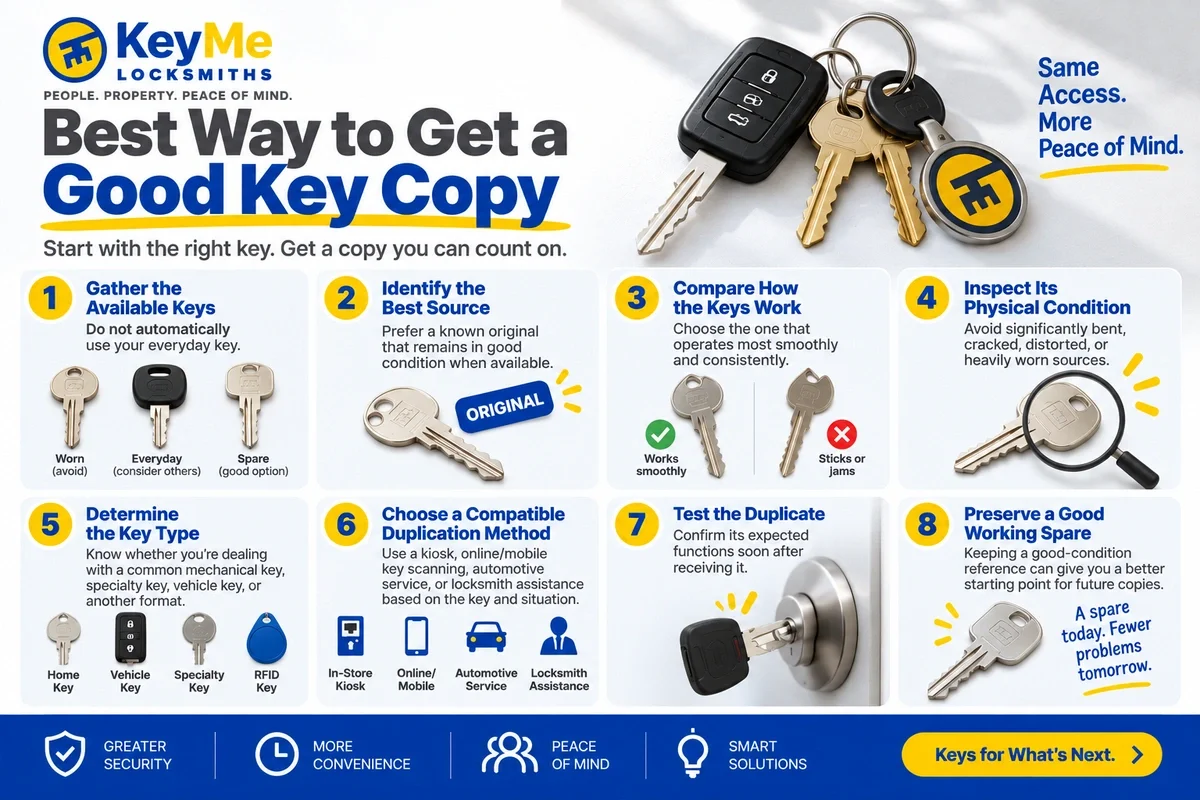
1. Gather the Available Keys
Do not automatically use your everyday key.
2. Identify the Best Source
Prefer a known original that remains in good condition when available.
3. Compare How the Keys Work
Choose the one that operates most smoothly and consistently.
4. Inspect Its Physical Condition
Avoid significantly bent, cracked, distorted, or heavily worn sources.
5. Determine the Key Type
Know whether you're dealing with a common mechanical key, specialty key, vehicle key, or another format.
6. Choose a Compatible Duplication Method
Use a kiosk, online/mobile key scanning, automotive service, or locksmith assistance based on the key and situation.
7. Test the Duplicate
Confirm its expected functions soon after receiving it.
8. Preserve a Good Working Spare
Keeping a good-condition reference can give you a better starting point for future copies.
Start With the Best Source You Have
A good key copy begins before duplication.
Choose a source that:
Works smoothly.
Shows minimal wear.
Is not bent or cracked.
Is as close to the original generation as practical.
Then match the key with an appropriate duplication method and test the new copy while the original is still available for comparison.
KeyMe offers key-copy services, self-service kiosks, online/mobile key scanning for eligible keys, key cutting, vehicle key services, and Car Key Vans at participating retail locations.
If you've already made a duplicate and it does not work normally, see Why Some Copied Keys Don't Work for the post-copy troubleshooting process.
References
- Associated Locksmiths of America (ALOA). Common Lock Issues. Consumer guidance addressing worn keys, duplicate-from-worn-key problems, worn locks, and door alignment.
https://www.aloa.org/consumers/commonlockissues - KeyMe Locksmiths. Frequently Asked Questions. Current guidance on selecting a source key, KeyMe duplication methods, mobile key scanning, Car Key Vans, and troubleshooting key copies.
https://key.me/frequently-asked-questions - KeyMe Locksmiths. What Is Online Key Copying and When Should You Use It? Current explanation of mobile key scanning and its role in proactive spare-key creation.
https://key.me/article/what-is-online-key-copying-and-when-should-you-use-it - KeyMe Locksmiths. What Types of Keys You Can and Can't Copy at a KeyMe Kiosk. Guidance on selecting a duplication method based on the type of key.
https://key.me/article/what-types-of-keys-you-can-and-cant-copy-at-a-keyme-kiosk